Chablis Diary part 6: Negotiating Chablis, a Visit to Patrick Piuze

Until Patrick Piuze came along, it was hard to think of a negociant who made interesting Chablis. Some of the large firms from the Côte d’Or have taken positions here, the Chablisienne cooperative is a major player with about a quarter of all Chablis, but the running is mostly made by individual domains.

Patrick’s winery in the heart of Chablis is an old building bought from Vocoret, in fact it still says Vocoret on the side. Inside it’s larger than it appears at first sight from the cramped interior, as it’s connected by a tunnel under the road to caves on the other side. This was constructed in the period when a Vocoret was the mayor of Chablis, it probably wouldn’t be possible today, Patrick explains.

PiuzeTW2
What is the driving force to be a negociant in Chablis? “I wasn’t born here, I came from Montreal. I ended up in 2000 in Burgundy at Olivier Leflaive and they asked me to look after the winery they were building in Chablis. I’m still here. Even if land is cheaper here, I had no money, the only way to make a lot of appellations is to be a negociant. The essence of the place depends on the mosaic of soils, when you realize this you want to make lots of cuvées not just one.” Production is  65% Petit Chablis or Chablis; 35% is premier and grand cru.

“We try to buy grapes we like from special sites, before we worry about having a specific appellation such as Blanchots etc. There are a few barrels of each wine – no single barrel wines.” That’s all very well, but I wondered how it’s possible to get grapes from top sites. “Well the structure of Chablis is different, there are many growers. The people we buy from may produce wine, but aren’t looking to distribute more bottles, it’s fast cash to sell the grapes. If a grower hasn’t created a brand, vinifying doesn’t have the same plus value. I want to be as close as possible to a domaine without having to purchase land.”

Patrick harvests the grapes with his own team. “Choosing harvest date is one of the most important things. And it‘s important to decide whether to pick in the early morning or afternoon, it depends on the conditions. We are an early picker. Harvest is typically 90 days after flowering. A wine can have only one backbone. 90% of white wines in the world have an alcohol backbone, but we have an acid backbone. Our wines are 12 or 12.1% alcohol, never more than 12.3%.”

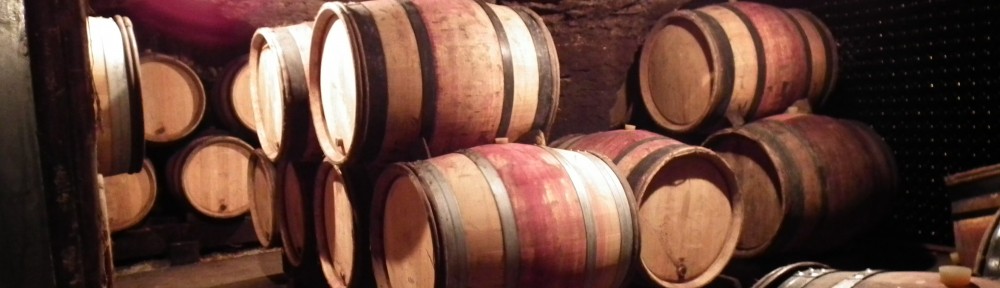
Petit Chablis is matured in cuve, Chablis is a mixture of cuve and barriques,  premier and grand crus are entirely in barrique. Not only is the wood old, but it’s chosen specifically for its history. “We buy only old barrels, to add density not makeup. If you lose the minerality you might as well make Macon. We only buy barrels from high acid vintages, because the wine of the first year marks the barrel.”

The style here reminds me just a little of Verget, where Patrick worked for a period, in getting to full ripeness without excess, but it’s a bit tighter; there’s a sort of silky sheen to the fruits, a sense of stone fruits adding to the citrus and minerality of Chablis; yet always with that wonderfully moderate alcohol. I pushed Patrick on why he can get such a complete impression at alcohol levels a per cent below everyone else, but I couldn’t resolve the mystery.

We tasted a range from 2012 and 2011, and that sense of tension counterpoised against the elegant fruits runs through the whole range from premier crus to the more overtly full grand crus. Terroir comes right out: Preuses the most feminine as always, Bougros racy, and Valmur ripe. It’s easy to understand why the wines sell out within a couple of weeks of the vintage.

Chablis Diary part 5: Louis Michel, the Master of Steel

“Our policy is, simply, to make wines that represent the terroir of Chablis: fresh, pure and mineral,” says Guillaume Michel. This translates to élevage in stainless steel. There has been no oak since 1968 or 1969.

Domaine Louis Michel stretches out to occupy all of one side of the Boulevard Ferrières, which runs from the World War Monument down to the river.  Underneath the old caves have been renovated into a snazzy tasting room; there is not a barrique in sight. At the river end of the buildings is the old tower that appears on the label, where Guillaume lives now.

LouisMichelTW2
Dating from the seventeenth century, the domain has 25 ha all in the historic vineyards of Chablis, almost on the true Kimmeridgian soil. More than half are premier crus. Why did your grandfather decide not to use wood, I ask Guillaume? “He didn’t like the taste of oak, and he didn’t have a lot of time to maintain barrels in the cellar. The tanks that because available at that time were steel with enamel coating;  stainless steel became available until the 1980s,” is Guillaume’s account of the transition.

The major difference between the cuvées, whether Petit Chablis, Chablis, Premier Cru, or Grand Cru, is the length of time in cuve before bottling, everything else is similar. Petit Chablis and Chablis spend 6 months on lees, premier crus spend 12 months, grand cru spends 18 months. “There is no battonage because we use indigenous yeast and bacteria, and fermentation is very slow, it lasts three or four months, and I consider that the natural stirring during fermentation is sufficient; to add to it would be too much. The fact that fermentation is slow, and that it involves many different yeasts, is what brings complexity.”

Complexity is the name of the game here. While lees-aging in steel is common in Chablis, few others achieve the complexity of Louis Michel. Indeed, my experience has been that in blind tastings people often assume the textural complexity of Louis Michel premier and grand crus must mean that they have been matured in oak. Guillaume expresses some surprise when I mention this, to him the difference is clearly evident. And the wines are not matured by formula; adjustments depend on the year. “Usually the wine is matured on fine lees, but in 2011 I didn’t use lees because after 3-4 months fermentation the wine didn’t need any more, and the lees would have made it too heavy.”

Terroir differences certainly come out clearly enough, even within a single premier cru. “We have vineyards in all three parts of Montmains (the cuvées are called Montmains, Butteaux, and Forêts); my grandfather used to blend but I prefer to make separate cuvees. Montmains has more clay, Forêts has more limestone.  Butteaux has more clay with larger lumps of Kimmeridgian limestone. Clay brings flesh and roundness, limestone brings minerality.” Tasting the 2012, Montmains shows as a blend of savory and fruity,  Forêts is more savory and mineral, and Butteaux is an interesting intermediate. There are only a few hundred meters between the vineyards. In the grand crus, Vaudésir is rich and savory, Grenouilles is even fuller bodied, and Les Clos shows its usual austerity, together with the impression of salinity that is common in this vintage.

These are wines that often can be drunk relatively early, but this is to miss the point of the complexity that develops later. Guillaume says, “I think it is important to wait at least a few years. You know we work in a very reductive environment, the first time it sees air is when the bottle is opened. I would say a premier cru needs at least 4-5 years, and depending on the vintage can last for 20 years. When you bottle the wine, for the first few months you can drink it, but then depending on the vintage it closes down.” The message is: please don’t commit vinicide: give these marvelous wines time to develop.

Chablis Diary part 4: Terroir versus Oak

“In the eighties there were two big schools, cuve and oak; my father was always stainless steel; he used to say, I’m not in the timber business. But he has changed his mind,” says Fabien Moreau at Christian Moreau. “William Fèvre always used some new oak, but that stopped as soon as Henriot took over in 1998. We didn’t want to boisé the vin, to the contrary we wanted to keep freshness,” says Didier Seguier, who came to Fèvre from Bouchard at the time. Here you see the convergence in Chablis: protagonists for stainless steel have taken up oak, while protagonists for oak have backed off.

The two extremes remain Raveneau and Dauvissat on one hand, where everything is matured in barrique, and Louis Michel at the other, where everything is matured in stainless steel, but at most producers Petit Chablis and Chablis are matured in cuve, and varying proportions of oak are used for premier and grand crus. The approach is Burgundian in the sense that the oak exposure is graduated with the cuvée. On the Côte d’Or, of course, all the wines are matured in oak, and the tendency is to increase the proportion of new oak going from communal wine to premier cru to grand cru. In Chablis, all the oak is old and it’s the proportion of oak to stainless steel that changes.

Almost every producer was at pains to say that there is little or no new oak. The duration is usually quite limited: one common approach is to put a proportion into oak, but after around six months to perform assemblage with the wine matured in cuve. After assemblage, the wine is matured further, but exclusively in cuve. So why do I often find obvious oak on Grand Cru Chablis, and sometimes on premier cru also? In fact, it’s often necessary to wait a few years to let the oak integrate.

As a lighter wine than the Côte d’Or, even at Grand Cru level Chablis doesn’t have the same capacity to support oak or more extraction. Indeed, although maturation on the lees is common, typically for around 12 months for Premier Cru and around 18 months for Grand Cru, battonage is unusual in Chablis. “We don’t have the same body and strength as the Cote de Beaune, if we go too far with battonage the wine will be good at first but will tire quickly,” says Sandrine Audegond at Domaine Laroche. I wonder whether the difference is battonage is a contributing factor to the occurrence of premature oxidation on the Côte d’Or and its absence in Chablis

Each producer has his own view on how best to express terroir differences in Chablis.Is this done by vinifying all wines in the same way, so that the only significant difference is the terroir. This is the view of both Dauvissat and Raveneau (with only oak) and Louis Michel (with only steel), and Jean-Claude Bessin (all premier and grand crus with 60% oak). Or should vinification be adjusted to the Cru, as it is at William Fèvre, Droin, Laroche, Long-Depaquit, and Christian Moreau, with a general policy of increasing oak proportion going up a hierarchy of premier and grand crus. Somewhere in between are Pinson and the Chablisienne cooperative, where all premier crus get the same treatment, but grand cru gets more oak.GrandCruChablisTW1Grand Cru Chablis extends all the way from the bottom to the top of the slope

After years of drinking Chablis, I have a pretty clear view of the characters of the premier and grand crus. Montmains and Vaillons are the best premier crus on the left bank, with similar exposures on parallel hillsides in adjacent valleys. Close to the grand crus on the right bank, Fourchaume, Mont de Milieu, and Montée de Tonnerre have more structure and richness, and among the grand crus Preuses is always the most delicate and feminine, while Les Clos is always the most reserved, even austere, and needs longer.

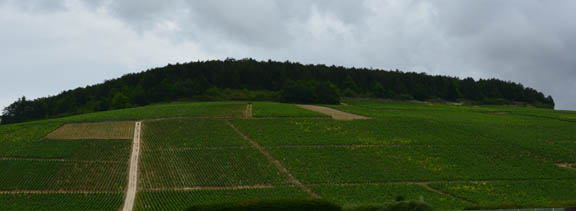
But the grand crus extend all the way from the road just on the edge of the town to the woods at the top of the hill. With the much slighter slope along the Côte de Nuits, for example, everything depends on position on the slope: so especially for Les Clos, the largest grand cru in Chablis, how come it is always the most powerful wine made by any producer, irrespective of whether the plot is in a protected position under the trees at the top or exposed in the middle or at the bottom? Even within the smaller crus, there can be significant differences in soil types, so is any fixed view of their character more imagination than reality?

Chablis Diary part 3: What is the Meaning of Chablis – the Fruitiness of It All?

All across the northern limits for winemaking in France, from the Loire in the west, across Chablis, to Champagne and Alsace in the east, wine styles continue to evolve in response to global warming and better methods of viticulture that increase maturity in the grapes. In the Loire Chenin Blanc no longer tastes of wet dog, but now shows an almost waxy, almost nutty, spectrum of stone fruits: Sauvignon Blanc is rarely herbaceous and may go so far as to show apricots. Over in Alsace, there’s a trend towards wines with more residual sugar, while in Champagne dosage has decreased to keep the balance. In Chablis this week I was struck by the sheer fruitiness of many wines: fruitiness is not a quality I would have associated with Chablis twenty or thirty years ago.

When I asked producers how they see Chablis today, the answers were pretty uniform: it should retain freshness and minerality. When I followed up by asking how its character has changed, the answer was generally dismissive: it hasn’t really changed at all, they would say. Global warming has been beneficial; chaptalization has become rare, difficult vintages have turned out much better than they used to, but that essential tension between fruit and acidity, perhaps what the French call nervosité, hasn’t changed at all. I don’t agree on this last, crucial point about character.

I remember when most Chablis was thin and acid, where the fruits (if you could detect them) were bitter lemon or grapefruit. Granted that citrus remains the dominant flavor in the Chablis spectrum, often enough today it moves from fresh citrus to stewed fruits, rounder and softer, and often enough there are notes of stone fruits running in the direction of apricots. Minerality is hard to describe, but like pornography you know it when you taste it, and it’s fair in my opinion to say that in many cases it has now become subservient to the fruits.

When I visited Verget last year, I had an interesting discussion with Jean-Marie Guffens about his entry into Chablis as a negociant. “They were all so bad in Chablis twenty years ago. For me, concentration is important, lower yields and riper. But everyone said, we are making Chablis, it’s never ripe, the typical Chablis is green. People said, when you make ripe Chablis, it loses its character. But you can’t make wine from unripe grapes – all green wines taste the same. Today I count about twenty people making good wine, twenty years ago there were almost none,” is his position. In conventional terms, Verget’s wines have often struck me as a half way house between traditional Chablis and the Côte d’Or, although I’m sure Jean-Marie’s view would be that “traditional” Chablis simply shows the accumulated history of failure in the region and is a misleading expression of its terroir.

Well, anyway, the typical Chablis isn’t green any more. Back in the eighties, the issue of steel versus oak was quite controversial in Chablis, but now most producers have settled into a compromise in which the top wines are matured partly in steel and partly in (old) barriques. The extremes of all oak and all stainless were defined by the principal protagonists many years ago, but others have been adjusting the balance of stainless and oak to get their desired style, and it’s here that I see the most change. Steel producers now use some oak; oak producers have backed off on the proportion. At one time, William Fevre was using quite a bit of new oak, but that stopped when Henriot took over in 1998. You don’t often get the chance to compare the two styles directly, and the closest I came was at Billaud-Simon, where the Mont de Milieu is vinified in stainless steel but the Vieilles Vignes from one parcel sees some oak. The stainless Mont de Milieu was to my mind closest to the aspirations for minerality, but the Vieilles Vignes had rounder, softer fruits with more immediate appeal. I have the impression that Bernard Billaud’s heart is in stainless steel, but the introduction of some cuvées using oak is a concession to the market.

The most overtly fruity style comes from Long-Depaquit, owned by negociant Albert Bichot. “The styles are really different here,” says régisseur Matthieu Mangenot. The common features are freshness and minerality. But Bichot’s style is to produce wine with fruity character. We don’t want to say to our premier cru customers, buy the wine and wait ten years, the objective is to bring emotion to the wine even when young.”

As a rough measure, it seems to me that it might be possibly to classify producers on savory/fruity balance. The most savory would be Raveneau and Dauvissat, both comitted to oak, and perhaps for that reason my favorites. But there is no exact correlation between use of oak and tendency to savory. My order of producers by style would go like this:

ChablisProducersThe balance changes with every cuvee and vintage, of course, but perhaps this is a useful guide to thinking about how producers fit into changing styles. The differences are not as violent as the arguments in some other locations between modernists and traditionalists, but the fruity style may be more modern, at least in the sense that wines like this would have been difficult or impossible to produce until recent times.

Chablis Diary part 2: the Legend of Raveneau

The entrance to Raveneau’s cuverie in a back street of Chablis is as discrete as the wines themselves. A simple metal sign above the door spells out Raveneau. A steep flight of uneven stone stairs leads down to the old cellars, which are crammed with barriques. But next to them is a newly excavated barrel room that was built three years ago. “It’s less picturesque but much more practical,” says Isabelle Raveneau, Bernard Raveneau’s daughter, who has joined him at the domain to take charge of marketing. Before the cellar was excavated, there were cellars on both sides of the street, and moving the wine around was a major hassle; today winemaking can rely more on gravity. But however more convenient the cellars may be, nothing significant has changed with the wines, which remain almost unchallenged at the very peak of Chablis.

RaveneauTW3Only the metal sign indicates you have found the master of Chablis

It’s hard to find descriptions to do justice to the subtlety of the style. Fruits are of course generally in the citrus spectrum, but they meld slowly into a more savory aura, with notes of liquorice or anise bringing a splendid complexity to the finish. From time to time I find Chablis from other producers with intimations of this style in individual wines, but no one else with this consistency across the range. Premier crus age for ten years or more, grand crus longer—I am finishing up my 2000s at the moment. For me, Raveneau is a unique representation of Chablis. The absolute master of the (old) oak style, Raveneau’s wines have gone from being impossible to find, ten years ago, to impossible to afford, today.

RaveneauTW4Some of the best wines of Chablis came from these cramped old cellars

So I asked Bernard Raveneau, what’s the secret, what gives Raveneau Chablis its unique quality? “It’s the origin, the travail attentif in the vines. A chef would say that if the ingredients are top quality, there is no need for artifice: it’s exactly the same with wine. Many people today say they use something special, such as biodynamics, but there is no secret here, except that we never go to extremes.” Yields are low, typically around 38-30 hl/ha, which certainly assists quality, but they are not so extraordinarily reduced as to explain the unique character. Nor is it a feature specifically of vine age, as vines vary from 10 to 60 years old (and clones and selection massale are both used for planting). And it’s not due to any single terroir, as the same style runs through the range from Chablis to Premier Crus to Grand Crus.

RaveneauTW10This cellar may be new but the barriques are old

“My father had only 3 ha,” says Bernard Raveneau, and looking at Isabelle, adds, “we grow only slowly.” About 15 years ago, he added 2 ha to bring the domain to its present 9 ha, with 1 ha in Chablis AOP, 6.5 ha in Premier Cru, and 3.5 ha in Grand Cru.. You get the impression that the details of the vines are regarded as less significant than the terroir, which rules all. Élevage is the same for everything from Chablis to Grand Cru. “It’s the origin that makes the difference,” says Bernard. Fermentation and malolactic fermentation are done in stainless steel cuves, then the wine goes into barriques for 10 months. New wood is used only as barrels need to be replaced, which means in effect a few each year.

The deceptive simplicity of approach produces the greatest wines in Chablis, but Bernard has an interesting view of Chablis vis à vis the Côte d’Or. “Chablis is the New World of Burgundy. In the 1960s, Chablis was 700 ha, today it’s 5,500 ha – so it’s a very new vineyard and people are more modern, they like investing in technology, where in Côte d’Or it’s very traditional. Here in Chablis, it’s a different mentality. People in Chablis pay more attention to winemaking; on Côte d’Or, if malo doesn’t start, they’ll shrug and wait until the Spring when it warms up, here people will do something about it, to get the process finished.”

We tasted the 2013s from barrique. The Chablis has relatively direct fruits, citrus with apple overtones, then that slightly malic impression continues on Forêts, and it’s with Vaillons that the impression changes to Raveneau’s typical slightly savory quality. Butteaux is a bit more restrained and herbal. Montée de Tonnerre begins to show more of the balance of the grand crus, with fruit intensity coming up. In the grand crus, Blanchots is delicate, Valmur broadens out, and then Clos shows the characteristic austerity of youth, distinctly more backward than the other grand crus, but all the same it is surprisingly approachable and the potential complexity is evident. I am surprised, because I had a bottle of Clos 2009 only a couple of weeks ago, and the fruits were distinctly closed; in fact the 2013 barrel sample seems readier! Good though the barrel samples are, these are not wines for instant gratification, and I fear that vinicide is committed on too many Raveneau Chablis’. I ask Bernard if the wines tend to close up for a while, but he says that they begin to open out after four years or so, and then typically come to a plateau: he doesn’t feel they really close up. I leave without being able to define the secret of Raveneau, but as convinced as ever that these are Chablis’ for the ages.

Chablis Diary part 1: A visit to Vincent Dauvissat

This is part 1 of the Chablis Diary. It continues with Raveneau, the savory/fruit index for producers, and terroir versus oak.


The first time I visited Vincent Dauvissat, a few years ago, I committed, well not exactly a faux pas, but perhaps a mis-step. Vincent had said that the duration of élevage in (old) oak barriques depended on the vintage, and I asked how he decided when the wine was ready to bottle. He looked at me, a little startled, and said simply, “The wine tells me,” but with an air of surprise at the naivety of the question. Over the years I have met many vignerons who practice what they describe as a minimalist approach, but few who in fact let the wine speak for itself so clearly.

Things have scarcely changed superficially since that visit. On one side of the courtyard is the house, on the other is the cellar. The house open; the cellar is locked. The children who played with the toys in the courtyard now help with the domain. The vineyards are the same; just over half are premier crus, there are Grand Crus and Chablis AOP, and a little Petit Chablis. Dauvissat has been biodynamic since 2002. I ask whether this extends to practicing by the phase of the moon. “Well, I’m a peasant, you have to be practical and efficient, so it depends on the weather.”

DauvissatTW3The courtyard at Dauvissat

The cellar is full of old barriques, with an average age of ten years. “The fact that the wine matures in a container that breathes brings out the terroir for me. New oak loses the subtlety of terroir, the delicacy on the finish, I don’t like that,” Vincent says. Élevage, exclusively in the old barriques, is in fact generally around a year. I ask whether there are differences in élevage between the various crus? “No, no, it’s the same work in the vineyards and the cave. The only difference in élevage is the Petit Chablis, which has only 9 months.” So the differences are due to terroir.

DauvissatTW6Dauvissat’s old cellars are stuffed with barriques

We tasted the range from the 2012 vintage. Petit Chablis has the most simplest fruits, Chablis begins to pick up in intensity, Sechets a little more, and the Vaillons really demonstrates the classic minerality. Coming to the grand crus, Preuses has more weight, and then Les Clos is as always the most austere, mineral, savory. Is Les Clos always the best, I ask. “Well each Cru has its style. Clos is always the most powerful, but Preuses has its own distinct aromatic spectrum,” is as far as Vincent will be drawn

We were discussing the aging potential of Les Clos, when Vincent says that of course it ages well, but the Petit Chablis also ages; the 2012 (which we had just tasted) will last fifteen years. He proved his point about aging by bringing out an old bottle to be tasted blind. Estimates of the year were just off, we thought it was 1995, but it turned out to be 1996. No one was able to pinpoint it as a Petit Chablis however: I would have thought of a Premier Cru. The impression was quite tertiary, with wide flavor variety; perhaps beginning to tire but still with some life. Certainly there seemed to be some convergence with premier or grand crus of this vintage, and I don’t know of any other producer whose Petit Chablis would last almost two decades.

To give Vincent the last word, “The wine speaks” is a perfect summary of Dauvissat.

Southwest Diary part 6: Visit to Tirecul La Gravière, Top of the Hill in Monbazillac

There isn’t much doubt that Château Tirecul La Gravière is the best producer in Monbazillac. Back in the seventeenth and eighteenth century, when Monbazillac fetched the same price as Sauternes, this was one of the 17 Grand Crus. But hard times came to the region after phylloxera, when most owners didn’t have the resources to replant their vineyards, and when the AOC was created in 1936, it was decided not to perpetuate the system of grand crus. Located on a hill with the Dordogne only a couple of miles away, this site gets botrytis reliably in the mornings, and then the fog blows off in the afternoons. When Bruno Bilancini came here in 1992, grapes were being merged with another property, so he recreated the name of Tirecul la Gravière.

TireculTWTirecul la Gravière’s production is almost entirely Monbazillac, divided between Les Pins, the chateau wine, and Cuvée Madame, made only in exceptional years. A Bergerac Sec (dry white) is made in some years from plots that did not get botrytized. Appellation rules call for liquoreux “avec sur maturité,” which can mean a mixture of botrytis and passerillage (desiccation), but Bruno’s policy goes to extremes: the Monbazillac comes exclusively from 100% botrytized grapes, the Bergerac Sec (if any) comes from zero botrytis.

Bruno is just a little disdainful about the appellation rules for Monbazillac.
”Monbazillac is required to be only 14% potential alcohol, which is very low.” Harvest at Tirecul is always at least 19% potential alcohol, sometimes 22%. The new SGN label in Monbazillac requires 17% potential alcohol, does not allow chaptalization (hallelujah: at last!), and specifies 18 months maturation. Bruno hasn’t yet decided whether to use the label, but has declared the entire 2013 vintage as SGN in order to keep the option open. “We’ve always made this style,” he says, “so for us the SGN doesn’t change anything. Thirteen producers have classified lots as SGN for 2013, but we are the only producer to declare the whole harvest.”

The blend of grapes in the AOP is similar to Sauternes, but Bruno uses only Semillon and Muscadelle. “When we arrived here there was a small amount of Sauvignon Blanc. The problem is that its maturity is very different from the others. One possibility was to pull it out, the other was to plant more, at least enough to fill the press. But as I’m not a great fan of Sauvignon Blanc I decided to pull it out.” The style here comes from the reliance on 100% botrytized grapes and the almost equal blend of Semillon and Muscadelle. It tends to be spicy in hot years – Bruno says the spice comes from the Muscadelle – and more savory or herbal with impressions of tarragon in leaner years. Alcohol is always moderate. “We never go over 13.5% alcohol in the wine, in my opinion whenever you go over 13.5% you find the alcohol,” Bruno says.

There are three cuvées. Les Pins is made only with young vines (defined here as less than 25 years). This is treated like a second wine: there is less use of barrels (80%), no new oak, and it’s only aged for one year. The chateau (grand vin) comes from vines with ages up to 80 years. Altogether there’s 45% of old vines and 55% of young vines. Cuvée Madame is a selection, berry by berry, of very botrytized berries, and is usually 10-15% of production.

In a long tasting during a recent visit to the chateau, we went through several vintages of the grand vin and cuvée Madame. “In my opinion, Tirecul needs to wait 8-10 years to develop complexity. It depends less and less on sugar as it ages, and becomes more elegant,” Bruno says. You could see the same effect in both the château wine and cuvée Madame: older vintages seemed less sweet, more savory and varied in flavors (but in fact sugar levels did not change). The concentration in young wines and the development of older wines made the point forcefully these wines offer a significant addition to the panoply of sweet wines, different from Sauternes, and distinctive in their own right.

Bordeaux Diary part 7 – Chateau Lafleur – the Beat of a Different Drum in Pomerol

“The first thing my parents did when they took over here in 1985 was to take down all the signs to Chateau Lafleur,” Baptiste Guinaudeau explained when we turned up for our appointment. The “chateau” is a somewhat obscure farmhouse with a tiny plot of 4.58 ha adjoining the vineyards of Chateau Pétrus. Keeping an appointment at Lafleur is a test of ability to draw deductions from the map.

LafleurTW3

The unassuming chateau at Lafleur carries no identification

“When Henri Greloud bought the property in 1872, his vision was to buy small plots and merge them into larger properties, but he felt Lafleur was special and he decided to keep it separate and not to merge it with Le Gay. He built separate cellars so that Lafleur could be independent. Without that decision Lafleur would have become part of Le Gay,” explains Baptiste, who is his great-great grandson. Both properties remained in the family for many years, but today the family properties are Lafleur and also Grand Village, in neighboring Fronsac.

The focus here is really on the vineyard. “We are farmers, we work daily in the vineyard. Chateau Lafleur has 24,800 plants, and we are looking after them individually. We are in the vineyard and we are making the wine also – this is unusual in Bordeaux, usually there are different teams for the vineyard and the cellar – but this connection between the vineyard and cellar is really important for us… The blend is 85% done in vineyard and 15% in cellar. Selection for Pensées (the second wine) is done in the vineyard at harvest. In 2013 400 plants were deselected (individually) from Lafleur to Pensées.”

LafleurTW6Two horses are used to work the vineyard at Lafleur

Lafleur is usually about 55% Cabernet Franc to 45% Merlot, which gives it a restrained character quite different from the average Pomerol. Pensées de Lafleur started as a second wine in 1987, soon after Jacques Guinaudeau took over, and for the first ten years was based on declassification of lots, assignment of wines from young vines, etc. But since 1995 it’s come 90% from a specific part of the vineyard, a lower strip running along the southwest border. It more or less reverses the proportions of varieties in Lafleur.

The focus in winemaking is to avoid too much extraction. “We don’t use the word extraction, we want to infuse, the best tannins come without intervention in the first days of fermentation. Cuvaison is only 12-15 days, which is short for Bordeaux, because the wine is already well structured.” Élevage sees some restraint. “We love barrels but we hate oak. 80% of Lafleur and Pensées ages in 6-month barrels coming from Grand Village, the rest is new oak.” And alcohol levels are generally moderate. “It’s impossible to be ripe with less than 13% alcohol in Bordeaux now, but you can be completely ripe at 13.6%. People are going to crazy levels of alcohol to impress critics.” This is old fashioned Bordeaux in the best sense – elegant rather than powerful or jammy fruits, moderate alcohol, restrained wood.

Lafleur can display a touch of austerity coming from its high Cabernet Franc content. It definitely needs more time than average to show its full complexity. “Lafleur is closest to Cheval on the Right Bank, but it’s much easier to compare it to Latour (in Pauillac) than to Pétrus, our style is more masculine, more Left Bank,” says Baptiste. It’s fascinating that the two top wines of Pomerol, Pétrus and Lafleur, should be adjacent, yet so very different.


Bordeaux Diary part 6 – Vive La Difference – The Triumph of Cabernet Franc at Cheval Blanc, Ausone, and Canon

The first and last visits of the day were to properties that could scarcely differ more superficially. Cheval Blanc has a fantastic new winery with the appearance of a breaking wave on the shore. Ausone has a nineteenth century belle epoque chateau that is being restored in the original style. Cheval is owned by Bernard Arnault of LVMH; Ausone remains in the hands of the Vauthier family. Cheval Blanc has 36 ha on the area of graves adjacent to Pomerol; Ausone has only 7 ha, partly on the limestone plateau just outside the town of St. Emilion, partly on the descending slopes. The production of Cheval’s second wine is larger than the production of Ausone’s grand vin. Yet these are the two original Premier Grand Cru Classé “A” chateaux—and in spite of the promotion of Angelus and Pavie to that category, neither has been admitted to the Club of Eight that represents the Premier Grand Cru Classés of both left and right banks. Both Cheval and Ausone have a strong commitment to Cabernet Franc, indeed these are the two greatest wines in the world based on a Cabernet Franc blend.

Thursday morning: Technical director Pierre Clouet shows us round the new cuverie at Cheval Blanc. “It took the new owners ten years to decide what they wanted,” he says, “but then it was done very fast. We wanted to respect the nineteenth century history but to have something modern.” It’s a green building with a living roof, containing a garden and terrace. Inside are 45 cuves to allow each of the plots in the vineyard to be vinified separately. “We produce exceptional wine by miracles in the vineyard and no mistakes in the cellar,” Pierre says. “We don’t want to change the style of Cheval, that was decided two centuries ago, but we want to have more precision, more resolution, more pixels.” The decision on whether to include lots in Cheval Bland or in the second wine, Petit Cheval, is taken on a plot by plot basis: each of the 45 cuvees must be good enough to include in Cheval Blanc, or it is declassified to Petit Cheval. There is also a third wine to keep up the quality of Petit Cheval.

ChevalTWThe architect wants the biomorphic form of the new winery to have the sense of simplicity and light of a cathedral.

There’s an interesting difference in the vineyard. “People who think that Merlot is for clay and Cabernet Franc is for gravel don’t understand Cheval Blanc; it is exactly the opposite here, Merlot is on gravel and Cabernet Franc is on clay. The Merlot is picked early, al dente, in order to preserve freshness. Cabernet Franc is not Sauvignon, it does very well on clay. This is what gives the wine its texture. The Cabernet Franc that is on gravel works best when the gravel is on a subsoil of clay, the tannins are too hard from Cabernet Franc on full gravel and there’s always some green pepper, so you would have to harvest late, and then you would get a mixture of over-ripe and under-ripe flavors.” We taste the 2006, which is round and elegant, a very good result for a year where I find most Bordeaux to have a rather flat flavor profile.

Afternoon: At Chateau Ausone, Alain Vauthier also believes that the Cabernet Franc is the essence of the style. “We’ve only been planting Cabernet Franc recently, and the proportion has increased,” he says. “We make very good Merlot, but I prefer the Cabernet.” I asked if there was a difference in terroirs for Merlot and Cabernet. “In theory, yes, but at Ausone there is the same effect as at Cheval Blanc and Pétrus: the terroir dominates the cépage.” We see round the facility, which is modest, with a fermentation facility using small wooden vats, and a barrel room cut deep into the rock. We taste the 2012, which is about to be bottled, and there is that characteristic combination of power with finesse.

AusoneTWThe Chateau at Ausone is being restored.

In between: Coming out of St. Emilion into the one way system at the top of the town, we pass a bewildering number of entrances with gateposts saying Chateau Canon. Most lead into the vineyard or towards the chateau which is plastered with signs saying, Keep Out, work in progress. Eventually we find an entrance that winds round the back to the bureau, separated from the chateau which is undergoing a massive renovation. John Kolasa arrives from Rauzan-Ségla in Margaux, also owned by Chanel. Things had gone badly downhill when Chanel bought the property in 1996, and it’s taken twenty years to get things back to where he would like them. The cellars have been entirely rebuilt and 75% of the vineyard has been replanted. Croix de Canon is used for the wine from the young vines, but as they become older these lots will begin to go into Chateau Canon, and Croix de Canon will come from the vineyards of the former Chateau Matras, adjacent to Canon, that were recently purchased.

The style here is distinctive. Once again, Cabernet Franc is key. At one point, Merlot reached 80% of the vineyards, but the replanting program has brought it back down to 65%. “Canon can’t make sexy wine because the vines up here on plateau get stressed, down below on the plain” (with a slightly disdainful gesture) “the wines are ripe and round when young, but they will be flabby after 40 years. Up here there is more minerality, the wines will last for years.” Bordeaux is coming back towards a fresher style, John believes. We taste a sample of the 2013, followed by the 2011 and 2001. The same purity of style is evident; if I had these wines blind I would predict a higher content of Cabernet Franc than is actually the case, as for me they have that mineral purity I always associate with the variety. The lineage back to the wines of the 1960s is clear. Canon is right back on form.

Talking about vintages, I ask both Pierre Clouet and John Kolasa what they feel about the highly rated 2000 vintage versus the 2001 vintage that it somewhat overshadowed. They have the same view: 2001 really represents the style of the chateau, it has not yet entirely come into its own and will last for a very long time, 2000 is delicious now but is (at the risk of putting words in their mouths) more opulent than the style they truly desire, and it will not last as long as 2001. Cabernet Franc über alles.

Bordeaux Diary part 5 – Crème de la Crème of Sauternes: Visits to Yquem, Climens, Coutet, Suduiraut, de Fargues

Tuesday morning: Visit to Sauternes starts with Yquem, looking as grand as ever and visible at a distance on the dizzy heights of 80 m elevation overlooking Sauternes. I’ve visited Yquem twice before, once when I had the fortune to follow the Japanese ambassador, so many extra wines had been opened and were available to taste, and once with an MW group. Both of these visits were conducted by the winemaker, but with LVMH now in charge, there’s a more corporate feel to professionally managed visits with a guide. But Yquem remains at the top of its game with only the Grand Vin (no second wine: anything not used is sold off in bulk for generic Sauternes) and the dry white Ygrec (about 10,000 bottles per year). Production of Yquem varies wildly from year to year: none in 2012 and about 100,000 bottles in an average year. It was available en primeur from 2004 to 2009, but it seems that this may now have been stopped.

YquemTW2

On the highest point in Sauternes, d’Yquem is still the grandest chateau of all.

Lunchtime: The connection with the Lur Saluces family, who owned Yquem until it was sold to LVMH, continues, as we go for lunch at Chateau Coutet, which was owned by the Lur Saluces family until the 1920s. Aline Baly, whose grandfather bought Chateau Coutet in 1977, tells us there used to be stories about a tunnel between Yquem and Coutet. From Coutet in Barsac you can just make out Yquem at a point of elevation on the horizon, but that would be some tunnel!

CoutetTW

The old vertical presses at Chateau Coutet, made by a former owner, are still used for making the super Cuvée Madame

Over lunch we try Opalie de Coutet, the dry white wine that was introduced in 2010. “It’s not made by making a general first pass of the vineyard,” Aline explains, “but from specific rows in certain parcels on the best terroirs which are now dedicated to making a high quality white wine.” Coming from an equal blend of Sémillon and Sauvignon Blanc, it shows quite a rich style. “Opalie is a great way to explain that sweet wine isn’t just sugar, there is terroir here,” says Aline. It’s an interesting introduction to the wines of Coutet, but I’m not sure how much impact it will make on the market as production is very small, only 3-4,000 bottles. The Coutet 1998 and 2003 make an interesting contrast, the first with a nice savory counterpoise to the sweet fruits, the second overtly decadent from the very hot vintage.

Afternoon: Chateau Climens is almost adjacent so we actually make our first afternoon appointment almost on time. Technical Director Frédéric Nivelle explains that he and proprietor Berenice Lurton have been converting to biodynamics. This is no mean feat in a climate as humid as Bordeaux. “The vines show improvement very quickly, but it’s slower to show in the wines,” Frédéric says. They make their own preparations to spray on the vines, and there’s a loft full of dried herbs. The intensity of the chamomile puts most chamomile tea entirely to shame.

ClimensTW

Dried flowers and leaves in the loft at Chateau Climens are used for making biodynamic preparations

Chateau Climens is committed entirely to Sémillon. When M. Lurton bought the chateau in 1971, there was only a little Sauvignon Blanc, and it never gave good enough results to include in the Grand Vin, so it was uprooted. Since then, Climens has been 100% Semillon. There’s only the Grand Vin and the second wine, Cypress de Climens. “Some second wines come from young vines, inferior plots, mechanical harvesting, and have shorter aging, but it’s not like here,” Frédéric explains. The second wine comes entirely from tasting barrels to decide which should go into the Grand Vin and which into the second wine, so it isn’t a question of level of botrytis, but one of style.

Late afternoon: Final visit of the day is back over to Sauternes, to Chateau Suduiraut, now owned by insurance company AXA. Technical director Pierre Montégut sees his job as making wine that will make people want to drink more than one. “I hate the half bottle in Sauternes,” he says, “I would like to bottle everything in full bottles. I want people to be able to drink more than a glass, they should be able to finish the bottle.” The tactic here is to have a range of wines in different styles. “Castelnau de Suduiraut was created in 1992 as a second wine when there was no Grand Vin, and was a classic second wine, resulting from declassification, until 2001 when we decided to make it separately,” explains Pierre. Then in 2009 the half of production that was Castelnau was split again, with half going to Lion de Sauternes, a lighter fresher style intended to appeal to younger consumers. For all that, my favorite at the tasting was the 2001—full force in the botrytized style.

Wednesday afternoon: We close the circle with a final visit to Chateau de Fargues, which Alexandre Lur Saluces has been restoring to glory since he left Chateau d’Yquem in 2004. The chateau is a true medieval fortress, built in 1306, destroyed in 1687, and now being rebuilt. Alexandre shows us over the fortress. “I restored everything at Yquem, and then I started again when I came here in 2004,” he says. This is a massive undertaking: at one end the walls have been rebuilt, stone by stone, but still have a derelict appearance, open to the sky; at the other end there is a roof and the interior has been rebuilt and refurbished. Expected completion date is year 2050.

FarguesTWAlexandre Lur Saluces is restoring the original chateau de Fargues

A modern chai has been built besides the chateau, where the production of this jewel of a property is vinified—yields are about 1000 bottles for each of the 15 ha in a good vintage. In 2012 there was no Chateau de Fargues as it wasn’t considered good enough. “It’s expensive not to make a vintage but it’s even more expensive to lose your reputation,” Alexandre says. We taste the 2006 vintage, which is sublime: subtle is not a word I often use to describe Sauternes, but it’s all lightness of being, balancing botrytis, sweetness, acidity, fruits. De Fargues was not classified in 1855 as the property was making only red wine at the time–the production of Sauternes started here in 1943—but it would be right at the top in any current classification. There is no second wine, some experiments with dry white wine have stopped, so there is only one wine: Chateau de Fargues. “I want to continue the family tradition of making top quality Sauternes,” is Alexandre’s position.

Conclusions: For all the talk about declining worldwide interest in sweet wines, the top chateaus of Sauternes remain pretty committed to their traditional styles. There’s a broadening of many the range at most chateaus, but the much touted move to more production of dry white wine doesn’t seem to be a major factor yet. The fact that it has to be labeled as AOP Bordeaux isn’t really seen as a problem, as the brand name of the Chateau is seen as more important. The move to allow it to be labeled as Graves is seen as somewhat irrelevant. “We are in the middle of Graves, it’s just a French stupidity (to have to use Bordeaux AOP), but it takes a long time to change things here,” says Pierre Montégut. It’s a historic accident resulting from a squabble about appellation definitions in the 1930s. But nothing can detract from the unique style that is Sauternes.