July 16, 2026 5:50 pm
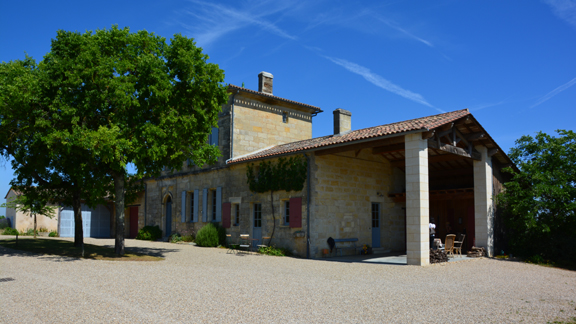
With a reputation second only to Petrus in Pomerol, Chateau Lafleur takes a completely different approach. While Petrus offers the quintessence of Merlot, Lafleur focuses on Cabernet Franc. Lafleur originated when Henri Greloud decided in 1872 that its 4.58 ha plot was unique, and that he would build a cellar there to vinify the wines separately from those of Chateau Le Gay, which he also owned. Otherwise, the wine would have become part of Le Gay. The estate passed by inheritance to two sisters who lived at Le Gay. The wine was made by Moueix until the sisters leased the property to their nephew Jacques Guinaudeau in 1984, and then in 2002 Jacques purchased it. His son Baptiste now makes the wine. The “château” is a somewhat obscure farmhouse with its tiny vineyard adjoining Petrus. Everything about Lafleur is restrained except its reputation. It certainly does not advertise its presence. “The first thing they did when they got here in 1985 was to take down all the signs to Lafleur,” they recollect now.
The vineyard owes a lot to its neglect by the sisters, who never replanted or used herbicides. Even after the great frost of 1956, which killed a hugs proportion of vines, they preferred to believe in prayer rather than action. “When Jacques took over, the estate looked more like a jungle than a vineyard. They constructed a new cellar in 2018, equipped with 8 stainless steel tanks in varying sizes to allow separate vinification of each area.
There are two wines, Lafleur itself, and Pensées de Lafleur, which originated by declassification in the difficult vintage of 1987, became a second wine coming from young vines and declassification in subsequent vintages, and then became a separate cuvée. Since 1995, it has come 90% from an 0.7 ha strip of clay that runs across the vineyard, plus 10% declassified from other parts of the vineyard. “We do not produce a second wine,” they say . “Pensées is another cru in our vineyard.”. “It’s almost-Pomerol,” they say, because the terroir is more typical, but 40% Cabernet Franc is not really a Pomerol blend. Pensées is about 20% of production and prices at about 20% of the price of Lafleur. The aging regime is similar for both wines, with 80% aging in 6-month barrel, and 20% in new oak. “We love barrels but we hate oak.”
The major part of the vineyard is on gravelly terroir, covered with stones. “A large part of our identity comes from the high proportion of Cabernet Franc,” Baptiste says. Usually about 55% Cabernet Franc, Lafleur has a restrained character distinct from the average Pomerol. The Guinaudeaus are scornful about clones of Cabernet Franc and attribute much of the quality of Lafleur to their old plantings, which they use to propagate the vineyard by selection massale. “We don’t speak about Cabernet Franc, we speak about Bouchet (an old name for Cabernet Franc).”
Lafleur is not a Pomerol any more. It was a shock when Lafleur announced in 2025 that it was leaving the appellation system, and all the wines would become Vin de France. “We realized because of the big drought, that if this goes further we would never be able to make the sort of wine we like.” The main change was a limited irrigation they call ‘water replenishment,’ in which water is injected about 15 cm below the ground between the rows. “The idea is to treat the soil rather than the vines.” The changes breached appellation rules, and Baptiste decided to leave Pomerol AOP. “The irony of our decision is that we changed the appellation label in order to keep the wine the same.”
The Guinaudeaus also own Chateau Grand Village, on the edge of the Fronsac plateau just outside the appallation. They make a red and two white wines there. They started a new project in 2018 when they planted two small plots with Cabernet Franc and some Merlot taken by selection massale from the Lafleur vineyard. The first vintage of the wine, called Les Perrières de Lafleur, was 2018. It ages one third in new barriques and two thirds in 1-year barriques. It’s much fruitier in style than the wines from Lafleur itself. The high-end white, Les Champs Libres, is barrel fermented with battonage, does not go through MLF, and is savory and mineral. All these wines are now Vin de France.
The decision to leave the AOP system certainly sends a signal. It reinforces the impression that tradition and bureaucracy are more important to the authorities than making the best wine. After phylloxera, everything changed in Bordeaux as it did all over Europe. The most dramatic change was in the varieties planted, but there were also major changes in viticulture. Today the system is stultifying, stuck on varieties that were adapted to the climate of the last century, with outdated regulations controlling viticulture. Climate change is at least as a big a challenge to the system now as phylloxera was a century ago. Lafleur has sent a message: but is anything listening.
Posted by Benjamin Lewin
Categories: Uncategorized
Tags: Bouchet, Cabernet Franc, France, Pomerol, travel, Wine, wine tasting
Mobile Site | Full Site
Get a free blog at WordPress.com Theme: WordPress Mobile Edition by Alex King.
In early June of 2022 I met with Christian Mouiex. Amongst other conversations, I asked him about his concerns with climate change and his concerns about the effects on his estates in Bordeaux. I was surprised when he said that, so far, the effects of the warmer temperatures on his vines and wines were positive. There was now far less concern about the grapes reaching maturity than previously. The wines were better than ever. Granted, his statements were just a couple days before the first serious heat wave of the 22 vintage hit. I wonder how he would respond to the same question now, a few short years later, as the heat of 22, 23, 25 and now 26 may be game changers.
By rjf9rjf7c75c4180c on July 17, 2026 at 4:16 am