With Lafite Rothschild closed for an extensive renovation until 2028, the way to get a taste of the Rothschild wines on the left bank is to visit Duhart Milon, now open after a refurbishment. Located close to the waterfront in the village of Pauillac, Duhart Milon is one of only two châteaux remaining in the village of Pauillac. The group of buildings is surprisingly extensive within the village, eve including a large garden, but the vineyards are outside at the northern border of Pauillac.
The first information about wine production at Duhart Milon dates from the eighteenth century, and it was well known by the nineteenth century. The château was created when privateer Jean Milon married Suzanne Castéja. After Jean Milon died, Suzanne left the property to her nephew Pierre Castéja, who was the proprietor at the time of the 1855 classification, when it became a fourth growth. After Castéja’s death, the estate was run for the family by André Delon, at the time also the manager of Léoville Lascases. Financial difficulties caused the usual depredations, and some of the vineyards were sold off, including 15 ha that went to Château Batailley.
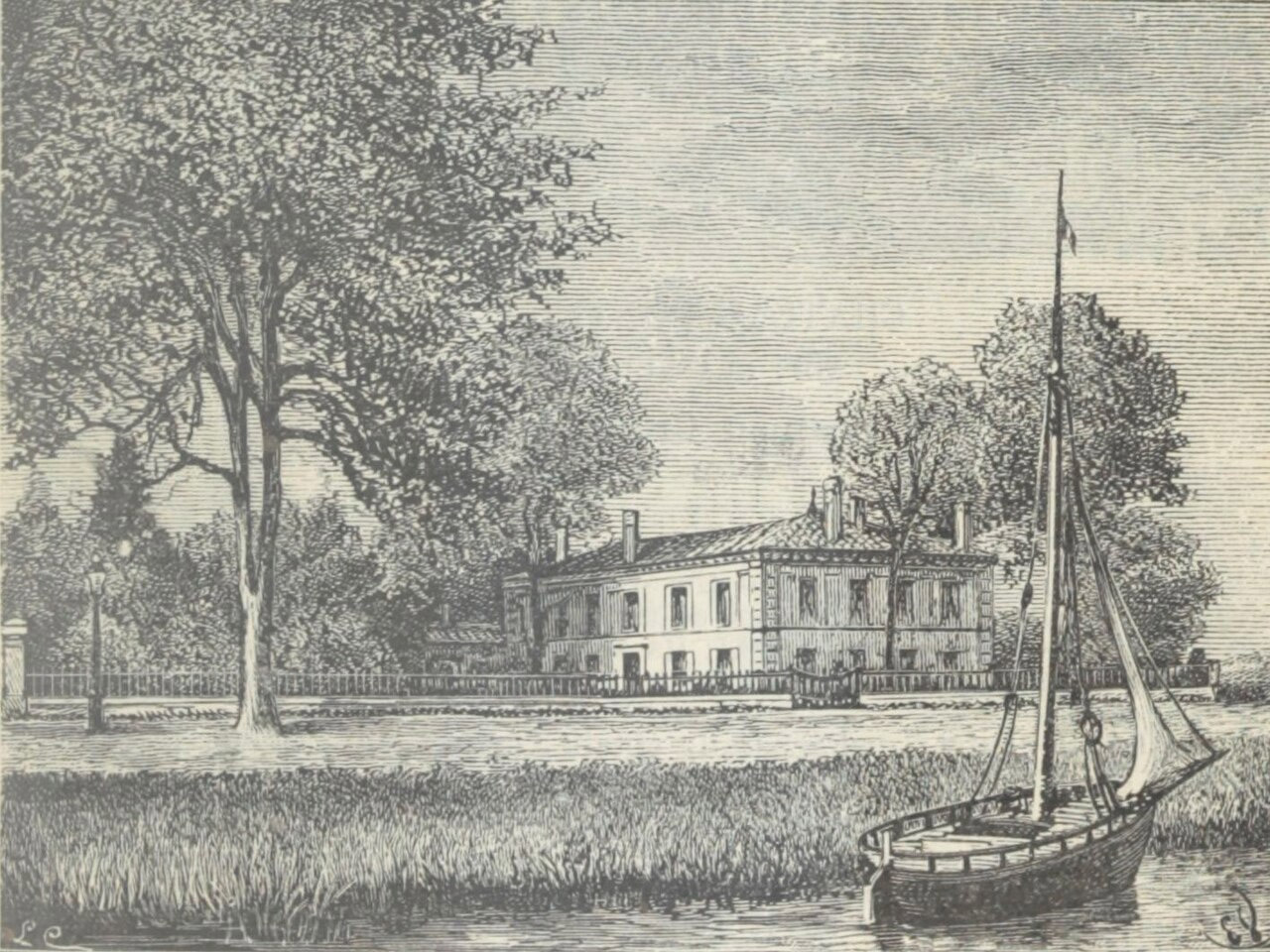
Duhart stood in splendid isolation near the waterfront in 1898. Today it is immersed in the town, although the winery buildings are surrounded by extensive gardens
Things got steadily worse as the property kept changing hands, until it was bought in 1962 by the Rothschilds of Château Lafite. The estate then consisted of only 17 ha, but the existing vineyards were replanted, and there was a great expansion as new vineyards were purchased. There are now 62 ha in a single block, separated by the hamlet of Milon from the vineyards of Château Lafite Rothschild immediately to the east. The château was known for a while as Duhart Milon Rothschild, but now has reverted simply to Duhart Milon. Although the vineyards are close to Lafite, elevation is lower, and exposure is more northern. Duhart Milon usually harvests 7-10 days after Lafite.
The grand vin is usually 70% Cabernet Sauvignon and 30% Merlot, aged 50% in new oak and 50% in 1-year oak. The second wine, Moulin du Duhart, is usually a more or less equal blend, with 20% new oak and 80% 2-year oak. Production is typically three quarters grand vin. In spite of proximity and similarities in winemaking, the wine does not at all resemble Lafite: it is solid where Lafite can be ethereal, and robust rather than powerful. Benefiting from the halo cast by its famous neighbor, Duhart Milon prices above its classification. A white wine was introduced in 2020, but is only a small production. It has a majority of Sémillon, aged in barriques for 8 months.
Tasting recent vintages at the château this week shows the extent of the change in Bordeaux. The grand vin from 2019 is very much the new Bordeaux: all but ready only half a decade after the vintage. It makes quite a classic impression, moving in a savory direction, with tannins not at all obtrusive but giving support. In fact, it should last another 20 years, becoming more savory and smoother with age. It’s a modern take on the old style of Bordeaux.
Moulin du Duhart is a complete contrast. The 2022 vintages shows a really fruity nose, not quite exotic, but tending to red fruits, say raspberries, rather than the traditional black fruits of Pauillac. That impression of aromatics beyond Bordeaux is enhanced by using 5% of American oak during aging, bringing coconut and vanillin. The quasi-exotic character comes out more on the palate, making this seem not merely approachable but even a touch aggressive: a quite different impression from the reserve of Pauillac. This is a wine intended to appeal to people who may not know, in fact may even have been put off, by Bordeaux. It’s an attempt to reinvent Bordeaux to appeal to a new class of consumers.
This is what Bordeaux has always done: stay classic but renew itself.

