A Preview of the 2023 Vintage at Denis Bachelet

“My great grandfather started the domain; he was a cooper and bought vineyards. After a few successions, I’m just a winemaker (since 1982). I started with 1.8 ha, now I have 4.5 ha. Today it is so difficult to find vineyards,” Denis Bachelet says.

Bachelet is something of a cult, enhanced by the small size of the domain; the wines are available only on allocation. When Denis took over the domain, it was just vines with no cellar or equipment, as his grandparents had retired in 1973. The vineyards consisted of Charmes Chambertin, village and premier cru Gevrey Chambertin, and a parcel of Bourgogne. Denis has bought further vineyards when he has had the chance, but the domain remains very small.

Denis Bachelet in his cellar

Identified only by a very discrete nameplate on the door, the domain occupies a building just off the D974, but the inside is larger than you might expect. Relatively expansive for a small domain, the cellars run all along under the building.

“When the weather is with us, we make 7 red and 1 white cuvées,” Denis says. The white is Bourgogne and there is also a red Burgogne. Côtes de Nuits Village comes from Brochon. From Gevrey Chambertin, there is village wine,  two premier crus, Evocelles and Corbeaux, and Charmes Chambertin.

We tasted 2023s from barrel, although Denis feels this is the wrong time of the year: October or November would be appropriate. He is committed to biodynamics to the point of bottling only by the phase of the moon. The wines spend 16 months in barrique. All the wines were racked in April and they will be racked again only for bottling.

The Bourgogne Rouge comes from two plots totaling just over a half hectare, planted in 1977 and 1986; it ages in used barriques. Côte de Nuits Villages comes from 6 parcels of 50-70-year old vines from the top of the slope at Brochon. 2023 is the last year under this label: from 2024 the parcels will be  classified as Fixin. The Bourgogne is positively juicy, and that sense of juiciness shows also in the Côte de Nuits Villages against a more structured background; then there is more overt structural support in Gevrey Chambertin.

Gevrey Chambertin is the largest cuvée, from 6 separate plots of 70-90-year old vines., aged with 20% new oak. Premier Cru Les Evocelles is only 0.17 ha, planted in 1960 at the top of the slope, and sees 60% new oak. Here the fruits are forward, rather than as overtly juicy in the Gevrey village, and show a lovely balance with the supporting structure. Although relatively approachable on release, the structure should support longevity. Dennis describes the general flavor spectrum of his wines as juicy black cherries, and says that his aim is “sucrosité [impressions of sweetness] without sugar.”

Les Corbeaux is just under a half hectare, comprising three parcels adjacent to Mazis Chambertin, planted in 1920 and 1961, and ages with 50% new oak. From a couple of parcels with about the same total area, Charmes Chambertin comes from the oldest vines of the domain, planted between 1907-1917; it uses 30-60% new oak depending on vintage.  Corbeaux makes a more filigree impression than Evocelles, perhaps you might say more feminine. Charmes Chambertin is all black cherry fruits, incredibly smooth even in a barrel sample, supported by supple tannins.

The trend is for the wines to show increasing smoothness and sense of sophistication going from Bourgogne through Côte de Nuits Villages through Gevrey Chambertin to the premier crus. The cuvées show an underlying sense of fruitiness in the black spectrum and richness, with fruits most obvious at the start of the hierarchy, and the sense of structure increasing as you move to premier and grand crus. These are sophisticated wines, and that sense of sophistication increases going up the hierarchy.

Tasting Notes for 2023 Barrel Samples

Bourgogne
Transparent impression, fresh red fruits make juicy impression. An unusually elegant style for Bourgogne AOP.    89 Drink 2028-2036

Côte de Nuits Villages
This really shows Denis’s objective of achieving sucrositeé without sugar. Fresh nose shows black fruits. Round and juicy, it shows black fruits on the palate, with a much fuller impression than the Bourgogne. Tannins are rounder and more supple. It makes an altogether richer impression.    89 Drink 2027-2036

Gevrey Chambertin
The juiciness and sense of viscosity or richness resembles the Côte de Nuits Villages but shows an increased sense of sophistication with a greater sense of structural support brought by lovely firm tannins.    92 Drink 2028-2040

Gevrey Chambertin, Les Evocelles
The palate is marked by forward black fruits in a lovely balance with the supporting structure, where the tannins are firm but not at all obtrusive. This is a very fine example of Gevrey Chambertin premier cru in the modern style, meaning that it is relatively approachable on release but still has the structure behind the fruits to support longevity.    93 Drink 2028-2040

Gevrey Chambertin, Les Corbeaux
Here the sense of black fruits is accompanied by a sense of spiciness on the nose. The palate makes a velvety impression, smoother than Evocelles, moving more towards a chocolate coating, with a sense of lightness of being where fruits are supported by lacy acidity.   93 Drink 2028-2040

Charmes Chambertin
Hints of spice as well as black fruits. For a barrel sample, this is incredibly smooth. Tannins seem almost soft and are extremely supple. The palate is all smooth black cherry fruits. The balance is so smooth that it may even be ready to start before the premier crus.    95 Drink 2027-2042

A Visit with Franck Follin-Arbelet

“I came back to Burgundy in 2016 to help my father,” says Franck Follin-Arbelet. “I had a different life before. I lived in Japan for two years and then spent three years in France working for a Japanese culinary school. I started making the wine in 2017. My father is still involved.”

The domain is at the end of a cul-de-sac, very discrete, with a house and old cellars dating from 1754. “This is a small domain, which my father created in 1993. My mother is part of the Latour family and some of the vineyards were previously part of Louis Latour. I’m basically the second generation. This is a very classic domain, we do everything by ourselves.”

 Franck is thoughtful about the changes in Burgundy. “Burgundy is changing fast and the change since 2000 has been tremendous. The wines we are making today are different from the wines we made in the 1980s and 1990s. You have to forget what you expected from Burgundy.”

“For my grandfather, the more alcohol you had, the better. For him it was fantastic if alcohol reached 13%. In 2020 and 2023, some wines reached 14.5% and struggled to finish fermentation. I like the 2018s, but of course they are not like Burgundy style, more like the Côtes du Rhône.”

“We have made some changes, all to fight against the heat. We pick earlier in the day, starting around 6:30, so the grapes come in cool. And we have more cooling equipment for the vats. We tend to do less extraction, with fewer punch-downs, because the wines are darker and more extracted anyway.”

The domain has plots in Pernand-Vergelesses, Aloxe-Corton, and Corton. The largest plots are premier crus in Aloxe-Corton, Les Vercots and Clos du Chapitre, each around 1 ha. “The plot in Corton is a sandwich.” South-facing, it is in en Charlemagne, with vines were planted in 1978. There are 17 rows of Pinot Noir, then 25 rows of Chardonnay, flanked by another 4 rows of Pinot Noir. It is one of the last plots with Pinot Noir in en Charlemagne.

Wines age for 18 months. Use of new oak increases with the level of the appellation. There is none for Pernand-Vergelesses, about 15% for Aloxe Corton premier crus, half for the Corton. When new oak is used, it is only for the first half of the élevage: after 11 months the wine is racked into used barriques.

We tasted the range from 2022, except for Les Vercots, which had all been sold, so we tasted the 2019. “We are facing a problem we [the Burgundians] created ourselves. Prices are crazy and people don’t want to buy Burgundy any more. We expected sales to be less, so we increased the allocations, but it all sold.”

Starting with premier cru Les Ficots from Pernand-Vergelesses, the wine shows classic freshness with a sense of tartness to cut the red fruits. The Aloxe Corton village is a step above the Pernand Vergelesses premier cru, and has greater depth and roundness, moving to the palate, with a nice edge of red fruits.  The fruits really take over in Aloxe-Corton premier cru Clos du Chapitre, which has a more feminine impression compared to the stronger, more powerful, Les Vercots. “Clos du Chapitre is a 2 ha clos and we have half of it. It is warmer spot because it is surrounded by houses in the village. The soil is distinctive, not very deep, with a lot of limestone. It always harvests early. Les Vercots has deeper soils.”

The red Corton comes from the same plot as the Corton Charlemagne in en Charlemagne. (“We cannot put Charlemagne on the label for a red wine, so it is labeled Corton without a climat.”) It ages in 4 barriques with 2 barriques new. Here the impressions of red and black fruits are right in the forefront, with a round, ripe impression, tending to elegance rather than power. “It’s not a massive wine, it’s delicate,” Franck says. It should become velvety, soft, and earthy, as it ages.  

The domain is focused on red wines but has whites from Pernand Vergelesses and Corton Charlemagne. The Pernand-Vergelesses village white has a fresh, clean style, something of a preview for the Corton Charlemagne, which is round on the palate but shows that typical sense of the linearity and minerality of Corton Charlemagne. The palate is smooth and silky, showing citric overtones with hints of new oak, which is very judicious. The wine makes up to 7 barriques, depending on the vintage, with a little new oak. “We can’t complain about our neighbors who are Coche Dury and DRC,” Franck says.

Tasting Notes, 2022 vintage

Les Fichots, Pernand-Vergelesses

Nice nose with some tart impressions and classical sense of freshness. Same sense of tartness carries over to palate with sour cherries/strawberries, light tannic support in background, texture moving towards chewy impression. 13.5%    88 Drink 2026-2032

Aloxe Corton
Nose shows similar style to the Pernand Vergelesses, with tart fresh impressions, but has greater depth and roundness moving to the palate, with a nice edge of red fruits. 89 Drink 2026-2034

Clos du Chapitre, Aloxe-Corton
Fresh nose has suggestions of tart but the red fruits are more evident than in the village Aloxe Corton. This gives a classic impression of the appellation with red and black fruits against a fresh background.    90 Drink 2026-2036

Les Vercots, Aloxe-Corton (2019)
Quite a fresh nose (especially considering the vintage): this shows the depth of the vintage but the palate retains freshness. The palate moves more towards black fruits. It is a success for the vintage.   91 Drink –2036

Corton
Impressions of red and black fruits are at the forefront, more obvious than with the premier cru Clos du Chapitre. The sense of freshness that marks the vintage in the Aloxe Corton and Pernand Vergelesses is less evident. “It’s not a massive wine, it’s delicate,” Franck says. Nice texture is not quite chewy, and should become velvety, soft, and earthy, as the wine ages. 91 Drink 2025-2037

Pernand Vergelesses, White
Fresh nose with some almost spirity notes. Fresh on the palate in a clean, linear style, citric overtones on the palate, which has nice weight, staying definitely in a citric spectrum.    89 Drink –2030

Corton Charlemagne
Round on the palate, the linearity and minerality of Corton Charlemagne showing here, citric overtones with some faint hints of new oak, which is very judicious. The palate makes a smooth, silky impression. It is a very good representation of Corton Charlemagne in the linear style.   92 Drink -2034

Barolo: A Focus on Drinkability!

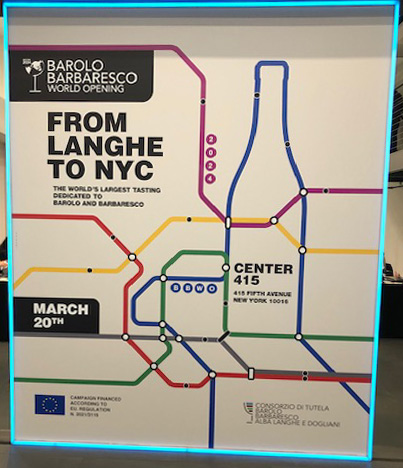
A huge tasting of Barolo, Barbaresco, and Nebbiolo from the Langhe in New York represented almost 200 producers¾probably close to half the total number of producers in Barolo and Barbaresco. The focus was on recent vintages, most often 2020 (in many cases about to be released in the U.S.), with some 2019s and 2018s, and even a few 2021s. The great surprise was how approachable the wines are: there are not so many that are actually ready, but there are few that won’t be ready within the next year or so.

This could scarcely be more of a contrast with the traditional view of Barolo and Barbaresco, that the wines need at least a decade before you even begin to think about opening them. To be sure, earlier maturation is a world wide trend, but perhaps because Nebbiolo has never been focused on fruits that in principle could come to the fore to hide the tannic structure, the increase in approachability is an even greater contrast with tradition than it is, say, in Bordeaux and Burgundy.

Increased ripeness and management of tannins has narrowed the gap between Barolo and Barbaresco. Indeed, ‘fruity’ appears in my notes for wines from both appellations, something that I don’t believe has ever happened before for either Barolo or Barbaresco. Evidence of fruit may be a touch more common in Barbaresco, but the result of this lightening of style is that the difference between Barolo and Barbaresco has narrowed, to the point at which they would be difficult to distinguish in a blind tasting.

2018 is the classic lighter vintage from Barolo, very tempting for consumption in restaurants, as the result of rain during the season. There were not many examples of the vintage at this tasting, but those that were presented showed well even against 2019, which is considered a more classic year. Perhaps the 2018s are showing better than expected because few single-vineyard wines were made this year, and the grapes went into the communal wines. The 2020 vintage is perhaps a touch lighter than 2019 which (perhaps because of the extra year in bottle) seems to have a little more richness at this point. From limited samples, 2021, also referred to as a classic vintage, seems a little tighter than 2020.

There does not seem to be much correlation between the new lighter style and the aging regime, that is, whether the wine ages in large botti or in barriques. Some of the wines did show a very slight sense of spice, but it would probably be over-imaginative to put this down to new oak: in fact, I would have to say that I did not taste any wines at all where I could really detect oak directly as a flavor component. If there is a trend, it is backing away from barriques with more focus on large oak.

A few wines gave a more modern impression, by which I mean a softer, fruitier impression on the palate; a few wines went in the other direction and showed an obvious sense of structure in the form of tannic dryness. But the main impression is a consensus about style in the sense of a determined effort to make the wines more approachable sooner, if not quite immediately. Aside from the few wines at each extreme, it would be an extremely astute taster who could identify aging regimes.

At the other end of the scale, I am left wondering how many wines will really have extended longevity. My average tasting note said, start in 3 years, and drink for a decade. At a comparable tasting 20 years ago, my average note would probably have said, don’t start for 10 years and then drink for at least another 10 years. On the other hand, it is almost certainly true that the wines made in the recent vintages will be enjoyable to drink overall for just as a long a period as the wines of the past , even if that period starts much sooner. The swings and roundabouts of outrageous fortune (to misquote Hamlet and mix metaphors) is the unresolved question as to whether today’s wines, at their peak, will reach the same level of complexity as those of the past.

The Answer to Terroir Does Not Lie on the Skin

The most common descriptor associated with terroir is “undefinable”—it’s attributed to a mix of influences including soil, exposure, and climate that create distinctive character in the wine coming from different vineyard sites. At its simplest extreme, it is scarcely rocket science to accept that grapes (or for that matter any other crop) will be quite different if grown in a sunny, well drained spot at the top of a hill from those grown in a shady, waterlogged spot at the bottom of the same hill. That reductio ad absurdum disguises the fact that there can be vineyard sites which to all appearances are identical in all the parameters you might think distinguish them, but which nonetheless consistently produce different wines. No one to date has been able to explain this mystery in any rational way.

A large part of the mystique of wine would disappear if we could explain terroir on a scientific basis, but there is actually little threat from the latest attempt, a report in the Proceedings of the National Academy of Sciences from a group at the University of California, Davis headed by Dr. David Mills. The basic finding is that microorganisms on the skins of the grapes are different in various vineyards in California. These observations were made possible by the ability of rapid DNA sequencing to identify large numbers of microorganisms without the need actually to culture them.

So vineyards in different places have different sets of bacteria and fungi, very likely related to both region and climate. Wind, temperature, and humidity were identified as pertinent factors. This is scarcely a major surprise. But that’s a far cry from supporting the conclusion that “these differences may help explain regional patterns in wine chemicosensory properties,” which is quasi-scientific speak for arguing they might be involved in terroir.

For these microorganisms to be involved in determining wine character, they would most likely need to play some role during fermentation (their mass could scarcely be sufficient to provide any significant level of flavor components in themselves). Well, here is a problem. A significant proportion of the microorganisms that were detected are so-called spoilage organisms, which if allowed to act on the grapes in fact spoil the wine. Precautions are taken to prevent this (most typically the addition of sulfur to block bacterial or fungal action before fermentation).

In fact, wine producers divide into two groups on the issue of the role of yeasts in fermentation. Probably most producers in California are in the group who kill off all the indigenous yeasts before fermentation; cultured yeasts are then added. This provides control of the process and prevents spoilage organisms from acting, making it quite unlikely that any yeasts or bacteria on grape skins are involved in determining wine character.

Some producers allow fermentation to be catalyzed by indigenous yeasts. But here is an interesting point. In spite of a longstanding general belief that this is part of the properties of the vineyard (which makes the present article appear somewhat less than novel), it appears that the yeasts that actually catalyze fermentation are different every year. Eminent oenologist Ribereau-Gayon said, “In a given vineyard, spontaneous fermentation is not systematically carried out by the same strains each year; strain specificity does not exist and therefore does not participate in vineyard characteristics.” So it is hard for this to explain terroir. Curiously, the present paper finds that there is greater vintage variation between small vineyards than between wider areas (but this is based on a comparison of only two years). To make a case that microorganisms are involved in terroir, wouldn’t you need to show that there is some consistency in them over substantial periods of time?

The microorganisms also differ from regards to grape variety, again not a surprise, as grapes with thin skins (more easily damaged) are likely to attract different microorganisms from tougher grapes with thicker skins. This goes back to the point that many of the microorganisms are in the spoilage class, and the last thing you want is for them to affect wine character.

My bet would be that if microorganisms are involved in terroir, it would be more likely to be those in the soil that act on the roots of the grapevines, and which might therefore indirectly affect the properties of berries as they develop. Maybe the answer lies in the soil.

Reference: http://www.pnas.org/cgi/doi/10.1073/pnas.1317377110