Traditional Winemaking in Mendoza

Visiting producers of Cabernet Sauvignon in Argentina and Chile last month, I spent some time trying to define regional and sub regional typicities. In Chile there’s a certain sense of restraint, perhaps making a halfway house between old Europe and the more forceful fruits associated with the New World style.  Maipo Valley was elegant, Colchagua more obviously structured, and Apalta the most silky. In Mendoza, well really in Luján de Cuyo since that’s where the serious Cabernet is to be found, the fruits are a bit more forward, but not nearly so obvious as, say, Napa. Both countries have a tendency towards varietal wines at entry level and blends at top level, although the blends are different: with Carmenere in Chile and with Malbec in Mendoza. In spite of that, I found the same difference between the varietal wines and the blends; where direct comparisons were possible, the varietal Cabernet has more of a linear purity, the blend smoother and broader and (to my mind) often more interesting with age.

But my attempts to define the wines in terms of terroir and climate were brought up short by a visit to Bodega Weinert in Mendoza, where winemaker Hubert Weber marches to the beat of a different drum. “The new style of winemaking is not very friendly for aging; if you concentrate on blackcurrant aromas and intensity, aging potential is reduced. Bodega Weinert is classic winemaking -I am not looking for intensity of young aromas, I am looking for complexity of flavor.  The wine spends up to five years in 2000 liter casks of old wood. Gran Reserva is the model,” he says. The lead wine is the Cavas de Weinert, a blend of Cabernet Sauvignon, Malbec, and Merlot. The blend stays constant in varietal composition, and is not produced unless all three varieties are of sufficient quality. It was declassified in 1995 because Hubert didn’t like the Cabernet, and in 1998, 2001, and 2005 because of problems with the Merlot. In some years, when one variety is exceptional, there may be a varietal bottling under the Estrella label.

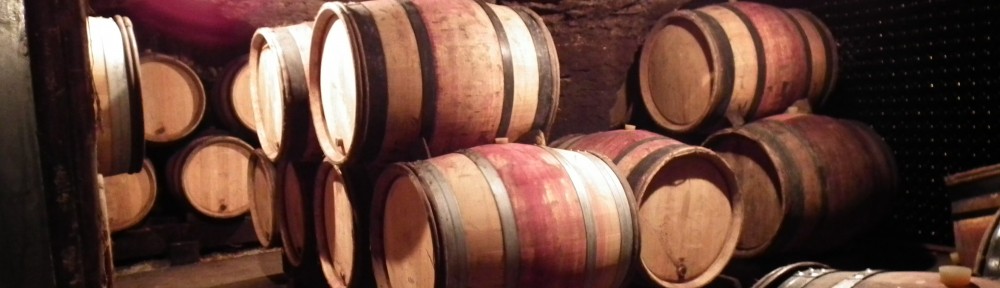
Casks at Bodeha Weinert

Old casks are used to age the wines at Bodega Weinert

With no exposure to new oak, the wines make a distinctive impression: the primal quality of the fruits to come through, showing a savory, almost savage, impression with  age. And the wines certainly age: vintages were lively back to 1977 in a vertical tasting. Younger vintages seemed more dominated by Cabernet, older vintages more by Malbec. I also tasted two of the Estrella wines. A Cabernet Sauvignon from 1994 was still intense and barely showing the austerity of the variety; a Merlot from 1999 showed refinement, and seemed to be aging scarcely any more rapidly than Cabernet Sauvignon. As you go up the scale at Weinert, the wines start out more fruity with faintly savory overtones, and then at the top of the scale the fruits are still there of course (in fact they are more intense) but the savory and even animal notes become predominant. You might say that the wines show an increasingly traditional European flavor spectrum.

So what price terroir and climate as the defining features for common qualities in the wine? I decided my conclusions about different regions were all valid, just so long as the winemakers stayed within the bounds of a certain commonality of approach.  But once the consensus is broken, it’s the winemaker’s hand that shows.

Tasting Notes

Estrella Cabernet Sauvignon, 1994

The immediate impression is savory and developed, with notes of barnyard and gunflint, all integrated with the underlying sweet ripe fruits. There’s still a lot of intensity. This is a powerful wine with an interesting blend of savory and fruity elements, supported by balanced acidity and smooth, firm tannins. Notes of gunflint on the finish really bring the wine to life, with the savory to fruit balance at its peak, almost salty in its overall impression. Only at the very end do you see the austerity of pure Cabernet Sauvignon beginning to take over. No one could call this wine elegant – it has too much intensity for that – but the balance should allow it to continue to age for another decade at least. 14.5% 92 Drink to 2024.

Estrella Merlot, 1999

This Merlot bucks the trend for clay terroir by coming from relatively sandier soils. It spent three years in cask and ten years in concrete before bottling. Initially this seems full and ripe, showing Merlot’s characteristic presence on the mid palate, with the typical barnyard notes of developed Merlot and just a touch of pungent gunflint. But there’s a finer impression than comes from Merlot grown on its more traditional clay, with an impression of refinement that’s unusual for the variety, and there isn’t much impression this will be much shorter lived than the Estrella Cabernet. 91 Drink to 2027.

Cavas de Weinert 2004

This is the current release. The immediate impression are those characteristic savory, almost pungent, almost piquant, notes. Smooth and ripe on the palate, there’s a sensation of coated black fruits. Tannins underneath the fruits dry the finish, but overall the impression is quite glyceriny. There’s an openly delicious quality. 14.5% 89 Drink to 2022.

Cavas de Weinert 1994

Development has taken a slightly different path here, in fact the nearest parallel would be the 1977 Cabernet Sauvignon, as there are only some hints of savory notes and more of a delicate, almost perfumed impression. Apparently this wine has gone up and down, and appeared oxidized a year or so ago, when it was taken off the market for a while, but then it recovered. There’s a slight sense that the smooth fruits are beginning to dry out, allowing the tannins to show more as a dryness on the finish, which is a little nutty. 14.5% 88 Drink to 2016.

Cavas de Weinert 1983

Savory and animal with pungent overtones of gunflint, overall contributing to a slightly sweaty impression (perhaps a touch of Brett). The smooth palate tends to opulence but is beautifully cut by the savory overtones. This is at a perfect tipping point from fruity to savory (although it’s probably been here for a while). Hubert sees this wine as having become more dominated by Malbec over the past five years; indeed, it shows more Malbec as it develops in the glass, becoming smoother, more elegant, more perfumed, less animal. 93 Drink to 2019.

Cavas de Weinert 1977

We compared two bottles. Around 2004 one lot of wines was recorked for an importer who insisted on having fresh corks. The rest remain under original corks. The difference was like night and day. The wine under new corks showed slightly oxidized fresh fruits with hints of raisins; otherwise the wine remains youthful, with the evident fruits lacking savory overtones, and a little restricted in flavor variety. By contrast the wine with the original corks has more of that classic savory impression, with rather restrained fruits, kept lively by an acidic uplift. Matching the greater tertiary development, the color is also a little more garnet. Compared with the varietal Cabernet Sauvignon of the same year, the wine is a little more developed and a little less obvious. 92 Drink to 2019.

Blending Cabernet: it’s the history, stupid

In Bordeaux they will tell you that Merlot is the perfect partner for Cabernet Sauvignon, because the Cabernet doesn’t always ripen reliably on the left bank, and the fleshier tones of Merlot complement it by filling in the mid palate. In Napa they will tell you that Cabernet Sauvignon ripens so fully and reliably here that there is no need for Merlot; it makes a complete wine in itself. In Chile they used to follow the Bordeaux model by blending the Cabernet Sauvignon with Merlot; but then it turned out that most of the Merlot wasn’t Merlot, it was really Carmenere; they did not throw up their hands with horror, tear out the Carmenere and replace it with real Merlot; now instead they make a point of producing varietal Carmenere or of blending it with Cabernet Sauvignon. In Argentina, if they blend Cabernet Sauvignon, it’s usually with Malbec, which is the predominant black variety. In nineteenth century Bordeaux, Cabernet Sauvignon was usually blended  with Malbec and Carmenere as well as Cabernet Franc: the Malbec was replaced by Merlot, and the Carmenere disappeared after phylloxera struck. The blend everywhere is as much a matter of historical accident as a deliberate search for what varieties best complement one another. So the question is whether Cabernet Sauvignon still needs to be blended, given that the climate is warmer  in Bordeaux than it used to be, and that the other areas where it is planted are mostly warmer than Bordeaux anyway.  And if it does need to be blended, what other varieti(es) really give the best complexity, and are they necessarily the same in every region.

Even though Bordeaux has experienced warmer temperatures in the past decade, tastings of barrel samples have convinced me that the Cabernet Sauvignon makes a more interesting wine when it is blended. As a single varietal wine, it tends to have very pure, precise, but more linear flavors: it broadens out to become more interesting when blended. I believe the same is actually true in Napa, but not for the conventional reason. Young Napa Cabernets can be so bursting with fruit that you really do not see any need for any other variety to round out and complete the flavor profile. But wait a few years. As those primary fruits drop out, the wine begins to become more linear, more austere, the bare bones of Cabernet show more clearly, and you feel that by ten years of age it would very often be improved by some Merlot, which brings more interesting savory development.

A recent visit to Chile left me wondering about the rationale for blending Cabernet Sauvignon with Carmenere. If you think you have difficulties ripening Cabernet Sauvignon, try Carmenere – which usually harvests about one month after the Cabernet Sauvignon. That alone shows you why it became untenable in Bordeaux. Even in Chile, where the Cabernet ripens quite reliably, Carmenere can be questionable; it needs to be grown in the warmer sites. When it ripens fully, it develops a smooth, elegant palate, with tannins that seem more supple than Cabernet Sauvignon, and it brings elegance to a blend. When it does not ripen successfully, it has something of the same herbaceousness as Cabernet Sauvignon itself, so it’s something of a double or quits game.

Malbec is somewhere between Merlot and Cabernet Sauvignon: not as fleshy as Merlot, but certainly smoother and more supple than Cabernet Sauvignon. Under peak conditions, Malbec may be a more interesting blending partner for Cabernet Sauvignon than Merlot, because the tannic structure is complementary: the more supple character of Malbec adds smoothness to the tighter structure of Cabernet Sauvignon. It doesn’t fill in on the mid palate in quite the same way, so the wine tends more to elegance than fruit-driven power.

For roughly a hundred years, from its rise following the phylloxera problem in the 1880s until a couple of decades ago, Merlot was the perfect blending partner for Cabernet Sauvignon. This is not true in the warmer climates of Napa and Chile, where the “Merlot collapse problem” describes the situation in which Merlot goes straight from green, herbaceous character to over-ripe jammy character, with too narrow a chance to catch it at the right point. I sometimes wonder whether Napa’s concentration on varietal Cabernet Sauvignon isn’t due as much to their difficulties with Merlot as to the attractions of the Cabernet. I am inclined to wonder whether Syrah would be a good choice, since it has richer tannins than Cabernet and can add a touch of aromatics that increases complexity, but Napa seems fixated on a bimodal view: it’s either Cabernet or it’s a Bordeaux blend. Syrah  might also do well in Argentina and Chile, but the accidents of history mean that Malbec and Carmenere are well entrenched. Come to that, it may be time for Bordeaux to reconsider, because in the 2009 and 2010 vintages, the Merlot became so ripe and alcoholic that in many cases it was impossible to blend it into the Grand Vin and it was relegated to the second wine. (An amusing paradox here, since that can make the second wine higher in alcohol than the Grand Vin, and the concept that higher alcohol goes with wines at higher appellation levels is well entrenched in the French hierarchy.) How about going back to Malbec or Carmenere in the Medoc – or maybe Syrah.

Bring Back the Merlot

I got to thinking about Merlot when I was tasting Cabernet Sauvignon in Napa last week. Now I have never been much of a fan of Merlot, I’m not an enthusiast for Pomerol, for example, because I find those fat lush fruits less interesting than the more restrained flavors of Cabernet-dominated blends in the Medoc. And even though the last couple of vintages have had their problems in Napa, I think it’s a fair point that the extra ripeness that Cabernet achieves there may make it unnecessary to fill in the mid palate with Merlot the way that has been traditional in Bordeaux. Although at the Napa Premiere tasting of the 2007, 2008, and 2009 vintages, it seemed to me that more than a few of the Cabernets (especially from 2008 and 2009) cried out for some Merlot on the mid palate (or cried out for something closer to 20% than the 10% they actually had). But it wasn’t so much the younger wines that made me think about the virtues of Merlot as the older ones that I tasted during the week, ranging from 1985 through to 1995.

Many of the older wines had a really sparse quality, a sort of Spartan palate, with the bare bones of tannic structure poking through the black fruits of Cabernet. No matter how delicious and full of fruit those wines were when young,  age may not have exactly withered them, but certainly it allowed the full austerity of Cabernet show through. The other striking feature was that although they had certainly matured, with the fruits lightening and changing from primary to secondary aromas and flavors, in very few cases was there much evidence of that delicious savory quality to which Bordeaux turns when old. It seems to me that the development of savory qualities, extending to what the French call sous bois (forest floor) is needed to compensate for the lightening of fruit flavors as the wine ages. I have begin to wonder whether this is something that happens more naturally with Merlot, or with a blend of Cabernet Sauvignon and Merlot, than with  Cabernet alone. I discussed a direct example of this previously in The Retarded Development of Cabernet Sauvignon. I think it is more difficult to find examples of pure Cabernet Sauvignon that has aged interestingly than blends.

Not that Merlot is dispensable in young wines; in can add refinement and elegance – but there’s a rub. Merlot is rarely planted on the best terroirs. If you ask in Bordeaux about the match between variety and terroir, the answer is usually that each variety is planted on the terroir that’s best for it. But the fact is that Cabernet is planted on the best terroirs – the gravel mounds – and Merlot is planted on the clay-rich soils where Cabernet won’t ripen. I have found two interesting exceptions to this rule, one in Bordeaux and one in Napa.

Chateau Palmer in Margaux is famous for having Merlot planted on gravel mounds, on terroirs that any other producer would have devoted to Cabernet. This goes back to an enthusiasm of Édouard Miailhe in the 1950s, when Merlot was heavily planted at Palmer, reaching as much as 60% of the vineyards. It was partially reversed at the end of the 1960s, bringing the level down to 47%, although this is still high compared to other producers. Palmer 1961, which represented one of the icon wines of the twentieth century, was only 30% Cabernet Sauvignon. No one knows why Palmer 1961 reached the heights of the first growths, but to my palate it was much in line with the 1959, 1962, and perhaps 1966 vintages – all of which had a very high proportion of Merlot planted on gravel, before it was cut back. Has Palmer ever achieved those heights again? Could this merely be coincidence?

I had a similar epiphany at Screaming Eagle when tasting barrel samples of Cabernet Sauvignon and Merlot to compare with the blend. Even within this small vineyard, the terroir varies from gravel at the eastern edge to more clay at the west of the vineyard. The Merlot came from a block of vines planted in 1987 on the best – for which read gravel – soils. Although Screaming Eagle has Cabernet on gravel and Merlot on clay, they are not slavishly devoted to the idea that they must follow the old Bordeaux rules, so there is some counter thinking, with Merlot on gravel, as well as some Cabernet on a clay plot that gives good results. The Merlot was elegant and refined, with a very fine grained texture that I don’t usually associate with the variety. But then again, I don’t get to taste much Merlot grown on gravel. I think that Merlot makes a significant contribution to the refined quality of Screaming Eagle.

Palmer and Screaming Eagle are, to my mind, hard examples to argue with. The problem with Merlot may be that, when it’s grown in company with Cabernet, the Cabernet usually gets first choice of terroirs. In Bordeaux, this means it’s never as refined. In Napa, the Merlot is often a bit too coarse – indeed, I wonder whether deficiencies in the Merlot are partly responsible for the focus on pure Cabernet Sauvignon. So bring back the Merlot, I say, plant some on your best terroirs, and make wines that will be truly refined when young but will mature into a gracefully savory old age.

Where Has All the Cabernet Gone?

Bordeaux is the world’s largest producer of Cabernet Sauvignon, with 28,000 hectares planted. Only a small part – perhaps 15% – goes into wines dominated by Cabernet Sauvignon; the rest is blended into wines where the dominant component is Merlot. Generally unknown, but running a fairly close second in plantings, is the south of France, with 22,000 hectares altogether in Languedoc and Provence (mostly in Languedoc). But how many interesting Cabernet-driven do you know from the south? What are they doing with all that Cabernet?

I spent a week in the Languedoc last month looking for Cabernet as part of the research for my book Claret & Cabs. I found half a dozen interesting producers and obtained a renewed respect for the practice of blending, whether with Bordeaux varieties or others. I wanted to know whether Cabernet Sauvignon in the south retained a typicity like Bordeaux or more resembled the warmer climates where it is grown in the New World.

I started my tour at Finca Narraza in Roussillon, not far from Perpignan just north of the Pyrenees, where Corinne and Gérard le Jan have a twenty year old vineyard of Cabernet Sauvignon. Interestingly, there’s just as much vintage variation here as in Bordeaux. Cabernet does well when the climate is Atlantic, but can be difficult to handle when it rains and the wind comes from the mountains or when the weather is too hot and it ripens too quickly. The main cuvée is an equal blend of Cabernet and Syrah, and the dominant influence seems to vary with the year. In either case, it’s fair to say that the wine shows more the aromatic influence of the south than of Bordeaux.

An interesting opportunity to see what a Bordeaux blend achieves in the south came from Verena Wyss, near Pezenas.  In the Belcanto cuvée, the structure of the Cabernet comes through quite clearly, but the aromatics are more those of the south, fruity and perfumed, than of the more savory tradition of Bordeaux. “There is no problem ripening here; it  is warmer and drier than Bordeaux. The training system needs to protect the fruit against excess heat, the opposite of tradition in Bordeaux where it needs to ensure good sun exposure. The problem here is not getting good maturity, it is avoiding over-maturity; the only answer is to harvest when the grapes are ready and not wait too long,” says Verena.

Another interesting insight came from the ability of Petit Verdot to ripen reliably in this climate,  which enables Verena to produce the La Tonga blend of 60% Cabernet to 40% Petit Verdot. Her I felt that the spiciness of Petit Verdot dominated the palate, making an attractive young wine, but I wondered whether it would age well. I received a partial answer when I visited Marc Benin at the Domaine de Ravanès, just a little farther west, where there is both a 100% Petit Verdot and a 50:50 blend of Petit Verdot with Merlot. “I don’t want to make a Bordeaux, I want to make a wine of the Languedoc, but with the Bordelais varieties. Here the Petit Verdot achieves the same maturity as the Cabernet Sauvignon and gives an interesting, structured wine,” Marc told me. Tasting these wines from 2002 and 2000 showed that Petit Verdot really matures very slowly indeed; I was left uncertain whether it would ultimately develop the same interest with age as Cabernet Sauvignon. But a vertical tasting of monovarietal Cabernet Sauvignon from 2007 back to 1995 showed some difficulty in getting a complete structural balance. The youngest vintage showed nicely concentrated fruits, but still a good way to go to maturity. “The Cabernet can be too strong. It’s not ready to drink straight away, you need to wait 3-4 years,” Marc said, explaining why he now blends the Cabernet with Merlot. Older vintages showed nice development, much along the lines of traditional Bordeaux, with savory and even herbaceous elements coming out. I was left with the impression that, just as in Bordeaux itself, blending produces a more complete and complex wine. A similar classic impression came from the Cabernet-Merlot blends at Domaine de Perdiguier, close by, where I revisited the question as to the typicity of Cabernet Sauvignon in the south. These wines sufficiently resembled Bordeaux AOC as to provoke me into realizing that by now I had made the transition into looking for something different in the south.

The pioneer for Cabernet Sauvignon in the Languedoc is Mas de Daumas Gassac, where the blend has now settled down at around 80% Cabernet Sauvignon with the remaining 20% consisting of a wide range of varieties, including the traditional Bordeaux varieties. The other varieties vary somewhat: initially they were mostly Malbec, Tannat, and Merlot; by 1990 they were described as Cabernet Franc, Syrah and Merlot; and today the label just says “several other varieties.” Daumas Gassac is not looking for the modern jammy fruity style. “We belong more to the Bordeaux 1961 attitude—wine with 12.5% alcohol and good acidity. Only 15% new oak is used to get finesse. The wine is no more typical of Bordeaux than it is Languedoc,” says Samuel Guibert, the current winemaker.

Almost adjacent, however, is the Domaine de la  Grange des Pères, where the attitude is almost the antithesis of Daumas Gassac but the wines are equally interesting. Daumas Gassac today, albeit way off the beaten track, is a modern facility with a snazzy tasting room, and constant trek of visitors.  Grange des Pères has a utilitarian appearance, it’s not especially easy to make an appointment with Laurent Vaillé who is nothing if not reticent, but the rendezvous, if successful, takes place in the working cave, where samples can be tasted from barriques. The wine is a blend of roughly equal proportions of Syrah and Mourvèdre with a minor component of 20% Cabernet Sauvignon. Minor, but essential. “The Cabernet Sauvignon is like salt in food. I do not want Cabernet Sauvignon to dominate my assemblage. Grange des Pères should have a southern character, but with freshness and that’s what the Cabernet Sauvignon brings,” says Laurent. Tasting barrel samples, you can see what each variety brings to the blend. All are rich and powerful with a good level of tannins, the Syrah full of rich, deep back fruits, the Mourvèdre distinctly spicy, and the Cabernet herbal and fresh. It’s not so much the acidity of the Cabernet as such, but the tightness of its structure that freshens the blend. Without it, the wine would have more of that jammy fruit character of warm climates. So here the Cabernet in effect is playing a moderating role on the sheer fruit character of the other varieties: almost exactly the opposite of the role it plays elsewhere as a “cépage ameliorateur” in strengthening weak varieties.

Over in Provence, the pioneer for blending Cabernet Sauvignon with Syrah was Eloi Dürrbach, who planted the vineyards at Domaine de Trévallon, near Saint-Rémy-de-Provence, just south of Avignon, in 1973. In the (relatively) cool microclimate at Trévallon, the two cépages play the traditional complementary roles: Cabernet Sauvignon can be austere, but Syrah softens it (without acquiring the jammy notes of the southern Rhône). Barrel samples of the two varieties before assemblage (which takes place only just before bottling) show more similarities than differences: in the 2010 vintage, both cépages showed dense black fruits with good tannic support, with the Syrah just a touch more aromatic and the Cabernet just a touch sterner. The interesting comparison was with a pre-assemblage blend, made because there wasn’t enough of either separate cépage to fill another foudre.  The increase of complexity was obvious, combining roundness with precision, sternness with aromatics. Usually the Syrah is a little more evident as an influence than the Cabernet, says Antoine Dürrbach, but it varies from year to year. There is no attempt here at instant gratification: usually the wine does not open up for ten years, he told me, but then it will last another decade. Indeed, the 2001 vintage was just beginning to open up in October 2011. I would be inclined to say that it has something of the aromatics of the south combined with the texture of Bordeaux. The whole is certainly greater than you might expect from the sum of the parts tasting the individual varieties.

My last stop to investigate blends of Cabernet with southern varieties was at Domaine Richeaume, farther east in Provence, located just underneath Mont Sainte Victoire. The backdrop to the vineyards could be a painting by Cézanne. There’s a small production of monovarietal Cabernet Sauvignon, the Columelle cuvée of Cabernet and Syrah, with a small component of Merlot, and the Tradition cuvée which is equal Cabernet Sauvignon and Grenache. The Cabernet gives the impression that seems to prevail with a monovarietal all the way from Bordeaux to Provence: more precision and elegance than the other varieties or even than the blends, but less completeness, just not quite filling in entirely on the mid palate. Syrah by itself goes the other way: lovely aromatics to the fore. Columelle is a good compromise: Syrah aromatics with that structure of Cabernet underneath. I wasn’t quite sure with the Tradition whether Grenache was filling in the fleshiness the Cabernet lacks by itself, or whether the Cabernet was giving structure to an amorphous Grenache, but it did not seem to me that the marriage was a complementary as Cabernet and Merlot.

They are quite disdainful in Bordeaux about growing Cabernet in the south. “It’s a big mistake,” the Directeur at one second growth blurted out when I asked what he thought about growing Cabernet there. “There isn’t any Cabernet in Languedoc,” one senior figure on the Bordeaux wine scene said, when I mentioned that I was visiting Cabernet producers there. But there are certainly interesting wines, based on Cabernet Sauvignon or containing a significant proportion of it, in Languedoc and Provence. They are no challenge to Bordeaux, not because they are necessarily inferior to it, but because their overall flavor spectrum is different: whether the Cabernet is a monovarietal, blended with Bordeaux varieties, or blended with other varieties, it takes on at least a partial tinge of the aromatics of the south. But none of the top wines fit into the rules for AOC, and they have not been imitated to any significant extent by others. So they create no halo effect to lift up the region. And in terms of the total production of Cabernet Sauvignon in Languedoc and Provence, my attempts to identify wines of character might account perhaps for a couple of hundred of the twenty thousand hectares. What are they doing with the rest?

The vast majority of Cabernet Sauvignon in the Languedoc goes into relatively inexpensive brands, produced on a relatively large scale for France. In fact, the Languedoc is France’s largest source for varietal-labeled Cabernet Sauvignon.  (The authorities would not give me any official figures for production of Cabernet Sauvignon in the Vin de Pays of the Languedoc, but I calculate there must be around 10 million cases of Cabernet Sauvignon or wines based on Cabernet. This compares with a total production for generic AOC Bordeaux of around 25 million cases, most of which has Cabernet Sauvignon only as a minor component.) Should the Bordelais be quite so disdainful of the varietal-labeled brands under the Vin de Pays labels? Given the inroads that have been made into the market at the level of Bordeaux AOC by varietal-labeled New World wines, isn’t the Languedoc more a threat by fifth column since it combines the mystique of being French with the varietal-labeling that appeals at this level of the market, and a more forward, fruit-driven style?

Finca Narraza, Vin de France, 2008

This equal blend of Syrah and Cabernet Sauvignon shows an impenetrable black color. A touch of reduction on the nose rapidly blows off. The black fruits of cherries and plums show an impressive density on the palate, supported by fresh acidity and firm tannins that are integrating nicely. The impression in this vintage is dominated more by Syrah than Cabernet, as indicated by the rich, plummy aromatics. It’s a more powerful wine than the 2009, albeit just a touch rustic in its overall impression. It will no doubt show greater smoothness in a year or so and should drink well for up to a decade. 89 Drink 2013-2021.

Finca Narraza, Vin de France, Cuvée Raoul Blondin, 2008

An impenetrable black color with a stern nose, although this is 80% Syrah and 20% Cabernet Sauvignon. Some savage notes to the nose resemble Syrahs of the northern Rhone. The dense black fruits on the palate are ripe and unctuous, deep and long, with a chocolaty texture. The Cabernet Sauvignon gives extra backbone to this basically Syrah-dominated wine. The structure is somewhat buried under the density of fruits but should support aging for a decade. A very fine effort. 90 Drink 2013-2021.

Verena Wyss, IGP d’Oc, La Tonga, 2007

This wine is a blend of 60% Cabernet Sauvignon and 40% Petit Verdot.  Spicy nose has intense aromatics. The classic notes of Petit Verdot are really evident, with a peppery spiciness on the nose showing as all-spice on the palate, which is full of flavor and character. The deep fruits show as blackcurrants and plums, with ripe tannins in the background. The Petit Verdot gives that Rolls Royce sense of power, but does it make the flavor spectrum just a touch monotonic? 90 Drink-2020.

Verena Wyss, IGP d’Oc, Belcanto, 2007

Belcanto is a Bordeaux-like blend of 60% Cabernet Sauvignon, 30% Merlot, and 10% Petit Verdot. It shows a medium to deep ruby color with a touch of garnet indicating the first development. The restrained nose gives an impression of black fruit with some floral notes. The underlying structure shows the influence of Cabernet Sauvignon quite clearly, with smooth black fruits supported by ripe tannins. At first the tannins hide behind the fruits, but then they come through to show as dryness on the finish. This elegant wine is certainly Old World not New World, but shows a touch more overt aromatics than would be found in Bordeaux. 90 Drink now-2021.

Domaine de Ravanès, Coteaux de Murveil VDP, Petit Verdot, 2008

Petit Verdot matures well in the Languedoc, offering the opportunity to make a varietal wine. Actually, the Petit Verdot at Ravanès is usually kept for blending into the top wines, but in this year it was interesting enough to make a monovarietal, without wood exposure. The year had a dilute character overall, but the wine shows the purity of the Petit Verdot fruits. The spicy nose might easily lead you to believe there had been oak exposure. Dense fruits show purity of line similar to varietal Cabernet. This shows very well as a young wine, but there is a certain direct focus that suggests aging won’t bring out real flavor complexity. You can certainly see what Petit Verdot brings to a blend. 88 Drink now-2016.

Domaine de Ravanès, Coteaux de Murveil VDP, Cabernet Sauvignon, 2007

This was the last year a monovarietal Cabernet was produced. It is still a dark ruby purple, showing very much a Cabernet nose with austere black fruits. Ripe and rich fruits dominate the palate, supported by ripe tannins. Very good extract but still not quite ready. Nice texture: there’s no exposure to wood so the forcefulness of the Cabernet fruits comes right through from this good year. 88 Drink 2013-2018.

Château de Perdiguier, Vin de Pays des Coteaux d’Enserune, Cuvee d’en Auger, 2007

This blend of 85% Cabernet Sauvignon and 15% Merlot spends a year in new oak. It has more evident concentration and roundness than the regular bottling. This vintage is still a deep ruby color with little sign of development. Black fruits on the nose have an austere edge with a touch of smoke and chocolate. The palate of ripe black fruits shows a touch of classic herbaceousness on the finish, but accompanied by a chocolaty texture. Tannic support shows as dryness on the finish. 88 Drink now-2017.

Château de Perdiguier, Vin de Pays des Coteaux d’Enserune, Cuvee d’en Auger, 2001

Dark color with only a slight touch of garnet developing. Restrained but classic nose with those herbaceous hints of bell peppers. Nicely rounded on the palate with good freshness and attack; the bell peppers come back on the finish. This gives a rather classic impression of a Cabernet Sauvignon dominated wine, although it’s half Cabernet and half Merlot. 87 Drink now-2014.

Mas de Daumas Gassac, Vin de Pays de l’Hérault, 2008

This is an elegant wine with Cabernet Sauvignon represented in a lighter style. Fresh on the nose and palate with a slight spiciness and some aromatic complexity. The Cabernet is identified by notes of cedar, with  lively fruits on the palate which show a faint savory touch of the garrigue. For the south this is a restrained style. Good variety of flavor across the palate supported by an unobtrusive structure with tannins well in the background.  88 Drink-2017

Mas de Daumas Gassac, Vin de Pays de l’Hérault, 2006

Nose shows fresh red fruits and a touch of nuts with intimations of complexity. Elegant fruits on the palate, following the red spectrum of the nose. There’s a touch of savory influence from the garrigue. Opening up in the glass, the wine shows its delicacy, yet with the fine structure and tannic support of Cabernet. It brings back memories of some of the more delicate older vintages of Bordeaux.  90 Drink-2016

Domaine de Trévallon, 2001

This vintage is just beginning to start its evolution. It’s a medium density color with some garnet on the rim. The nose is quite developed, and shows gunflint with a touch of some tertiary barnyard aromas. The palate is less developed than the nose, showing ripe blackcurrants and plums, but the tertiary notes come back on the finish. Tannins show as dryness on the finish. Personally I’d wait another couple of years for the peak, after which the wine should hold for some time.  91 Drink now-2020.

Domaine Richeaume, Vin de France, Columelle, 2009

Black fruits drive the nose. Freshness on the palate cuts the ripeness of the fruits, which show the typical aromatics of Syrah. Although the Syrah dominates the palate, there’s a sense of restraint and finesse, which is perhaps due to the Cabernet. The overall impression is fine grained and elegant. 30% of American oak was used here. 90 Drink 2012-2020.

Domaine Richeaume, Vin de France, Cabernet Sauvignon, 2008

Some evolution on the nose has occurred in the last year. It’s a touch reduced, with some hints of gunflint and a touch of barnyard. The black fruits are quite stern on the palate. This is less open, less overtly fruity than the Cabernet blends. The good fruit concentration comes back on the finish where ripe tannins are evident. The developed notes of barnyard certainly cut the fruits: it’s an interesting question whether they will become complex enough to offset the lightening of concentration as further maturation occurs. This wine was matured exclusively in French oak. 88  Drink 2012-2018.

Pichon Lalande Tasting

A vertical tasting of Pichon Lalande with Sylvie Cazes in New York gave surprises about both chateau and vintages more than confirming expectations.

When I investigated second wines a few years ago, I came to the conclusion that they are indeed second best not only with regards to the grand vin of the chateau but also with regards to other wines at the same price. In comparative tastings, it usually seemed that a Cru Bourgeois at the same price point was a better wine than the second wine of a Grand Cru Classé. Since then, especially with good vintages becoming more frequent, second wines seemed to have improved somewhat, but at this tasting I was not especially impressed with either vintage of the Réserve de la Comtesse. The 2006 seemed just to be a little too thin; blind I would have taken it for a Cru Bourgeois somewhere towards the bottom of the hierarchy. The 2003 fared a bit better, but did not seem very convincing. In neither case did it seem that the second wine was a bargain based on applying the expertise of the chateau at a lower price level, which is the usual justification.

The 2005 Pichon Lalande gave real pause for thought about the vintage. I’ve never thought of Pichon Lalande as one of the most “international” of the chateaux – nothing like as exotic as Cos d’Estournel, for example – but this seemed like a throwback to the seventies. Unmistakably Cabernet-dominated, the fruits never seemed to come to life, and I was left with the impression that they might dry out before the slightly hard tannins resolve. Where was the supposed opulence of the vintage? Some notes reminded me of 1996 or 1975, with a possible imbalance developing between fruit and acidity. It definitely did not show nearly so well as the 2004, a nice wine for drinking now.

The 2003 fared relatively well insofar as it hasn’t fallen apart like so many, but nothing will persuade me that this was a great vintage, as it was being described. Where’s the elegance, where’s that traditional lightness of Bordeaux? The only thing to do with 2003s is to drink them up – or sell them off at auction.

The 2000 was a big surprise: last time I had this wine it was developing distinctly herbaceous notes. Today they showed more as cedar with some vegetal overtones. The nose was so totally different from anything else at the tasting that the lady next to me decided her glass must have a problem, and asked for another pour in a fresh glass. This wine supports those taking the minority view that for some chateaux, 2000 was not as good as 2001.

The most fascinating comparison was between the  Cabernet-driven 1996 (75% Cabernet Sauvignon) and the Merlot-driven 1995 (45% Cabernet Sauvignon). The 1996 was the one wine that was really characteristic of its vintage: very classic, savory and herbaceous – in style more like the seventies than the eighties. But I think it still has a bit too much acidity and tannin for it really to mature to a classic. By contrast, the 1995 was absolutely delicious: it’s come right around in the past five years and is the peak of perfection for a left bank Merlot, soft and supple but with adequate structure. So much for the Medoc being best in the Cabernet years.

The 1985 was for me the wine that had  it all: classic herbaceous notes in a context of ripe, sweet, but savory fruits: the wine of the tasting. This was not the vintage I would have picked out ahead of time as the most likely to excel. A few years ago the 1975 was showing as one of the best wines of the vintage, a slightly tighter version of what the 1985 has become today, but now the 75 has passed its peak, and the high toned aromatics suggest it is in decline.

The motto: never mind the Ides of March: beware the Vintage of  the Century. 1975 has never fulfilled the expectations raised at the time (vin de garde, my foot), 1996 is not going to come around (another vin de garde that won’t make it), 2000 may be going into decline, and 2005 may not make it. The wines showing best were 2004 (a lovely restaurant vintage) and 1985 (never hailed for its longevity at the outset). It ain’t so easy as they think to judge these vintages en primeur.

Tasting Notes

Réserve de la Comtesse, 2006

Slightly spicy black fruit nose gives a fresh impression. There’s a light fruit impression on the palate with a touch of vanillin. Crisp acidity leaves a tang on the finish and gives some emphasis to the light tannins. Overall impression is that the palate is driven by relatively light Cabernet fruit. A little too acid, a little too light in fruit concentration, this is relatively disappointing for the second wine of a super-second.  86 Drink-2016.

Réserve de la Comtesse, 2003

First touch of garnet in appearance suggests some development, but not much evident on fresh black fruit nose, except a bit of lightening in fruit intensity. Palate shows very good acidity for 2003, black fruits with vanillin overtones, but the fruits already are beginning to dry out and the tannins are beginning to stick out just a little. Not a bad result for the vintage but somewhat lacking in focus.  86 Drink-2014.

Pichon Lalande, 2005

Medium ruby color already with a touch of garnet. A mellow nose has a very faint touch of nuts. The palate is smooth and fresh, not at all the blockbuster you might expect from the reputation of the vintage. The overall impression is quite classically Cabernet-driven, fruits with a touch of asperity backed by tannins that don’t seem very generous, decent structure to age well, although softening a little in the glass to become nuttier. Blind I would put this down as an average rather than great year, and in short, more of a throwback to the classic style than would be expected from 2005.  88 Drink 2014-2021.

Château Pichon Lalande, 2004

A garnet touch to the color suggests some development. The fresh black fruit nose gives a faint impression of perfume. Nice balance on the palate between black fruits, just a touch of asperity from the tannins shows retronasally, but overall the tannins are quite soft. This is a very good result for the vintage, producing a wine that will drink well now and hold for a few years. A perfect restaurant wine.  88 Drink-2018.

Château Pichon Lalande, 2003

Age indicated by medium garnet color with some orange at rim. Black fruit nose shows blackcurrants and a touch of cedar, even a faint touch of herbaceousness on the nose, somewhat surprising for this vintage. Rich and chocolaty on the palate, with tannins that are ripe but giving a faint impression of being over cooked. The wine becomes a touch hard on the mid palate in the glass. It may be that the tannins will outlive the fruits. The wine is not falling apart, as many are, but it gives a slightly clumsy impression, not atypical of this vintage. It should be drunk in the near future.  87 Drink-2015.

Château Pichon Lalande, 2000

This wine is full of surprises and has changed yet again. What appeared as herbaceousness two or three years ago now shows as an intense cedary aroma on the nose, following through to palate and finish. The dusky garnet color still appears relatively youthful. It is hard to pick out the fruits on nose and palate against the background of cedar, but they seem to be in good balance with the acidity and tannins. The wine gives a very dry, classic impression: it is lean rather than opulent. 90 Drink-2021.

Château Pichon Lalande, 1996

Medium garnet color. Classic nose, with fruits turning savory, although no tertiary development yet. Completely classic on the palate, a throwback to the seventies in style, dominated by the Cabernet Sauvignon. Savory black fruits have a touch of herbaceousness, with the sense of bell peppers carrying through the long finish. The acidity is less pressing here than in some wines of the vintage. This should continue to mature in the classic style – which is to say savory with vegetal overtones rather than overtly fruity – until the tannins overtake the fruits.  89 Drink-2020.

Château Pichon Lalande, 1995

This wine is now at a delicious point, much softer and more open than the 1995. The garnet color is beginning to lighten up. The nose shows notes of nuts and semolina, giving over to slightly more vegetal notes (nut less intense than a few years ago). The palate is soft, supple, and  fleshy – the antithesis of the classic 96. This is really delicious right now; although there is decent structure, it does not have great potential longevity.  90 Drink-2016.

Château Pichon Lalande, 1985

The hit of a vertical tasting of Pichon Lalande. Lightening garnet color. Classic nose showing bell peppers and a touch of cedar. Acidity quite noticeable on the palate, which generally follows the nose. Beautiful balance, now a point with savory fruits not yet turning tertiary. Elegant and delicate, with bell peppers strengthening on finish. Very fine grained structure. A bit of a surprise that this year should end up with such a completely classic development.  92 Drink-2016.

Château Pichon Lalande, 1975

This wine probably peaked about five years ago, when it showed an absolutely classic aroma and flavor spectrum of a left bank, Cabernet-dominated wine. It’s still in the same tradition, but the fruits are beginning to dry out. It’s a lightening garnet color with a touch of high toned aromatics on the nose. The fruits on the palate start out surprisingly sweet, but the touch of bitterness intensifies in the glass: you have the sensation that the fruits are drying out in the glass, allowing the bell peppers to become more dominant on the finish. Slowly the dryness of the finish takes over.  88 Drink up.

The Best Terroir is the Best Terroir

How far can you take terroir? It seems blindingly obvious that some sites produce better wine than others: it is not rocket science to suppose that a sunny spot in the middle of a well drained slope will produce better wine than a cool, shady, damp spot at the bottom.  And I am prepared to buy the fact that slight differences in terroir can reliably produce different nuances in the wine: I was quite convinced of this by several series of pairwise comparisons in Burgundy when I was researching my book on Pinot Noir. Other convincing examples come from comparing, for example, Ernie Loosen’s Rieslings from different vineyards in the Mosel. You can’t mistake the fact that these wines are consistently different, although all made in the same way. But the unresolved question that sticks in my mind is whether different terroirs match different grape varieties or whether the best terroirs are simply the best terroirs. (The middle of that slope would probably produce better plums, apricots, or apples than the bottom.)

I was much struck by this issue when visiting Pinot Noir producers in Germany. All of them, of course, also produce Riesling; in fact, for most of them the Pinot Noir is little more than a sideline. Everywhere in Germany, Riesling is planted in the best terroirs. Those terroirs that aren’t quite good enough for Riesling are planted with other varieties. But where is Pinot Noir planted? Are there spots that are really suitable for Pinot Noir but where Riesling would not succeed? This does not seem to be the case. Pinot Noir is a demanding grape, and it is usually planted in spots that would also have made good Riesling. The best terroirs are the best terroirs, and it’s a matter of choice whether Riesling or Pinot Noir is planted there. And as for the effect of terroir on the nature of the wine, I saw similar effects on both Pinot Noir and Riesling: more minerality, more sense of tension in the wines from the volcanic soils in the north, to rounder, fatter wines from the limestone soils in the south, and softer, lighter wines from sandstone soils in the east.

Is it a general rule that every wine region has a top variety (or varieties) that take the best terroirs? Even on the left bank of Bordeaux, where you hear a lot about the perfect match between Cabernet Sauvignon and the gravel-based soils, it’s really more the case that the gravel-based soils are the best terroirs – so Cabernet Sauvignon is planted there. Merlot is planted in the spots that couldn’t ripen Cabernet Sauvignon. I’ve yet to hear a proprietor extol a vineyard for the perfection of the match of its terroir to Merlot – I suspect the match is more faute de mieux.

Are there regions that grow multiple top varieties where we could test the argument that there are terroirs that are equally good but suited for different varieties. Burgundy seems the obvious case, where the contrast is increased by the fact that Pinot Noir is black but Chardonnay is white. Isn’t it the case that the terroirs of Puligny Montrachet, Chassagne Montrachet, and Meursault, are uniquely suited to Chardonnay whereas those of (say) Nuits St. Georges, Clos Vougeot, and Gevrey Chambertin are uniquely suited to Pinot Noir?

Not exactly. The focus of the appellations to the south of Beaune on white wine is quite recent. Until the second half of the nineteenth century, Puligny Montrachet was mostly planted with Gamay, Chassagne Montrachet was almost exclusively red, and Meursault was divided between red and white wine. The area that is now Corton Charlemagne mostly produced red wine until the twentieth century.  And in the eighteenth century, Clos Vougeot’s white wine was almost as highly regarded as Le Montrachet, as indeed was a white Chambertin. Could we at least argue that the change is due to better understanding of what grape varieties are suited to each terroir. No:  it’s the economy, stupid.

When fashion has swung to and fro on red wine versus white, plantings have followed. Here’s a modern case in point. Beaune’s Clos des Mouches is one of the few vineyards that have both black and white grapes. But there isn’t any pattern to the plantings that follows details of terroirs: in fact, rows of black and white grapevines are more or less interspersed, according to what was needed when replanting last occurred. And as Chardonnay has proved more profitable than Pinot Noir, there’s been a trend towards replanting with Chardonnay.

If the best terroirs are the best terroirs, what determines the best variety for each location? Well, climate is no doubt the most important factor: heat accumulation and hours of sunshine are basically going to determine whether and when the grapes reach ripeness.  Are the best terroirs simply those where historically the grapes have ripened most reliably? On the hill of Corton, where the plantings of Chardonnay for Charlemagne stretch round to the western end of the hill, where Pinot has trouble in ripening, you might argue that the best terroirs are planted with Pinot and second best with Chardonnay, although I have to admit that they make wonderful white Burgundy.

So here is the challenge. Are there examples where two terroirs in the same vicinity give different results with two grape varieties of the same quality (and color if we want this to be a rigorous test)? If one terroir gives better results with one variety and the other terroir gives better results with the other variety, then I will withdraw my conclusion that the best terroir is the best terroir and matching grape varieties is down to climate.

Cabernet Sauvignon: To Blend or Not to Blend

One of the questions I’ve begun to think about as I start the research for my book on Cabernet Sauvignon is whether the traditional difference between blended wines in Bordeaux but varietal wines in Napa is still justified.

Blending in Bordeaux originated as a protection against failure of any one variety in a climate that was marginal (at least for the varieties being grown). Cabernet Sauvignon did not ripen reliably every year on the left bank, so blending with varieties that ripened more easily (originally with Malbec, later with Merlot) offered two advantages: adding riper flavors to the wine than would be obtained with Cabernet Sauvignon alone; and being able to vary the composition of the blend to respond to failures and successes each year. It also allowed more vineyard area to be cultivated, since Merlot will ripen in spots where Cabernet is not successful. (On the right bank, of course, Cabernet Sauvignon is even harder to ripen and so is generally replaced by Cabernet Franc, but the same principle applies). Even today, with warmer vintages and better viticulture, there is still significant variation in annual usage of each variety; Chateau Palmer, for example, has varied from 40% Cabernet Sauvignon to 68% in the first decade of this century.

The contrasting focus on monovarietal wine in Napa Valley comes partly from the move to varietal labeling that was stimulated by Frank Schoonmaker after the second world war, and which became standard in the New World. (Before then, most wines were labeled by reference to Europe with generic names such as Claret or Burgundy.) Of course, at first the situation in California was not in fact too different from that in Europe, because the rules were so lax that a wine could be labeled with a varietal name so long as it had more than 50% of the variety. Slowly the rules became tightened until reaching today’s minimum limit of 75%. The rationale for making monovarietal Cabernet Sauvignon is that the grapes ripen more reliably in Napa than they did in Bordeaux, the result being that the mid palate is full of fruit, and does not need to be filled in by Merlot or other varieties. Proponents of monovarietals would argue that Cabernet Sauvignon achieves a full flavor spectrum in Napa without needing assistance from other varieties, in fact, I suppose they might take this argument to the logical conclusion of saying that you can only really appreciate the full varietal force of Cabernet Sauvignon if you don’t weaken it with other varieties.

But do these arguments for a fundamental difference in approach still hold up? In the past two decades, climate change has seen temperatures in Bordeaux warm to basically those that Napa showed in the 1970s. Napa has also warmed up a bit, but the gap has narrowed. Climate change has caused somewhat of a change in attitude to winemaking. One of the themes of my book is that prior to 1982, the issue in Bordeaux was trying to get Cabernet to ripeness; the issue in Napa was taming the ripeness to achieve a Bordeaux-like elegancy. Post 1982, a change in consumer attitudes meant that riper, fuller wines were desirable – no more of that touch of herbaceousness that characterized traditional Bordeaux. Coupled with the move to picking on “phenolic ripeness” rather than sugar levels, this led to increasing alcohol levels in the wines. Now the problem everywhere is to control the ripeness. It’s still true that Napa reaches greater ripeness than Bordeaux, typically resulting in an extra per cent of alcohol.

Is it the case that this extra ripeness means that Cabernet Sauvignon is complete in itself or is it true rather that blending even with small amounts of other varieties increases complexity? Should the Bordelais reconsider their view that monovarietal Cabernet Sauvignon is uncouth; or should the Napa producers move to blending in at least a little Merlot to add variety? Before trying to answer this question, it seems to me that the basic facts need to be established. After all, wines labeled as Cabernet Sauvignon in Napa can have up to 25% of other varieties, and even small amounts of secondary varieties can have a significant effect on taste. I remember a blending exercise we did on a Master of Wine trip to Bordeaux where it was surprising what a difference it made to the feeling of completeness in the overall blend when just a tiny percentage of Petit Verdot was included. The question is whether in comparing Bordeaux and Napa we are comparing blended wine with monovarietal wine, or whether we are comparing wines blended with a smaller overall proportion of Cabernet Sauvignon with wines blended with a greater proportion.  So I propose to begin by trying to establish the constitution of wines that are varietal-labeled by determining just how many are really 100% Cabernet and how many have a minor component of another variety. That should be the starting point for an investigation of whether the best wines will be made by blending in Bordeaux but not in Napa. Of course, the answer might depend to some extent on the criteria: mine will be for complexity and elegance in the wine.

In the Médoc, there is a de facto association between quality and Cabernet Sauvignon. The first growths have higher average levels of Cabernet Sauvignon than the second growths, the other grand cru classés are lower, and cru bourgeois are lower yet. (Some of the top wines have more than the 75% Cabernet Sauvignon that would be required for them to be labeled as varietals in Napa!) Whether this is due to the fact that the first growths have better terroir (that is, more reliably capable of ripening Cabernet Sauvignon) or is due to more commercial factors is hard to say, but the fact is that there’s a correlation (albeit rather a loose one) between proportion of Cabernet Sauvignon and position in the marketplace. What does this tell us about Napa, where the majority of wines have more than 75% Cabernet Sauvignon (that is, are varietal-labeled), although they do not necessarily show a price advantage over other Cabernet-based wines. Some of the most expensive cult wines are labeled as Cabernet Sauvignon, others as Proprietary Red. (Of course, whether the varietal-labeled wines are monovarietal remains to be seen.) Cabernet-based wines are certainly at the top of Napa’s hierarchy, but they don’t have to be varietal-labeled.

Which leads me to another thought. The difference between wines of the Médoc and Napa Valley has narrowed since the turning point of 1982. There is a convergence on what is sometimes called the “international” style, focusing on fruits. Partly this is due to Bordeaux closing the temperature gap with Napa, partly it is due to adoption of shared attitudes on viticulture and vinification. (Also notable is the fact that Bordeaux has increasingly moved in the direction of Merlot to obtain those richer flavors: plantings of Cabernet Sauvignon in Bordeaux peaked at 32% in 1990 but today are only 24%, although the Médoc remains around 60%.) It is definitely more difficult to be confident of distinguishing the wines in blind tastings. So to what extent are the differences due to the focus on blending in Bordeaux as opposed to varietal focus in Napa? Would the answer become clear from a comparative tasting of Meritage wines (Bordeaux-like blends from Napa) against Napa or Bordeaux? And of course back to the basic question: what makes the best wine?

Cults and Icons: Cabernet versus Merlot

I’ve just started the research for a book on Cabernet Sauvignon, which I’m calling Claret & Cabs to emphasize the comparison between the classic style of Bordeaux and the New World style. A large part of the book will focus on Bordeaux and Napa Valley, but I plan to try to identify interesting Cabernet Sauvignons made elsewhere, especially from regions that aren’t well known. I suspect that this will be a more difficult task than it was for Pinot Noir in my last book, and I wonder whether that is because Cabernet is less of a terroir grape than Pinot, so style is more determined by the winemaker, giving power to the big battalions rather than to small producers exploiting unusual terroir niches. Anyway, that’s a topic for a future blog.

Another difference between Pinot and Cabernet is that cult wines are much less a feature of the world of Pinot. Are cult wines concentrated on Cabernet Sauvignon, Merlot, and Syrah, rather than Pinot Noir, Nebbiolo, and Sangiovese because the first group can give heavily extracted, powerfully intense wines, whereas the second group is more about delicacy? (Is this a metaphor for the state of the modern world?)

Claret & Cabs will conclude with a chapter on Cults and Icons, and I’ve spent the last few days trying to decide what makes a wine qualify. The First Growths of Bordeaux clearly have iconic status, in fact they’ve had it ever since, indeed before, the 1855 classification. One question I will ask is whether that has always been justified. The other question is which other chateaux should be included – the super-seconds perhaps? One noticeable feature of the list, however it exactly comes out, is likely to be that it consists exclusively of major chateaux.

This is a big contrast with the situation in Napa Valley, where the majority of cult wines are based on the managed scarcity of tiny production runs. It’s not quite so easy to define the cult wines here. In Bordeaux, you can pretty much rely on the relative pricing, which has a structure firmed up by the last couple of centuries of distribution through the restrictive practices of the Place de Bordeaux (essentially the local market of negociants).  Consistent pricing is not so readily available for Napa Valley, but whether you define cult wines by taking a slice at the top price tier, say over $250 per bottle, or in terms of Parker points, a feature in either case is that production is often under 1000 cases, sometimes only 300-500 cases. (The correlation between pricing and critics’ scores, for which I take the Wine Advocate as definitive, is more distant for Bordeaux than it is for Napa, presumably because the 1855 classification and other historical factors have a greater influence, and indeed I shall look at this in a future blog.)

In any case, the fairest comparison for the cult wines of Napa Valley might be more with the limited production garage wines of the right bank of Bordeaux than with the great chateaux of the left bank. But the garage wines are virtually all Merlot, either monovarietal or heavily dominated by it. (Is the lack of garage wines on the left bank due to the fact that the chateaux there are so successful already they feel no need for them?) Since the book is specifically on Cabernet Sauvignon, however, I’m going to have to compare the top wines of the left bank with top wines of Napa. Should I use simple criteria of price or critical scores or should I filter the results by demanding a certain scale of production? At the height of the craze for garage wines, a producer on the right bank who was not participating, said to me, “it’s easy enough to produce high quality wine on a miniscule scale by using all the tricks of viticulture and vinification, but the real issue is to get quality wine when you have tens of hectares to cultivate.” I’m still struggling with the issue of whether wines that are only available on limited mailing lists, indeed where you can see the inheritance of a place on the list being fought over, should be regarded in the same light as wines in general distribution that anyone can buy. Some time in the next few months I have to decide on my criteria for including wines in the final chapter: all suggestions welcome.