A Visit with Ernie Loosen

Not only is Dr. Loosen one of the top producers in the Mosel, but Ernie Loosen is one of the most interesting people to visit, as he has a wide range of activities and trenchant opinions on many issues. A day spent with Ernie is an insight into trends in wine production in Germany in general and the Mosel specifically.

Ernie’s mother and father were both single children who inherited wine estates. He is the first dedicated winemaker in the family: his grandfather was in business, and his father was a lawyer. The estates were regarded as an investment, although Ernie’s father later became fully involved as a retirement activity. Ernie took over in 1988, and combined the estates under one name (previously they had been separate in Bernkastel and Urzig). Bernkastel is his mother’s estate, which produced only sweet wines. His paternal grandfather thought that sweetness was a fault, and his estate produced only dry wine until 1953 when it changed to fruity-style wines. Ernie introduced dry wines when he took over. Here in a microcosm is the great change in Germany to trocken (dry) wines.

Ernie recollects that sweet wines took over after the war because the technology became widely available. Ernie’s view is practical. “Before the technology the only way to have sweet wines was to do it naturally. The barrels of sweet wines got the higher prices, so this led to a drive to have technology that would make it generally more feasible. After the war, sweet was absolutely big, everybody wanted sweetness. I remember people drinking only Auslese. The demand for dry wines shrank so dramatically there was no market. My father stopped producing them when he took over in 1953. In the 1990s the whole fashion in Germany switched from fruity to dry; now we hardly sell any fruity wines in Germany.”

The ability to make high quality dry wines is relatively recent, and owes much to global warming. “It would have been more difficult for my father or grandfather to make great dry wines in their cooler conditions. We did make some great dry wines when the cellarmaster forgot to stop fermentation – there was some good 1985. But every time I drink it – it’s nice now – I wonder how it was 30 years ago; it must have been sour and not at all attractive. So I don’t see global warming as pessimistic here.”

In fact, Ernie is quite pragmatic about global warming. “The reaction to global warming is a bit fatal – we are not in the hands of global warming, we will not have to plant Syrah here in ten years. We have enough viticultural tools, we can alter yields; you used to have to reduce yields drastically to get ripeness, but we don’t have those really cool vintages like 1984 any more. My father and grandfather had only three ripe vintages per decade. We get our fruit ripe every year, but not over-ripe, that is the difference. We jumped up in the last 30 years from average ripeness at 8.5% alcohol to 10.5% alcohol – but that’s not high.”

A major difference in approach from the past is that now it’s the grapes with greatest potential alcohol that go into the dry wine. “There is selection in the vineyard right from the first day of picking, with different buckets for healthy fruit, partially botrytized (Auslese), and totally botrytized (BA etc). For the healthy grapes, if potential alcohol is less than 10.5% it goes to Kabinett, at 10.5-11.5% it goes to Spätlese, over 11.5% it goes to dry wine. We would never be able to produce only dry wines because being on the river and having moisture, we always have some botrytis.”

One of Ernie’s major concerns today is to produce dry wines that age well. “For me a great wine can only be a great wine if it has aging potential. Before 2008 we produced our dry wines mostly in stainless steel with cultured yeasts. They performed beautifully as young wines – the stainless steel really brings out beautiful fruits – but I call them poppy wines because as soon as the fruit lightened after a year they became one dimensional. The driving force (for rethinking) was a 1950 Urzig Würzgarten which was brilliant now. So what did my grandfather do? I wanted to make dry wines that will age again. So we are now making wines with more aging potential – they may not be so charming when young. I have changed many things to make the wines longer aging.”

Now there is a Reserve program for the oldest vineyard in each of the three major terroirs, with 20,000 bottles being set aside each year. In due course, these will become late releases. With lunch we had a Reserve wine from Wehlenner Sonnenuhr (not yet released): just one cask was produced, and the wine spent 24 months on full lees. It shows more depth and body than the Grosses Gewachs Sonnenuhr, with more grip and less delicacy. “This is exactly what I’m looking for,” says Ernie, “it should be closed now or it can’t open out with age.”

Comparing Loosen wines is always an exercise in understanding terroir. In the estate wines, Blue Slate is more precise and fragrant than Red Slate. In the Trocken single vineyard wines, Wehlener Sonnenuhr is delicate and elegant, Urziger Würzgarten has more weight with hints of the famous spice, Erdenner Treppchen shows slightly more herbal aromatics. Moving to Kabinett or Spätlese, the same relative differences show, but the wines are fuller bodied, with more of a delicious sweet/sour edge to the finish. As the Reserve wine program matures, there will be more opportunities to see how these differences play out with age.

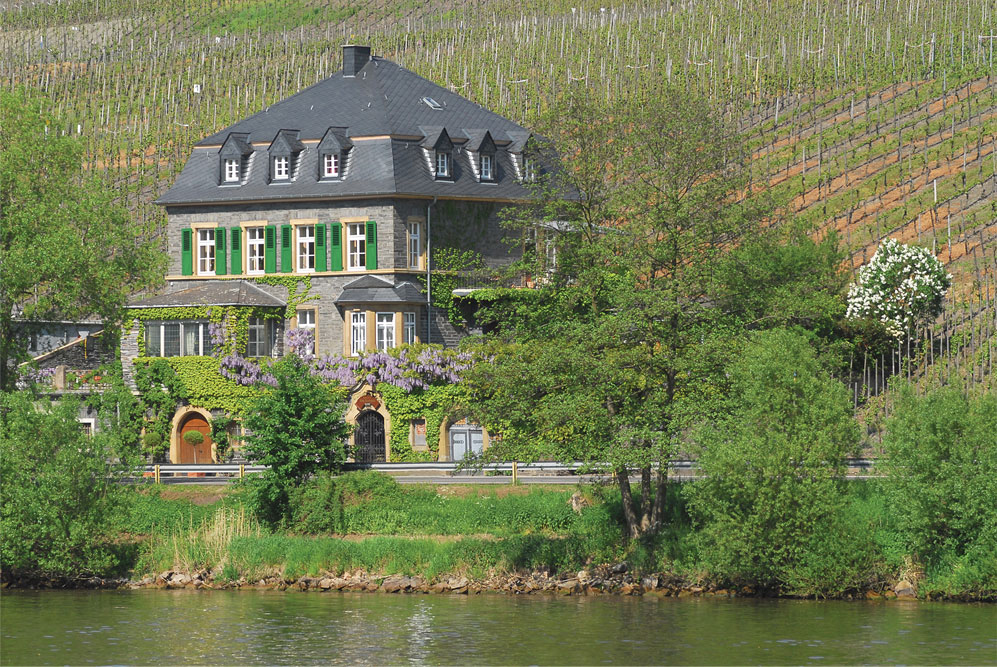
DrLoosen copySince this photo was taken, a major expansion has been undertaken and new cellars are being constructed to the right of the house.

What eBooks Have Got Right and What Amazon Has Got Wrong

With Wines of France now published, I’ve been working on an electronic edition. With 350 pages of text discussing the wine regions of France, and 250 pages for profiles of individual producers, it’s really rather big for a single electronic book, but I think it may be useful as a series of seven guides to the individual regions: Bordeaux, Burgundy, Champagne, Rhône, Loire, Alsace, Languedoc & Provence. Each guide will have the information about the region from the book plus the profiles of producers from the region, and maps to show where to find the producers for people who want to plan an itinerary.

It seems blindingly obvious that an electronic format is a good way to go for a guide, as it’s easy to include direct links, e.g. to producers’ web sites, maps of the region, or other information, and also can be updated quickly and easily. But surprisingly the eBook format is not very hospitable. The problem is that the content – like any guide – is heavily dependent on graphics – pictures of the region, maps to show appellations and vineyard locations, maps to show where to find producers, and so on – and these are difficult to handle in the electronic format. One problem is the small size of the screen; but more important is the difficulty of achieving a layout like a print book, where the big effort is always to get the graphics close to the text that relates to them.

It’s possible to do a reasonable job for the generic eBook format, although it will come off better on a tablet than an iPad. But you can see the maps in color, legends can be fixed neatly below or besides them, and text can be wrapped around them. You can’t see a two page spread, of course, but you can move around the text and maps in a pretty workmanlike way, and of course you can go off to ancillary links quite easily. For people who carry iPads or tablets around, I think this will be quite useful.

The big problem comes with the Kindle, which, after all, is more than half of the eBook market. The programming for Kindle is amazingly primitive: Amazon must have made an early decision that the main appeal would be for books which are essentially text only. (This reminds me of the disastrous decision IBM made when it introduced the personal computer, that there would be different formats for black and white screens (no graphics) compared to color screens. And it’s really difficult to see any justification for Kindle using a different format from all other eBooks.)

For the Kindle, this is not just an issue of color, although it’s certainly more difficult to use maps and so on in black and white: it’s really difficult to do any sort of layout for the Kindle, as the software essentially limits the material to flowing in strictly linear order. Many of the commands that work with the generic eBook format have been disabled for the Kindle. That’s why so many books have odd spaces and look weird. The situation is supposed to be better with the latest formats for Fire, closer to the generic eBook format, but that’s not yet a really significant part of the market. I appeal to Amazon to make it possible to integrate graphics with text for the basic Kindle, as this will open the whole market up to guide books and other books that extend beyond simple text.

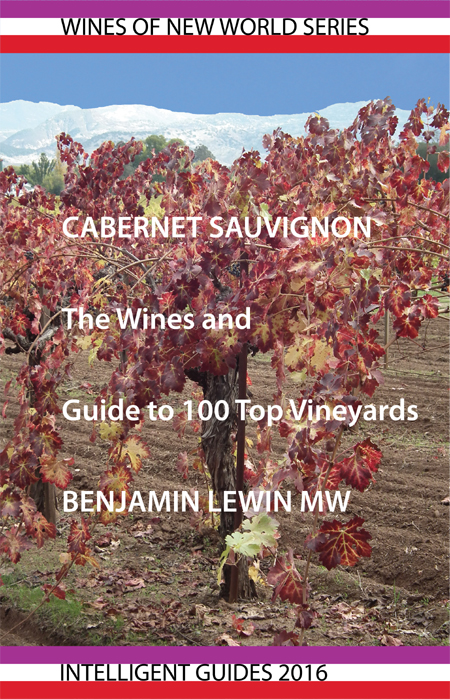
My first eGuide will be New World Cabernet Sauvignon: The Wines and Guide to Top 100 Vineyards, in a few weeks. I have some tastings to complete so that it will be really up to date, then it will be ready for release. The seven guides to French regions will follow in the New Year. All the guides will be available for both iPads and other devices as well as for Kindle, but it would be great if Amazon improved the Kindle format.

Kindle8 copy

Is Bordeaux 2012 the Restaurant Vintage of the Century?

“Lovely restaurant wine” is the phrase that appears most often in my tasting notes from today’s UGCB tasting in London of the 2012 vintage. Although there were no wines that seem to have the longevity I would require to buy for my cellar, there are many wines that I expect to enjoy drinking three to ten years from now. There are clearly significant differences between the appellations, but I do not entirely agree with the view of the vintage that was expressed at the en primeur tastings. Now that the wines are out of barrique and into bottle, it’s evident that it is too simple just to characterize this as a year when Merlot was more successful than Cabernet, although clearly the vintage has been shaped by the fact that there were heavy rains in the Médoc in late September, and October was generally wet. This made it much easier to get ripe Merlot than Cabernet.

Notwithstanding the difficulty with Cabernet, the only appellation in which I get any sense of the overt herbaceousness that used to characterize Bordeaux is Moulis-Listrac, where the wines are light but the best have enough potential flavor interest to suggest an elegant future. However, I have to admit that I do not mind a faint herbaceous edge, although not everyone will like it. Chasse-Spleen stands out for me as the best wine, elegant and taut.

Not surprisingly considering its size, Margaux is the most heterogeneous appellation. Wines range from showing noticeable tannins to having relatively soft palates, but all are distinctly light weight. The key for the short term is the character of the tannins, and the question for the mid term is how the fruits will show as the tannins resolve. In the best cases, the wines will be light and elegant in the feminine tradition of Margaux. I especially like Rauzan-Gassies for its appealing liveliness, with nicely ripe tannins. Just to the south, the glossy sheen of La Lagune gives an elegant impression that is more Margaux-like than usual. At the Cru Bourgeois level, I liked Labegorce, as much St. Julien in its precision as Margaux in its elegant femininity. Some wines may simply not have enough stuffing to withstand the loss of the initial burst of primary fruit, although in the immediate future the soft, furry palates may be quite appealing. The potential problem is that a sense of dilution may turn hollow on the mid palate.

With its compact size, St. Julien is much more homogenous and many wines make a fragrant, almost perfumed, first impression, with a classical sense of precision to the following fruits. Tannins seem riper and in better balance with the fruits than in Margaux. These will be perfect restaurant wines (if the price is right). Gruaud Larose stands out for its fragrant elegance, with tannins already integrating into an elegant palate. Beychevelle makes an impression of classic precision.

Pauillac seems less uniformly successful to me. There’s a more solid impression to the fruits and tannins. I would never use the word rustic in conjunction with Pauillac, but at this stage there is a certain robust impression, which will translate into solid fruits, but without the fragrant uplift that characterizes St Julien. Pichon Baron stands out for showing its usual power with ripe tannins and a fragrance that is unusual for the year. I also very much like Grand Puy Lacoste, which shows as a something of a half way house between Pauillac and St Julien, taut, smooth, and elegant.

It is difficult to assess St. Estèphe from this tasting as the top wines were absent, but the wines generally show a tight character with hints of the hardness you sometimes see in this appellation. As the tannins resolve, the wines should be light but relatively elegant. It is quite successful at the Cru Bourgeois level, and I especially like the light elegance of Phélan Ségur.

You would expect Pessac-Léognan to do better than the Médoc given its higher content of Merlot, and the best wines have smooth black fruit palates (smoothness is the mark of the appellation in this vintage) with nicely tamed tannins, sometimes showing a touch of the classic cigar box, but too many just seem soft without sufficient supporting structure. Smith Haut Lafitte stands out for the depth of its fruits, and Domaine de Chevalier for its sense of elegant liveliness, with a tension that is unusual in this vintage.

Over to the right back, where St. Emilion is a bit of a conundrum, Canon just edges out Canon La Gaffelière as the wine that best exhibits a classic sense of smooth opulence. Other wines seem to be moving in a more savory direction, almost pointing towards the Médoc, such as La Gaffelière and Clos Fourtet, but Troplong Mondot is the standout in the savory direction. Many seem round and soft but without much stuffing.

Pomerol shows an unusual sense of structure, with some wines displaying faint herbal overtones on opening. The ripe black fruits of Beauregard just edge out Bon Pasteur, which however is more structured than opulent, in contrast to Michel Rolland’s reputation for overt lushness. As always, La Conseillante is nicely balanced, with nothing to excess, and more underlying structure than is immediately apparent. Sometimes Pomerol is too opulent for me, but not this year.

Now that they are bottled, the whites do not seem as impressive as reports from en primeur suggested they would be. The standout for me is Domaine de Chevalier, with a beautiful balance between grassy impressions of Sauvignon on the nose and waxy impressions of fat Sémillon on the palate. This is very fine indeed, with classic elegance. Some of the wines I usually like seem to be showing a crowd-pleasing softness, quite attractive in a Burgundian sort of way, but with insufficient freshness to last.

This is not a year for Sauternes, but two wines stand out. Coutet is classically botrytized, rich and deep, and totally delicious. Climens is much lighter, really elegant and fresh, and with a beautifully balanced flavor spectrum: it may not be so long nived, but it is lovely now.

The range for me runs from wines I would enjoy in a restaurant from, say, a year or so from now, to those that I would hold for three or four years before starting. The best will offer a classic representation of their appellation in a relatively lighter style; few will be really interesting more than a decade from now. I just hope that, after the restaurant markups, they will seem as appealing economically as gustatorially.