Unknown's avatar

About Benjamin Lewin

One of 300 Masters of Wine, Benjamin Lewin has published many books, including What Price Bordeaux?, Wine Myths and Reality, In Search of Pinot Noir, Claret & Cabs: the Story of Cabernet Sauvignon, and Wines of France. He is the author of many volumes in the series on classic wine regions, Guides to Wines and Top Vineyards. He also writes the myths and realities column for the World of Fine Wine and has written for Decanter magazine. His books have been shortlisted for the prestigious Andre Simon and Roederer wine book awards. The blog records interesting wines, people, and experiences encountered while writing his books.

A Visit to Chateau Rayas

It is notoriously difficult to make an appointment to visit Chateau Rayas. Past proprietors were famous for failing to make appointments, even with their own distributors, or for hiding when visitors came. Emmanuel Reynaud is not quite so reticent, but all the same he likes to group his visitors, so that they do not distract too much from the serious business of producing Rayas.

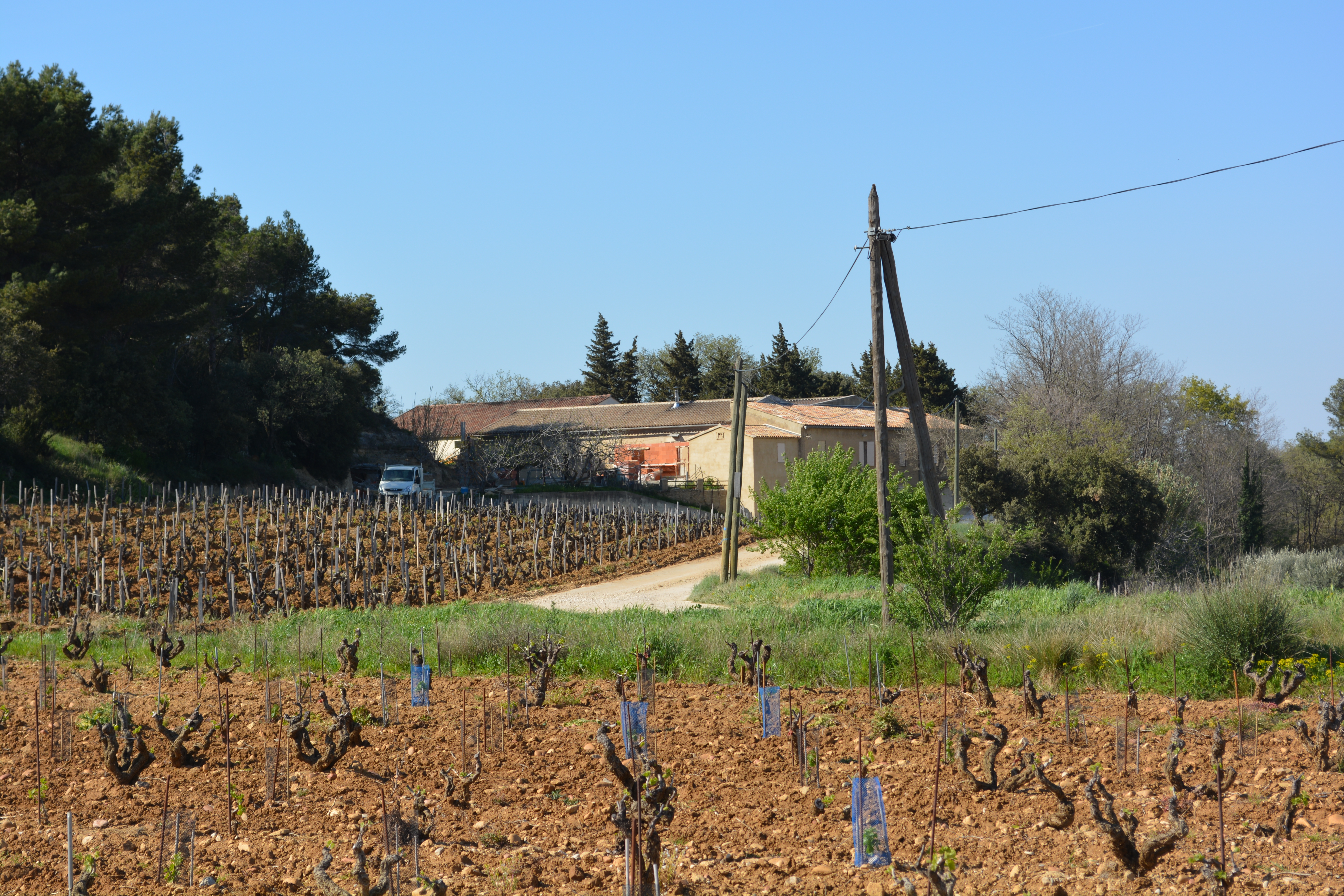
Given this history I was surprised and pleased to be able to make an appointment to visit Rayas as part of the research for my next book, and I made sure to arrive in good time. Rayas is not the easiest place to find, with a somewhat obscure dirt track entrance around the side of Chateau Valdieu. The “chateau” is a utilitarian building appearing like a warehouse on a small hill. When I arrived, M. Reynaud emerged to say that he would be ready shortly. Slowly the other members of the 4 p.m. tour arrived. This turned out to be one of the most curiously composed visits I have made to a winery. Given the reputation of Rayas, and the difficulty of making an appointment, I expected a very serious group of professionals. But one couple turned out to have no interest other than to purchase a few bottles of wine: everything was delayed while they accomplished this, and then they left.

A diminished group, we set out to explore the terroir. M. Reynaud explained that Rayas has several individual vineyards, each surrounded by the local forest. Next to the chateau is the “Coeur” vineyard. The terroir is sandy and a slight elevation relative to the surrounding countryside ensures breezes that give freshness. The other major plots are the Couchant (to the west) and the Levant (to the east). All the plantings are Grenache. A little to the north is the Pignan area, used to produce the second wine. The vines date back about 70 years, and are replaced individually as necessary; there is never any wholesale replanting. M. Reynaud is not especially forthcoming about his techniques, so I was not really able to establish his opinion on how these features contribute to Rayas’s ability to retain freshness so well.
Rayas1

One of our party was amazed by the concept that the vines were grafted: this led to much discussion about French vines and American rootstocks. When we had all that straight, we went inside for a tasting of barrel samples from Fonsalette (the Cotes du Rhône made by Rayas), Pignan (really more a wine from the northern terroir than a second wine made by declassifying Rayas), and the individual terroirs of Rayas. The emphasis here is on the reds, but there are also whites, including the white Châteauneuf that can be very good, with a savory representation of the garrigue that is quite remarkable considering its constitution from an equal blend of Grenache Blanc and Clairette.

The building lived up to expectation, or at least to its reputation for dilapidation. It’s an old two story construction, with a roof that was recently replaced. Several rough holes have been knocked in the concrete floor that separates the two storeys, presumably to allow pipes to be run through. Aside from the fermentation cuves, everything is old wood, very old wood in fact, in various sizes from barriques or tonneaux to larger containers. I asked M. Reynaud if he ever uses any new oak. “Why would I want to do that,” he said with a look of amazement. “I make wine,” he added as a further explanation. “It’s for the Americans, the new oak.”

But the quality of the barrel samples (all from the 2012 vintage) spoke for itself. The most interesting was a comparison between the three main Rayas vineyards. The Coeur was silky with much finesse, refined and sophisticated rather than fleshy. Le Couchant was warmer and nuttier (more typically Grenache, you might say), in a similar style to Coeur, but rounder, richer, with a faint sweet impression on finish. Le Levant offered a sterner quality to the nose than you usually see in Rayas itself, rich again, but with a strong sense of underlying terroir: I felt this might provide the backbone for the blend. I could see these components of the blend combining to offer freshness, fruits, and structure, but the whole is undoubtedly greater than the sum of the parts in the magic that is Rayas.

Should there be corkage on bottled water?

In the era when restaurants customarily doubled the price of wine, I felt more or less free to order any wine on the list that I could afford.  As prices slowly crept up to three times retail, I began to feel restricted, and if I could not find a (relative) bargain, somewhat confined to less interesting wines than I would usually drink. As prices routinely increased over a three-fold markup (and remember that this is really probably closer to four-fold since restaurants pay trade rather than retail prices), I reached the point of gritting my teeth and saying to the sommelier, bring me the cheapest bottle of red on the list. Now I have decided that ordering off the list is a mug’s game and I have been looking for restaurants that allow corkage.

Even in New York City, there is a surprising number. By and large, at any quality level there are some restaurants that allow corkage and some (more?) that do not, and it’s only a rare exception when a restaurant offers something so unique that I feel it is worth patronizing in spite of the absence of the corkage. The most common range is $35-$45, going up higher at some grander restaurants. The case I always make to restaurants that do not have corkage is: why don’t you charge the price of your cheapest bottle, or the average profit on a bottle, for corkage: then it will be revenue-neutral and everyone wins. Some restaurants accept it, some don’t.

I will at a pinch accept the argument that a restaurant is putting thought into providing a wine list that suits its food and that they want diners to focus attention on it. But I really find in infuriating when the list is simply put together by a distributor, it has no particular interest, and it’s just another profit center. Sometimes the wines are simply so inappropriate (and expensive) that I feel, absent corkage, I must vote with my feet. In the course of research into  corkage, I have had some interesting exchanges with sommeliers or wine directors. The Atlantic Grill informed me that they do not allow corkage but have an appropriate list with well trained staff to help diners. When I replied that I did not actually like their white Burgundy selection and found the New World whites overbearing, but I thought there might be a place for Riesling in a fish restaurant, the response came with a distinct sense of “gotcha” that there were many German Rieslings on the list, perfect for someone with my taste. Sadly, the accompanying copy of the list showed that not a single one of those Rieslings was dry. I don’t know who is going to drink off-dry or sweet Riesling with their fish, but it ain’t me.

I have started  compiling a list of restaurants that do or do not allow corkage, attached at the end here: additions and corrections are welcome. In the meantime, that brings me to water. I happen to like sparkling water with meals, but everything seems to have changed with the introduction of equipment that allows restaurants to introduce their own bubbles into tap water. This may be good for the environment because the bottling is done at source, as it were, but the stuff has a lethal taste: it is not like  mineral water, it tastes like chlorinated water with bubbles. I think it is absolutely the ruination of a good meal: it gives no refreshing uplift to counterpoise the food. Now some restaurants that have the equipment also have real mineral water for those who ask for it, but some have switched over completely and there is no alternative. My question to them is: can I bring my own Pellegrino and will you charge me corkage (screwage?) on it?

Restaurants with corkage in Manhattan:

l’Absinthe $45

Antonucci $20

Casa Lever $65

Dovetail $35

David Burke $45

Eleven Madison $75

Gramercy Tavern

Jean Georges $85

La Mangeoire $30

Marea $75

The Mark $75

The Modern $45

Picholine $50

Sette Mezzo $35

Spigolo $35

Tocqueville $45

Union Square Cafe $20

Restaurants that do not allow corkage:

Atlantic Grill

Cafe Boulud

Crown

Daniel

Le Bernardin

Veritas

Vico

Experiments at Chateau Margaux: fining, filtration, and closures

You might think that once a wine has gone through alcoholic and malolactic fermentations, and been matured for months in oak barriques, that the die was set. Not a bit of it: the continuing experiments at Chateau Margaux show that there is an effect from every stage of what I suppose you might call finishing procedures. “Once again it is impossible to deny the differences, which is somewhat frightening,” was Paul Pontallier’s comment at the end of the tasting.

Once simply part of the routine of producing red wine, fining has become somewhat of a controversial issue, and is now one of the most obvious differences between Old and New World. When I was discussing Cabernet Sauvignon with producers in the course of researching my book Claret and Cabs,  virtually every producer in Bordeaux told me they fine, and almost all producers in Napa Valley said they avoid fining just like filtration.

Fining was introduced as a procedure to lighten the wine, the traditional process being to add egg whites to the barrel. Albumin protein in the egg whites is positively charged, and so reacts with negatively charged tannins to precipitate them. The conventional argument is that this softens the wine by removing harsh tannins and also polishes it by taking out other components. Critics ask why the egg whites should act only on harsh tannins and take the view that desirable tannins and other components might equally well be affected. And, of course, over the past ten or twenty years, tannins have become much riper so you might well ask whether they still need to be removed. (Most producers who continue to find do use fewer egg whites now than they used to.)

Well, the answer at least in the context of Bordeaux, is absolutely clear: the 2004 Chateau Margaux fined with 6 eggs tasted like a completely different wine from the unfined example. Some people thought they could see a difference on the noses of the two wines, but personally I thought they were indistinguishable (and I am a bit hard put to see why volatile compounds might be removed by fining). But the unfined example had more evident tannic grip, less finesse, and came up just a little shorter on the finish. The fined sample simply gave a distinctly more polished impression, not just because of less tannin, but with a sense of being altogether better rounded. Chateau Margaux as you will find bottles in the shops, by the way, has been fined with 5 egg whites per barrel since 1996.

Filtration seemed to have less effect, as tested by comparing unfiltered Chateau Margaux 1995 with sterile-filtered wine. There was no detectable difference on the nose, and the balance on the palate seemed very similar. The main effect to my mind was that the sterile-filtered example seemed like a slightly older, more developed wine, with a touch of sous bois that was not evident on the unfiltered wine. Most participants preferred the second wine, but that depends somewhat on whether you prefer your wines younger or older. Paul Pontallier felt that the filtered wine had actually deteriorated a little due to a touch of oxidation. I can’t say that I would describe the filtered wine as eviscerated or having lost character as a result of filtration, but I suppose it might be the case that the filtration removed components that protect against oxidation.

The closure trial compared Pavillon Rouge 2002 sealed with natural corks with the same wine sealed under screwcaps. There had also been a trial with synthetic corks, but apparently the results were disastrous, and in relatively short order the wine was spoiled. “It’s a good decision to use screwcaps for white wines that will be drunk in the first six months,” says Paul Pontallier, “and with what I know now I would do the same, but our dilemma is that we want to make wine that will age.” The two wines were quite different: open, round, and fruity under cork, but reserved, backward, and showing more austerity under screwcap. Interestingly, the participants split more or less equally as to which style they preferred.

Chateau Margaux is just about to undertake the construction of a new experimental cellar that will allow them to undertake even more experiments. Among future projects are looking into the properties of individual clones of grape varieties and investigating the effects of different types of pressing. “To my astonishment, many people take the view that, if it is new, it must be better,” says Paul Pontallier, “I admire their optimism, but I feel the need to experiment first.”

Experiments at Chateau Margaux: biodynamic, organic, and conventional viticulture

Far from the stuffy reputation for sticking to tradition, Chateau Margaux has one of the most active experimental programs in the world of wine. Paul Pontallier presented the results of some of these experiments in a seminar in New York this week. “I believe in doubt,” he says, explaining that he thinks viticulture and vinification should be based on knowledge gained from testing situations rather than on unsubstantiated beliefs.

The first experiment was a comparison between wines made in the 2012 and 2011 vintages from vines that had been cultivated conventionally, organically, and by biodynamics. This experiment started 5-6 years ago with a 2 ha plot—unfortunately not one of the best, says Paul—and is going to be extended to a slightly larger, more homogeneous, plot next year. The plot is divided into groups of rows that are cultivated with different methods, and every effort is made to stop treatments from spreading into the other rows. There’s more than one separate block of each type in order to minimize soil effects.

I have always been a skeptic about the effects of different types of viticulture. It seems obvious that organic viticulture is better for the environment than conventional treatments with herbicides and pesticides, but it does not seem axiomatic that it will necessarily produce fruit of better quality. Whether biodynamic treatments add anything to organic cultivation has always seemed rather doubtful to me. One problem is that no one has tested the effects in any sort of controlled way, and you might well argue that many of the well known organic or biodynamic wines are better than conventional wines simply because the producers are more skilled at what they do. So this was a very rare opportunity to see whether wines made under exactly the same conditions, but from grapes cultivated in different ways, show any differences.

The wines were tasted blind: all we knew was that the first three were from 2012 and the second three were from 2011. The immediate surprise was that in each group two wines were closely similar and the third was distinctly different. The two similar wines shared brighter fruits and acidity, more sense of aromatic uplift, more presence on the finish: in each flight the other wine had a slightly flatter profile with less finesse. My assumption that the last wine must be the result of conventional viticulture turned out to be correct. I had not expected such a striking demonstration of the advantages of organic viticulture,  but I feel the results were completely convincing.

The differences between organic and biodynamic examples were much narrower: in 2012 I had a slight preference for the organic wine, whereas in 2011 I had a very slight preference for the biodynamic wine. The differences were slight enough that I would not have argued if I had been told they were different bottles from the same lot.

Paul Pontallier says that to date they have found no objective differences in grapes or wines from the different treatments; and soil measurements this year suggested that if anything the conventional soils have more diversity. One of the most stunning aspects of the comparison, it seems to me, is that a clear difference should be evident between conventional and organic/biodynamic in only five years, given that it takes at least three years for a vineyard to be converted. Many producers whom I’ve asked about the effects of conversion say that the most significant difference appeared after something closer to a decade, so it will be fascinating to see whether these differences are sustained and broaden in the future.

Bordeaux 2010 : Musical Chairs at the Communes

At the first showing of the 2010 Bordeaux’s at the UGCB tasting in New York last week, the most common question from producers was “which vintage do you prefer, this year or 2009?” The comparison with the 2009s at the UGCB tasting a year ago is like night and day: those wines were often immediately appealing, with lots of obvious fruit extract, whereas the 2010s have a more precise, structured, impression and are more difficult to assess. Producers seem to feel almost universally that 2010 is the better year. I am not entirely convinced and am becoming worried that my palate may have been corrupted.

Differences between appellations came out more clearly this year, but in a different way from 2009. The appellations seemed to playing musical chairs, with some switches of character. Margaux shows fruit precision more obviously backed by tannins;  St. Julien shows a soft delicacy. In fact, you might say that Margaux shows a touch of the precision of St. Julien, while St. Julien shows a touch of the delicacy of Margaux. Pauillac is quite firm but often shows perfumed violets reminiscent of Margaux,  and tannins are less obvious than usual. St Emilion is unusually aromatic (some wines were too aromatic for me) and Pomerol seems to be sterner. The other turn-up for the book was that those chateaux that have been showing a move to a more modernist style–Pape Clément, Lascombes, Lagrange, Léoville-Poyferré at the forefront–reverted to more classic character, although Smith Haut Lafitte went full force international.

My concern about the future of this vintage started when I tasted through the wines from Margaux (the appellation best represented at the tasting). Almost all the wines showed classic refinement and elegance, with a very nice balance of black fruits to fine-grained tannins, but for the most part there did not seem to be the sheer concentration for real longevity. My sense is that most of the Margaux will be lovely to drink between five and ten years from now, but they may not continue to hold for another decade beyond that. Of course, if they follow the path of the 2009s, which were very approachable a year ago but many of which have closed up today, this timescale could be extended. Judging from Margaux, this is a very good vintage indeed, but I am uncertain whether it will rise to greatness. The best wines in St. Julien are the Léovilles, which have precision and fruit concentration: others have precision but do not quite seem to have the fruit concentration.

Pauillacs were mostly lovely, but with more elegance than the power you usually find, and some might almost be described as delicate. Most seem lively for the medium term, but few offer the potential for real longevity, Perhaps we should no longer expect real longevity? A word that often appears in my tasting notes from Pauillac is “superficial.” There are rarely enough wines from St. Estèphe at the UGCB to form a definitive judgment, but on a rather limited showing they seem to be somewhat Pauillac-like this year.

St Emilion seemed to show its basic varietal composition more clearly than usual. All the wines were more obviously aromatic than usual, and those with greater proportions of Cabernet Franc tended to show unusually high toned aromatics, tending to black cherries; wines where the Merlot was more obviously dominant gave the slightly sterner impression that is the reputation of the vintage. Canon and Canon La Gaffelière were the most obviously aromatic. Cabernet Franc seems to have been too ripe for any wines to show overt notes of tobacco, but there are occasional sweet hints of it. Most wines will be ready to start in a couple of years and should hold for a decade. Pomerol, with its greater content of Merlot, is usually more obviously lush than St.  Emilion, but this year seemed more subtle.

I did not get the expected impression of greatness from the Sauternes. The best had a beautiful sweetness with overtones of botrytis, but didn’t seem to have quite enough piquancy to maintain freshness in the long run. However, the wines I tasted were mostly from Sauternes, and it’s said that the standouts were in Barsac this year.

Best wines for each appellation (from those represented at the tasting which were most but not all of the top wines) were:

Pessac-Léognan: Domaine de Chevalier

Margaux: Rauzan-Ségla

St. Julien: Léoville Barton

Pauillac: Pichon Lalande

St. Emilion: Figeac

Sauternes: de Fargues

Looking back a year, I was equally surprised at both tastings, but in quite different ways. Based on reports en primeur, I expected the 2009s to be heavy if not brutish: but by the time they had settled down for the 2009 tasting, most had that characteristic acid uplift of Bordeaux to cut the rich fruits. Accustomed to those rich fruits over the past year, the 2010s seemed much tighter, but I’m not sure they’ve really got that much more structure, and in many cases it seems uncertain whether the fruit concentration will really carry them on for years after the 2009s, as conventional wisdom has it. However, in the past year the 2009s have quite tightened up, and now seem more classical; if the 2010s do the same, I may have underestimated their potential for longevity. There’s no doubt that the 2009s are more delicious and will remain so for some time: perhaps my palate has been Parkerized, but I prefer them at the moment and I’m uncertain if and when that will change.

Modernism versus Tradition in the Graves

To celebrate the sixtieth anniversary of the classification of the chateaux of the Graves, the Commanderie of New York held a dinner and tasting this week. All the chateaux had their wines from 2009 out for tasting, and there were older wines at dinner. One day after the UGCB tasting of the 2010 vintage at its first showing, there’s a fascinating comparison between the two vintages, and also looking back to the same wines at the UGCB 2009 tasting one year ago. I was especially struck by the comparison between three wines: Domaine de Chevalier, Pape-Clément, and Smith Haut Lafitte.

Domaine de Chevalier provided a textbook illustration of the difference between the vintages. Always the most precise and elegant wine of Pessac, the 2010 showed all the hallmarks of a classic vintage: lots of tension in the wine, with finely edged black fruits supported by taut tannins. No wine at Domaine de Chevalier is ever going to show forward fruits in the modern style, but the ripeness of the 2009 vintage certainly softened the edges; a year ago it was just starting to show some aromatic development, but today it’s closed up a bit, its homage to the luscious quality of 2009 has backed off, and it’s somewhat reverting to type. It looks like the 2010 vintage will be the more classic and longer lived; it’s certainly far more reserved now than the 2009 was a year ago.

At the other extreme, Pape-Clément has been the most modern wine of Pessac-Léognan since Bernard Magrez started to revitalize it. At the 2009 Bordeaux tasting a year ago, it was one of the most overtly modern wines: very powerful and full of fruits in the modern style, giving a full-throttle impression. You might say it took full advantage of the conditions of the vintage. Although when I asked Bernard Magrez whether Pape Clément had changed more than other chateaux, he said, “No, I don’t think so. The typicity is the terroir, that we can’t change, this is what gives character to the wine. One can’t make a wine ‘international’,” it seems to me that Pape-Clément has been getting steadily richer, with warm, deep, black furry fruits showing a character moving towards the right bank. The 2009 vintage has calmed down a lot in the past year: it’s still somewhat oaky, but the fruits now let the powerful structure show more clearly. In an interesting contrast, the 2010 gives a modern impression of bright black fruits backed by vanillin, but not nearly so overtly as the 2009 did at the same stage. The original impressions of both vintages accord closely with the reputations of the years in the context of a modern style.

The surprise came with comparing Smith Haut Lafitte of the two vintages. Smith Haut Lafitte has been moving steadily in a more modern direction, although not so overtly as Pape-Clément. The 2009 was certainly in the modern style on release, but the 2010 makes it look positively restrained. With lots of new oak showing at first impression, followed by soft, black fruits, and furry tannins, this is far more “international” than the 2009 or for that matter than the Pape-Clément 2010. This is a striking move in the direction of modernism. Perhaps this reflects what Daniel Cathiard told me a few months ago: “We have to listen to our consumers (sometimes). The Americans showed what they like, now the Chinese. There is an influence because we want our wine to be referred, we want to make wine that pleases our customers.” A year on from release, today the 2009 tastes like most 2010s: still modern, but with the edges more precisely defined than they were a year ago. In fact, if you tasted the two vintages blind at this point, it would not be difficult to become confused and to conclude that the ripe, forward, fruits of the 2010 were typical of the 2009 vintage, and that the greater precision of the 2009 was typical of the 2010 vintage.

The hit of the evening at dinner was the 2000 Haut Bailly, which has reached a peak of smooth, firm, elegance, with a subtle balance of flavors. It’s close to perfection at this point, with that firm density so typical of Graves, but my one cause for concern is whether it should have got to this stage in only 12 years, and what that may mean for the future. But I would guess it’s good for another decade, at least.

The dinner concluded with a comparison of Haut Brion and Mission Haut Brion 1998. This was one of those split vintages: relatively poor in the Médoc but very good on the right bank. It was also pretty good in the Graves. The Haut Brion and Mission gave the impression of a good or very good rather than top notch vintage, and although they were generally similar in style, in this year the Haut Brion definitely has the advantage over the Mission. A confirmation of the old saying that the first growths show to greatest advantage in years that aren’t absolutely top rated.

The comparison between the 2009s and 2010s was an education in not jumping to conclusions immediately after the vintage. The 2009s have really closed up in the past year; there’s been a more or less continuous loss of lusciousness and increase in structure ever since the en primeurs. This makes you wonder just how accurate the assessments were en primeur.

When did you last confuse Cabernet Sauvignon with Cabernet Franc?

Confusing things in wine is common. There’s an old story about André Simon—I think it’s been attributed to other famous wine connoisseurs also—that he was once asked: when did you last confuse Burgundy and Bordeaux? He thought for a bit, scratched his head, and said, “Well, not since lunch, anyway.” But surely everyone can tell the difference between Cabernet Sauvignon and Cabernet Franc? Well maybe not.

I bumped into a curious situation when I was researching Cabernet Sauvignon on the right bank of Bordeaux for my book Claret & Cabs. There’s really not very much at noted châteaux because it’s so difficult to ripen. Merlot of course is the predominant variety, and if there’s Cabernet, it’s usually Cabernet Franc. On the graves of St. Emilion, Château Figeac is the standout example, with 33% each of Cabernet Sauvignon, Cabernet Franc, and Merlot, and there are also a couple of other châteaux with significant amounts. The area of the plateau where these châteaux are located extends into Pomerol, so I took a look there, and discovered to my surprise that Château Petit Village was reported to have 17% Cabernet Sauvignon. I had not realized anyone in Pomerol had that much.

Then I discovered that in 2010 the reported proportion of Cabernet Sauvignon at Petit Village had dropped to 7%. Ahah, I thought, they must have discovered that it doesn’t work well enough, and pulled it out, it would be interesting to discuss this. So I made an appointment to visit the château. When word of the visit reached AXA (who own Château Petit Village), it was cancelled. “We do have some Cabernet Sauvignon on the estate, however not much (less than 7%), and our main concern there is Merlot, the main grape variety on the estate. We do not feel that speaking about Cabernet Sauvignon here is relevant to the style and personality of the wines from Petit Village,” said Marie-Louise Schÿler of AXA.

This seemed a bit over-sensitive, but I then discovered that in fact there had never been that much Cabernet Sauvignon anyway. A review of current wines mentioned that a plot of old vines that had survived the frost of 1956, and which had been thought for fifty years to be Cabernet Sauvignon, had been discovered really to be Cabernet Franc. My efforts to discuss this with René Matignon from Château Pichon Baron (also owned by AXA), to whom the report about the discovery was attributed, were rebuffed. “I prefer you address your requests to Marie-Louise Schÿler,” he responded.

So I cannot report any details about the character of this Cabernet Franc, but I do think that a plot of Cabernet Franc that could masquerade as Cabernet Sauvignon for over half a century might have something rather interesting to contribute to the future of the right bank, especially given the difficulties created by the warming climate trend. Perhaps AXA will relent and allow me to taste some barrel samples in the future.

The Fruit, The Whole Fruit, and Nothing But The Fruit.

Unless you are a winemaker, you don’t usually get to see wines immediately after they have finished fermentation, but in many ways this is the most revealing stage, before any oak or other influences have changed them. This is a real WYSIWYG situation—what you see is what you get. I had an unusual experience of comparing the products of four vineyards on a recent visit to David Abreu in Napa in tasting through a range of tank samples as the wines waited to be transferred to barriques.

David Abreu is probably the most famous vineyard manager in Napa and is responsible for establishing many of the top vineyards. He still functions as a grower with his own vineyards, making wine from only some of the production. Winemaking here follows a somewhat unusal approach, and the emphasis is decidely on the vineyard as opposed to the individual variety.

Every one of Abreu’s four vineyards—Madrona Ranch (in St. Helena at the base of Spring Mountain), Capella (just south of Madrona Ranch), Thorevilos (east of St. Helena just below Howell Mountain), and Howell Mountain (in Angwin) is planted with a mix of Bordeaux varieties. Usually Cabernet Sauvignon and Cabernet Franc are predominant. There are several harvesting picks in each vineyard–there were 6 in Madrona this year, and 3-4 in the other vineyards–and the grapes that are considered ripe on each pass are harvested and then cofermented, irrespective of variety. Abreu’s winemaker, Brad Grimes, says, “People tend to think that separating into lots and fermenting as such is more precise, but one of the advantages of taking fruits that are ready together and cofermenting is that you can usually balance out acid and alcohol.”

Certainly these samples gave more complete impressions than you usually see from barrel samples. The special quality of Madrona came through clearly; it was always the most profound, irrespective of the date of picking or the exact mix of varieties. Capella seemed to be the most refined and elegant, Thorevilos more masculine. The big surprise was Howell Mountain, where the interplay of fruit and tannins practiced an unusual deception. At first taste, the wine was surprisingly soft, round, and chocolaty: where were the famous mountain tannins, I wondered? Then 30 seconds later, the finish closed up completely with a massive dose of tannins.

All these wines will mature in 100% new French oak, so there’s a great deal of change yet to come, but it was fascinating to see the essential character of each vineyard come out so directly from the fermentation tank.

A Ripe Vintage in Margaret River

At the end of a week visiting producers of Cabernet Sauvignon in Margaret River, I wound up with a horizontal tasting of the 2007 vintage with producers of fourteen wines.

The 2007 vintage was warmer than usual and Cabernet got ripe everywhere. Given the general reputation of the vintage, I was expecting a fair number of over-ripe wines, but in fact they are rather rare.

Margaret River is a large region, with the heart of Cabernet production focused in the (unofficial) Willyabrup subregion, with wines that tend to be more robust made in Yallingup to the north, and wines that are tighter coming from Wallcliffe farther south. The vintage showed a very wide range of styles, from wines with black fruits classically cut by a herbaceous touch of pyrazines, to lighter wines dominated by red fruits, and in one case with the warm, earthy impression more usually associated with Pinot Noir. Some wines are sourced from more than one subregion, so it’s not always obvious how to relate wines to individual origins (which are not often stated on the label).

Acidity was usually in balance, and in spite of the hot year does not appear to have been over compensated (one of the problems with Cabernet generally in Australia being that winemakers are so fanatically determined to avoid contamination with Brettanomyces that they acidify to a higher level than might be strictly justified by the demands of taste).

This is certainly a very good vintage, but the succeeding vintage in 2008 was more “classical,” and I found I generally gave those wines higher scores in vertical tastings. But 2007 is delicious to drink in the next few years.

Tasting Notes

Fraser Gallop Estate, Cabernet Sauvignon

Slightly piquant black fruit nose changing in the glass to more herbal overtones. Fine, elegant black fruits, real finesse here, black cherries and plums with subtle aromatic overtones, silky tannins giving a fine-grained texture. This gives a classical impression of pure Cabernet fruits poised on the perfection of ripeness. The very faint herbal overtones on the finish should develop in the next few years to bring complexity to the finish. 14.5% 91 Drink to 2022.

Juniper Estate, Cabernet Sauvigno

Slightly austere black fruit nose tending to savory herbal impressions of sage. Precisely delineated black cherry fruits dominate palate, round and elegant, very much the pure varietal character of Cabernet Sauvignon. Firm tannins dry the finish where there is a very faint sensation of herbaceousness. A classic example of the firm style of Willyabrup. More approachable than usual from this estate. Still needs another year, but should age well for a decade. 14.0% 90 Drink 2013-2022.

Voyager Estate, Cabernet-Merlot
Herbaceous opening to the nose with black fruits hiding behind, giving a cool climate impression. Classic impression on palate of black fruits, softer than the nose would suggest, with soft, ripe chocolaty tannins, those notes of pyrazines coming back on the finish, which shows a touch of heat, but overall a fine elegant impression. 14.2%  90 Drink to 2020.

Cullen, Diana Madeline Cabernet Sauvignon

Nose of fresh red and black berries, opening out into fragrant, perfumed nose with hints of roses and violets. Sweet, ripe, elegant, well rounded fruits of black cherries and black plums, with reserved tannins holding back the fruits on the finish. Flavor variety is developing in an elegant style reminiscent of Margaux, but another year is required to let the tannins resolve. There’s some heat on the finish. 14.0% 89 Drink 2013-2020.

Leeuwin Estate, Cabernet Sauvignon

Warm nose with vanillin and nuts hiding black fruit character and giving an impression of new oak, and then some herbaceous notes of pyrazines developing and strengthening in glass. Sweet, ripe, rounded, firm style on palate, with ripeness of fruits evident but cut by herbaceous touch coming back on finish accompanied by nutty notes from new oak. Impression at this point is a little rustic from the new oak. 14.0% 89 Drink 2013-2021.

Woodlands Wines, Nicolas Cabernet Sauvignon

Slightly austere nose with impressions of cherry fruits. Fine, elegant palate of red and black cherry fruits with refined impression from silky, fine-grained tannins. Just a touch of nuts on finish. Nice balance, needs another year to let the tannins resolve and fruit flavor emerge to show a wine some real finesse in a lighter style. 13.5% 89 Drink 2013-2020.

Cape Mentelle, Cabernet Sauvignon

Fresh nose holding back red fruits, with some sweet herbal elements including thyme  developing in glass, making a cool climate impression. Showing nice flavor variety on palate with strawberry and cherry fruits coming out, against a light tannic support. Give this another year to let the dryness of the tannins on the finish resolve, and it should begin to develop a nice savory balance to the red and black fruits. Some heat on finish. 14.0% 89 Drink to 2020.

Moss Wood, Cabernet Sauvignon

Light elegant fresh nose of red fruits, opening out into a spicy and floral nose showing cinnamon and nutmeg. The height of elegance on the palate, but with a flavor profile more like Pinot Noir than Cabernet Sauvignon, with fragrant red fruits pointing towards raspberries and strawberries. The elegance and warmth remind me of Sassicaia in a lighter vintage. This is ready to drink but I suspect that may be deceptive and it will last longer than might be evident at first blush. 14.5% 89 Drink to 2020.

Lenton Brae, Wilyabrup Cabernet Sauvignon

Slightly piquant red fruit impression on nose, leading into soft palate of ripe red fruits of raspberries and cherries. Tannins are fine and silky bringing an elegant impression of fine texture to the finish. As the tannins resolve this will become soft and elegant in a style driven by red fruits. 14.5% 89 Drink to 2019.

Stella Bella, Serie Luminosa Cabernet Sauvignon

Stewed fruit character on nose suggests ripeness, and then pyrazines develop in the glass. More classical on palate than might be suggested by nose, with smooth, ripe, elegant black fruits cut by that touch of herbaceousness that is typical of Wallcliffe (which accounts for a major part of the wine).  Light tannins dry the finish, which shows some heat. This is a light, elegant style, but does it have the stuffing for longevity? 14.0% 88 Drink to 2018.

Ashbrook Estate, Cabernet Merlot

Fresh nose with black fruits behind and slightly nutty cereal overtones (reflecting new oak). Sturdy, ripe, well rounded impression of Willyabrup, blackberry fruits cut on finish by drying effect of tannins, with some faintly herbal impressions on finish. Not a wine for instant gratification but should develop in elegant style over next five years, although there is a slight impression of hollowness on mid palate. 14.0% 88 Drink 2013-2020.

Vasse Felix, Cabernet Sauvignon

Ripe vegetal impression, with mix of ripe, stewed, fruits and green overtones, leading into a palate that mixes ripe and green impressions. Fruits tend to blackberries and blackcurrants, tannins are firm, there is a fairly robust impression on the palate, but some flavor variety is developing. 14.5% 88 Drink to 2019.

Xanadu, Cabernet Sauvignon

Black fruit nose with some faintly over ripe impressions clearing to a faintly herbal impression.Elegant balance on the palate, with blackberry fruits showing a touch of reserve as the tight tannins of the finish cut in. Overall the impression is tight rather than generous and there’s a risk the favor profile will narrow down with age. 14.0% 88 Drink 2013-2020.

Thompson Estate, Cabernet Sauvignon

Soft black fruit nose, with some cereal impressions, turning to riper stewed fruits in the glass giving a warmer climate impression. Warm, sweet, ripe red cherry and strawberry impression on palate, with a lingering sweetness on the finish, and slightly nutty notes coming back. Some heat on the finish. A warm, forward, delicious style – already approachable – but does it have Cabernet typicity? 14.5% 87 Drink to 2018.


Clonal Paradox

I was struck by the importance of clonal variety by an experience along the lines of Sherlock Holmes’s dog that (didn’t) bark in the night. On a trip to Washington state to visit Cabernet producers, it turned out that virtually all of the state is planted with a single Cabernet Sauvignon clone, #8 (on its own roots, since there is no phylloxera because of the sandy soils, but that’s another story). Clone 8 is essentially the same as clone #7, the Concannon clone, which is common in California.

Elsewhere there may be a focus on clones (such as in Napa) or an indifference to them (such as in Bordeaux), but in either event the vineyards have a wide diversity with regards to origins of plants. Of course, the availability of clones has led to all sorts of dire predictions about homogenization of flavors (more with the increasing dominance of the Dijon clones of Pinot Noir than with Cabernet Sauvignon), but here is an actual example.

So what are the consequences? One noticeable feature of Washington State with regards to Cabernet Sauvignon is that wines blended from different vineyards are more common than single vineyard bottlings. I wonder if this is because the homogeneity of the genetic material limits diversity in the vineyard and drives producers to find it by blending from different sites?

A tasting at Col Solare on Red Mountain, where other clones have been planted as well as the predominant #8, suggested that producers may be missing out by using a singe clone. Barrel samples showed that a blend of clone 8 with clone 21 had Red Mountain’s characteristic strong tannins, clone 6 conveyed its usual more herbal impression, but clone 2 was intense and precise, while clone 10 was delicate and fragrant. As the vines are relatively young  (planted in 2002), it may be that these differences will narrow with age, but I was left wondering whether Red Mountain’s reputation for strong, aggressive, tannins might partly be due to a specific interaction with clone #8.

On the one hand, the prevalence of a single clone allows vineyard differences to be seen directly; on the other, you wonder at the assumption that the same clone fits all sites, in spite of their different exposures, temperatures, etc. With plantings of Cabernet Sauvignon (and also Merlot) dominated by single clones, you might argue that clones play a much smaller part in Washington than elsewhere. Or perhaps considering the lack of diversity this implies, clonal selection plays a much larger role than elsewhere, since the uniformity significantly restricts the potential expression of different sites.