The first time I visited Clos Rougeard, the Foucault brothers were making the wine in the cellars under their house at Chacé. I had sent an email, and then another email, and then a fax, saying I would like visit, without any response, until one day the phone went and it was Nady Foucault at the other end, laughing so hard it was difficult to understand him, but saying “So you want to visit us…” We arrived a couple of weeks later to find the house shut and no one in sight except a neighbor sitting on this step on the other side of the street. He observed us with a malicious eye, and then volunteered, “They have all left to go to the vineyard.” We were a bit early, and then at the appointed time, they duly came back.
Clos Rougeard is by far the most famous name in the entire Loire Valley for red wine. Its three cuvées are the definitive expression of Cabernet Franc. The white, Brézé, is probably the best Chenin Blanc in the Loire. Brothers Nady and Charly Foucault ran it together since 1969, until Charly died in 2015. As the result of Charly’s death, the estate was sold in early 2017 to the Bouygues brothers (of the industrial Bouygues Group, who own Château Montrose in St. Estèphe). Jacques-Antoine Toublanc, who was a consultant to the brothers, came as winemaker to maintain continuity.
When I visited Clos Rougeard two years ago, Jacques-Antoine was working out of a trailer, and a splendid new building was still under construction. The building has now been completed, and Cyril Chirouze, who came from Moulin-à-Vent to take over later in 2022, is making the iconic wine.

The Foucault brothers bought the site in 2010, because the cellars under their house were too cramped. It had been used for large-scale production of sparkling wine, and they tried to adapt it for Clos Rougeard. After the Bouygues brothers, who after all are in construction, bought Clos Rougeard in 2017, they started to construct a completely new winery at the site. It was first used to produce the vintage in 2020.
With the appearance of a Greek temple, the new winery is very large, and makes you wonder if there might be plans to expand Clos Rougeard. (When the Bouygues bought Clos Rougeard it had 12 ha, now it has 15 ha.) The new plots include an extra hectare in Les Poyeux and an extra hectare in Le Bourg, but the grapes won’t be included in Clos Rougeard until the conversion to organic viticulture has been completed. ( Production has varied quite a bit lately, with 40,000 bottles in 2016, increasing to 60,000 bottles in 2018.) The first level underground has 17 tulip-shaped concrete vats—well, actually to my mind, they look like decapitated eggs. Each can ferment from 45 hl up, so each one can be used for a hectare. (Before these tanks were installed there was no temperature control.) There are 14 tanks for red and 3 tanks for white. There is neither pump over nor punch down. An elevator is used to take up to 50% of the juice up so it can be sprayed over the cap. Another level down are the original old cellars, extending over 1 km.

The domain wine (known as Le Clos but not labeled as such) is a blend from 15 parcels, spread over four villages, extending over a distance of 6 km. Les Poyeux and Le Bourg are the cuvées from single vineyards. Le Bourg is more concentrated, but has limestone soil that keeps the roots moist so the wine always has freshness. With sandy soils, Poyeux is more elegant. “If you look at the Rougeard history, Bourg is very young. The first vintage was 1988. It was an experiment, it was a successful one, obviously. Real Rougeard lovers know Poyeux as the more historic cuvée,” Cyril says. “Because of the nature of the soil you will find that Les Poyeux is more impacted by the vintage than Le Bourg. We have less acidity than in Bourg and this is connected with the reaction of the place to drought. We are more scared about climate change for Poyeux than for Bourg.”
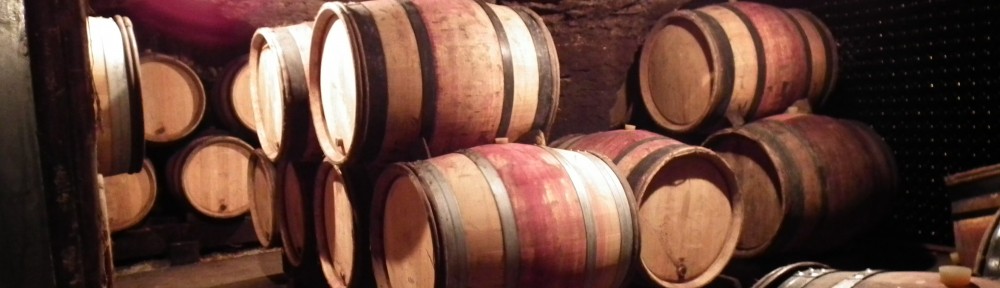
All the cuvées offer an unmistakable impression of pure Cabernet Franc. The domain wine is elegant and pure, Les Poyeux is the crystalline essence of Cabernet Franc, and Le Bourg is tighter with higher acidity and tannins, and needs more time. Cyril is really concerned to maintain the elegance of Clos Rougeard. On this visit, we tasted 2022 and 2023 from barriques. As we taste Poyeux, Cyril says, “2023 was not the most powerful vintage, we could have used more extraction, but we thought it was risky, we would have extracted some green stuff if we had done more pumping over. It’s a contrast with the massive ripeness of 2022.” Clos ages only in used barrels (which come from Poyeux or Bourg). Poyeux ages for two years in 1-2-year barriques. Le Bourg ages in 80% new barriques (sometimes, as in 2022, in 90% new), with a minority of 1-year barriques.

“You are now comparing things that are not comparable,” Cyril says, as we move from tasting a barrel sample of 2023 Bourg to a sample of the 2022 vintage. “2022 could have been too ripe, 2023 could have been under ripe. But Bourg soil is like a sponge with its limestone soil. Both 2022 and 2023 will have good capacity for aging but for different reasons, 2023 for acidity, 2022 for its shoulders.” (And tasting the just-released 2018 from the first of a trio of hot vintages, you can see that Bourg really has a remarkable capacity to maintain freshness.)
The remarkable feature of Poyeux is the way that terrific sense of absolute black fruit purity comes through every vintage, whether it’s cooler or warmer, more powerful or more elegant, that core of purity is always there. Most vintages require at least a decade for the flavor profile to broaden out, but the wine is always silky and fresh.
Tomorrow: the white at Clos Rougeard (https://wordpress.com/post/winespecific.com/2492).
Tastings of Clos Rougeard Saumur-Champigny
Les Poyeux 2023
(Barrel sample) Fresh nose conveys impression of smooth, crystalline black fruits, with a mix of red and black inclined to cherries. “It is a gentle, elegant wine which is the classical style,” Cyril says. Great sense of fruit purity, hints of oak in the background; the wine is so approachable you feel you could already start to enjoy it. It will become increasingly silky as it ages. 90 Drink 2030-2040
Le Bourg 2023
(Barrel sample, 1-year barrique) Color is significantly darker than Poyeux. More generous fruits on the palate, more black than red. Also in elegant style, but with more presence on the palate. Very fine tannic structure, with oak showing only as touch of bitterness on finish (which should resolve with time). Very fine fruits are balanced by freshness of the vintage. 92 Drink 2028-2040
Les Poyeux 2022
(Barrel sample) Earthy nose comes close to animal overtones, a contrast with the ultra-pure sense of black fruits in 2023. The palate has that smoothness of the black fruits of ripe Cabernet Franc, with a coating of tobacco and chocolate, bringing granularity to the palate. That typical sense of purity emerges from the texture as the wine opens in the glass. 93 Drink 2032-205
Le Bourg 2022
(Barrel sample; new barrique) Much more powerful nose than 2023 vintage. Palate is quite oaky with earthy overtones. You have to look through bitterness from the oak (and tannic structure) on the finish to see the rich fruits underneath. Palate has black fruits with restrained sense of power; indeed, behind that stern first appearance there is a great density of fruit, supported b the underlying freshness. The structure will make this a long lived vintage. 94 Drink 2032-2044
Le Clos 2018
Smooth, not ready yet, tannins as always are very fine but there is some bitterness on the finish. But the finesse and sense of purity come right through. Some faint notes of roasted meat, almost animal, show on finish; freshness comes out at the end. 92 Drink 2028-2042
Les Poyeux 2018
More direct sense of black fruit purity than Clos, with typical impression of crystalline structure. The faint animal notes that were visible before release have now disappeared to leave a really pure, clean expression of black fruits on the palate, reinforced by the linearity of the finish. This is very much an expression of absolutely ripe Cabernet Franc. It needs time for the fruit flavor profile to broaden out, probably about a decade. 93 Drink 2028-2040
Le Bourg 2018
Nose blends black fruits with earthiness and some faint impressions of roasted meats. The main impression is just how complete it is. Black fruits are balanced by lovely freshness, already more varied in flavor and is more savory than Clos or Poyeux. Bourg really has a remarkable capacity to maintain freshness. The flavor variety has really come out in the past two years. 95 Drink 2030-2050
 Lewin on Wine