Is Aligoté the Future of White Burgundy

Aligoté is not quite the grape variety that dare not speak its name, but it is certainly quite subservient to Chardonnay in Burgundy. It is found only in a relatively small production of Bourgogne Aligoté and in Bouzeron on the Côte Chalonnaise where it is the authorized white grape variety. The problem with Aligoté has always been its piercing acidity, but could that now become an advantage in the era of global warming, when Chardonnay can lose acidity and become over-ripe and overblown?

“Of course, thanks to global warming it is more and more important. Because Chardonnay is less and less vibrant. The skin of Chardonnay is becoming thicker and this brings bitterness, which may replace acidity,” says Pierre de Benoist at Domaine de Villaine, the top domain in Bouzeron. (Pierre is the nephew of Aubert de Villaine, of Domaine de la Romanée Conti, who established the domain in Bouzeron in 1971.)

Part of the problem with Aligoté is that the dominant cultivar—from which the available clones are derived—is Aligoté Vert. Domaine de Villaine grows the Aligoté Doré subvariety, which achieves greater ripeness. It’s been propagated by selection massale from some very old plants, some 115 years old representing the first planting after phylloxera.

Burgundy’s top Aligoté vineyard is Domaine Ponsot’s premier cru Monts Luisants in Morey St. Denis, one of the rare plantings of a white variety on the Côte de Nuits. (It is curious that although white plantings dominate the southern part of the Côte de Beaune and are rare on the Côte de Nuits, it is the latter that has all the variety ,with the Gouges strain of Pinot Blanc growing in premier crus in Nuits St. Georges, as well as the Aligoté in Morey St. Denis.)

The Luisants vineyard consists of 80% old vines planted in 1911 and 20% replanted in 2006. It cannot have been easy to maintain, because for a while planting Aligoté was not allowed in premier crus, although the restriction now has been lifted. Actually, Aligoté may be more common than is always realized: some years ago a producer on the Côte de Nuits said to me darkly, “you would be amazed how much Aligoté there is in Corton Charlemagne if you take a look at the vines.” Indeed, as Alexandre Abel at Domaine Ponsot points out, “The reputation of Corton Charlemagne was established in the 19th century when there was a huge proportion of Aligoté.”

Monts Luisants has become more consistent and precise since Alexandre took over winemaking in 2017. It used to be fermented in stainless steel and moved to barrique only after fermentation. Now it is moved to barrique around halfway through fermentation. “In 2017 we started to press it more gently and we don’t use sulfur,” Alexandre says.

One of the most interesting Aligoté cuvées I tasted comes from Meursault (of course, the vines may be in Meursault but the wine is Bourgogne Aligoté). Patrick Essa of Domaine Buisson-Charles is a person of strong opinions. When I had to change the time of our appointment because another producer had a problem with timing as he had to pick up his wife and children at the railway station, Patrick said, “Keep in mind that a vigneron whose principal concern is to collect his wife from the train is not as passionate as he should be about what he does.”

Patrick harvests the Bourgogne Aligoté as late as possible. “Aligoté goes from green to doré to rosé and I like it to be rosé.” Will Aligoté become more prominent because of global warming causing loss of acidity in Chardonnay. “I don’t have any problem with Chardonnay, lack of acidity is a problem caused by high yields.”

Global warming is forcing producers to reconsider what grape varieties may be appropriate everywhere wine is made. In the Rhône, they are bringing back varieties such as Counoise and Cinsault, that had been more or less phased out, because they produce less alcohol than Grenache. With Burgundy whites, the problem is more lack of acidity than gain in alcohol, but the question is the same: could a different variety produce better results if global warming continues?

Tastings

Domaine De Villaine, Bouzeron, 2021 
This is a blend from 17 plots of Aligoté in Bouzeron. They come from 9 lieu-dits and each lieu-dit is vinified separately in a foudre. Average age is 65 years and the oldest vines are 115 years. This vintage shows good acidity, but not oppressive, with inclinations towards salinity. Quite savory and fresh. Considering this is a cooler year, shows very good roundness. 89 Drink –2027

Domaine Ponsot,  Monts Luisants, 2020 
The acidity is really very well controlled and is more in the background than upfront. Fruits are quite lemony but the palate is silky, round, viscous, but without the fullness of Chardonnay. This is a leaner style, pointing in a more saline direction.   90 Drink –2030

Domaine Buisson-Charles, Bourgogne Aligoté, 2022 
(barrel sample) Almost stern impression to nose. Round, ripe, and flavorful, mingling fruity and savory impressions. A good example of the potential complexity of Aligoté.    88 Drink -2027

Burgundy Diary 2023: Vintage Extremes

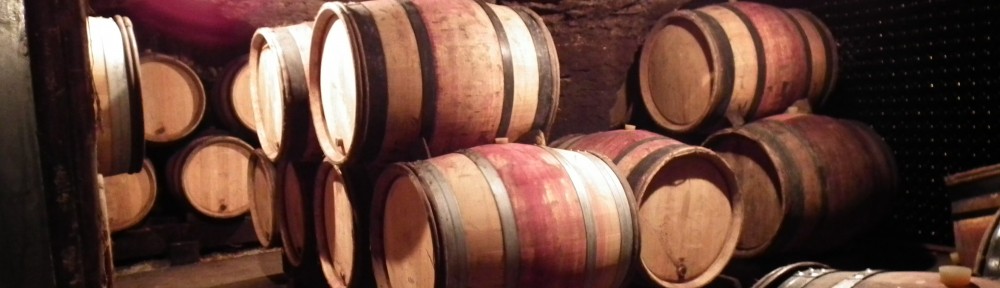
My week in Burgundy was an exercise in vintage variations. Barrel rooms are quite full from a good crop in 2022. Although as one producer said, it’s actually only an average crop, but it feels large because of the tiny crops in 2021 and 2020. Some producers have none to show because they have sold out. Directly or indirectly these lurches in quantity and quality are the result of climate change.

“Climate change is a good thing for Pinot Noir. It’s not bad for Chardonnay, but may be in the future,” says Jérôme Flous at Faiveley. “Pinot used to be not ripe but now we have good ripeness in every vintage. Twenty years ago we had 2 good vintages in 10, now we have 8 good vintages in 10. 2020 was hot, but we had the experience from 2003. 2021 is an old school vintage. 2022 is a very balanced vintage, very good if not great and not too concentrated.”

The key to understanding the wildly contrasting 2021 and 2020 vintages are the very different effects of different means of reducing yields. “We lost 75% of the crop in 2021 and 50% in 2020,” says Alexandre Abel at Domaine Ponsot. The main problem in 2021 was frost and hail. The word producers most often use to describe the vintage is ‘disastrous.’ “But even if the growing season was wet in 2021, the quantity was so low that the vines could ripen the fruit if you took the risk of delaying the harvest. In 2020 there were 5 months without rain, and here the concentration comes from the small berries.” In Beaune, the situation was reversed. “We made more wine in 2021 than 2020 because we escaped the frost in 2021, and Beaune really suffered from the drought in 2020,” says David Croix at Domaine des Croix.

2021 may be a throwback to lighter colored wine with more of a cool climate impression, certainly it is more elegant and a great contrast with the massive 2020, but if it is a throwback it is a modernized version, because the structure is so fine and balanced by the fruits. Unlike other throwback vintages where there has usually been a deficiency such as dilution or herbaceousness, this offers a complete impression. It is really unusual in giving full force expression to Pinot Noir, but being ready to drink more or less on release. It may not age as long as a classic great vintage, but you can get the full experience with immediate gratification.

Erratic yields are crucial to understanding 2021. The Morey St Denis Alouettes premier cru at Domaine Ponsot seems denser and richer than the grand cru Chapelle Chambertin, because Chapelle was the least hit, with only (!) 40% loss, while Alouettes was the most hit. So yields around 8 hl/ha in Alouettes give it greater concentration and ripeness than the Grand Cru. I might well have reversed the two wines in a blind tasting.

When 2020 is good, it is very very good, but when it is bad it is horrid. I’ve commented before on the existence of some massive wines that give an impression more of Châteauneuf du Pape than Burgundy (winespecific.com/2023/06/15/sea-change-in-burgundy-send-the-lifeboats/). Most wines do not go anywhere near this extreme, but it was certainly necessary to be cautious. At Domaine Ponsot, to avoid excessive extraction, reds were pressed before fermentation completed, at around 90%, and then fermentation for the last 10% was completed in stainless steel. To be a great producer in Burgundy these days you have to be prepared to cope with climatic extremes: drought and heat at one extreme, frost, hail, and rain at the other. What other plagues might come next?

“With global warming we have new diseases, the vines suffer more from heat, in 2021 there were crazy temperature variations. We may need to change the cultivars and the root stock. We used to grow low to capture heat from the soil, now we may want to get away from the soil,” says Frédéric Drouhin. So with vineyards performing differently in these new conditions, could it be necessary to change the classification? Oh no! “Global warming will not change the classification, the geology is more important than the climate,” Frédéric says.

Some top results for red 2021

Joseph Drouhin, Chambolle Musigny, Les Amoureuses

Increased density to the nose compared to the Chambolle Musigny premier cru blend. Follows to the palate, wonderfully elegant, round, touch of extra ripeness showing as a viscous sheen. Lovely balance, this has it all, with the finesse of a grand cru. Can start already because the tannins are so supple. 93. Drink –2023.

Henri Gouges, Nuits St. Georges, Les Chaignots

More weight than the village wine, rounder and more aromatic, tending to black cherries, the aromatics carrying through to the finish. Tannins are supple with structure evident more by inference than directly. It is distinctly softer than Les Porrets. 91. Drink –2036

Joliet Père et Fils, Fixin, Clos des Perrières

Fresher impression than 2020 or 2022, with livelier acidity. Tannins moving towards chocolaty although overall lighter than the flanking vintages. Although the impression is relatively fresh, that sense of richness is still there in background. This vintage used 30% whole bunches and had 18 months élevage. 90 Drink –2030

Domaine des Croix, Beaune, Les Bressandes

A slightly sterner more structured impression to the nose compared to the clay-based premier crus. The structure is evident on the palate even though it is basically behind the savory red fruits. The savory character turns quite saline on the finish. Tannins are silky and well in the background. 90 Drink -2033

Domaine Ponsot, Morey St. Denis, Les Alouettes    

With yields of 8 hl/ha and only 4 barrels produced, this wine has achieved a concentration greater than the Chapelle Chambertin of the vintage. Surprising concentration and richness, rounder and deeper. The tannins are taut but the palate stays fresh and approachable.   92. Drink -2032