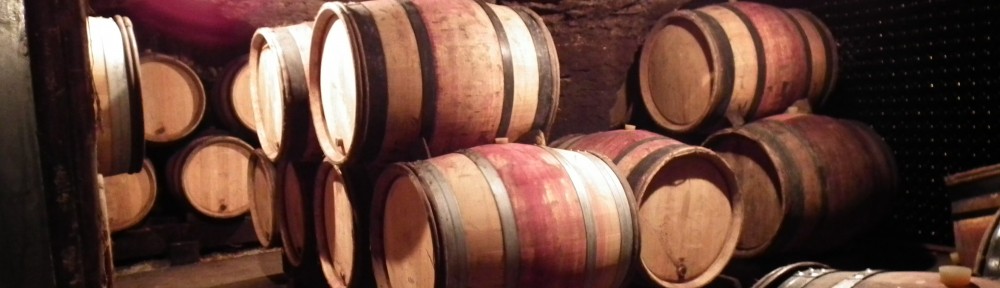
Blending the Altitudes

“We play with the altitude like in France they play with the latitude,” said Hervé Birnie-Scott when I visited Terrazas de los Andes in Mendoza. The winery here was the first to be built in the middle of vineyards, in 1898, by one of the founders of winemaking in Argentina, but it went bankrupt (like almost all) in the bust of the 1960s. It was purchased by Domecq, who intended to use it as a distillery, but when they in turn sold it, Chandon purchased it with the intention of using the house for entertainment. When Chandon decided to move into production of dry wines in Mendoza, this became their headquarters and winery. Terrazas’s first vintage was made at Chandon in 1992, but its own winery was refurbished and was used from 1998. Some of the original Chandon vineyards were transferred to Terrazas, and when the trend to making varietal wines intensified in the late nineties, they purchased more land.

Today Terrazas has vineyards at various altitudes into the Andes, with 500 ha of black grapes, which include 270 ha Malbec, 180 ha Cabernet Sauvignon, 50 ha Petit Verdot, and some Merlot and Syrah; there are also 52 ha of white. There’s a very interesting approach here in matching varieties to terroir, where altitude is the main determinant. Going west from Mendoza towards the Andes, the land rises up from 800 meters to 1200 meters within some 20 km. Syrah is planted in the warmest vineyards, near Mendoza, and then as the land rises, varieties are chosen for successively cooler temperatures, culminating in Chardonnay at 1200 m elevation. With an average temperature drop of 0.6 °C per 100 m, the difference between the lowest and highest vineyards is comparable to going from the south of Italy to the north of France. Syrah is planted on the warmest sites at 800 m, Cabernet Sauvignon between 900 and 980 m, Malbec around 1067 m, Merlot in the highest sites for black grapes at around 1150 m, and Chardonnay at 1200 m.

The focus is on varietal wines. I asked Hervé whether this was a marketing decision or because they express the terroir better. “The dominant influence was the United States and Australia, driving in the direction of varieties. If you go through the phone book, under M you will find Malbec, but where would you find “blend?” We produced what people wanted to buy. Commercially there was a feeling that Malbec was just a table wine, and there was pressure to produce Cabernet Sauvignon. But from outside Cabernet Sauvignon was boring and the Malbec was discovered. The driving force was the journalistic view – the next big thing for you is the Malbec,” he says.

The top Cabernet here is the single vineyard Los Aromos, at 980 m the highest elevation at which they grow Cabernet. Yet the wine is refined and pure, with that directness of 100% Cabernet, but no signs of harsh mountain tannins. The Reserva range is made in a more obviously approachable New World style. Terrazas also has a collaboration with Château Cheval Blanc to produce a Cabernet-Malbec blend, Cheval des Andes. Here the French influence dominates, as the wine was clearly marked to be a blend from the very beginning.  Interestingly it seemed to me to have a firmer character than the single varietal Los Aromos.

Tasting Notes

Mendoza, Terrazas Cabernet Sauvignon Reserva, 2009

There’s an immediate fruity impression of smooth black fruits with the tannins giving a slight edge to a warm finish. This is very much in the New World approach of fruit-driven wine, easily approachable, with just a touch of high toned aromatics. It’s soft and furry and the structure isn’t really evident (although 30% new oak was used). 14.4% 87 Drink to 2018.

Mendoza, Afincado Los Aromos Cabernet Sauvignon, 2007

The vineyard is in Perdriel, but the name has been trademarked and so cannot be used on the label. Some character shows immediately with a savory impression initially extending almost to barnyard and then clearing more towards a spicy and vegetal spectrum. Smooth on the palate and elegant, a refined impression with a fine texture coming from the tannins, and a touch of blackcurrants and cassis emerging on the finish. It’s just a touch linear, with precisely delineated fruits in the style of pure Cabernet Sauvignon, somewhat reminiscent of samples of pure Cabernet from Bordeaux. The wine was matured in 100% new oak.13.6% 91 Drink to 2022.

Mendoza, Cheval des Andes, 2007

There’s a warm nutty quality on opening that makes you think about very ripe Cabernet Franc, a reasonable thought given the antecedents of this wine in a collaboration between Terrazas de los Andes and Cheval Blanc, although in fact it is a blend of Cabernet Sauvignon and Malbec. Smooth on the palate to the point of obscuring the tannins, some wood spices showing, but after the initial burst of generous fruit, a more sober palate shows a somewhat monolithic black fruit character with a dense structure that will take some time to resolve. It’s quite elegant and well balanced, but lacks the sense of uplifting acidity that characterizes the left bank in Bordeaux. It lacks subtlety, said my constant companion, the Anima Figure. 14.5% 88 Drink to 2020.

Is Napa Going Flabby?

I’ve been exploring differences between Cabernet Sauvignon (or blends based on it) from Napa and Bordeaux, and am wondering how much the acidity is a major factor in perception, as opposed to higher alcohol or extraction from the New World. In fact, acidity seems the most immediately obvious difference when I compared recent Napa vintages with the Bordeaux 2009 vintage.

A tasting  precedes the Napa barrel auction each February, and has an interesting format when wines from three successive vintages are presented blind, so that tasting focuses on vintage character and differences. At the end of the tasting, there’s a list of the producers. I tasted all three vintages, 2007, 2008, and 2009 from all fourteen Cabernet Sauvignon producers. (There was also a smaller tasting of Merlots.) The intention of the blind tasting is to indicate the general style of the vintage rather than focus on specific wines.

There’s a fairly clear line between the vintages: 2007 is more concentrated than either of the succeeding vintages. Differences between 2008 and 2009 are less distinct, although in general I’m inclined to agree with the conventional wisdom that 2009 is less intense than 2008, but both 2008 and 2009 tend to give a fairly flat impression, at least at this stage. Every producer in this tasting had a characteristic style that ran through all three vintages, but often the lighter fruits on 2008 and 2009 let the tannic structure show through more clearly, making the wine a little spartan. I felt that few of the wines at this particular tasting would be really long-lived, although the best will drink well in the mid-term (next five years or so).

At barrel tastings the same week, and allowing for the difference in age, the 2010s struck me as generally in line with the previous two vintages of 2009 and 2008. That makes three relatively indifferent vintages in a row. I did not feel, as has sometimes been suggested, that 2010 was a vintage more in line with Bordeaux, that is, lower in alcohol, not so rich, but with more finesse.

The 2009s provided an interesting contrast with a large tasting of Bordeaux 2009 just a couple of weeks earlier, where the wines had that characteristic lift of freshness, in spite of the reputation of the vintage for being unusually rich and alcohol for Bordeaux. Acidity in all three Napa vintages, by contrast, generally seemed a little low. On the best wines this makes the wines quite approachable, with a soft, velvety or furry palate, but in other cases the impression remains a little flat. There was a tendency to hollowness on the mid palate, especially with 100% Cabernet Sauvignons, but also even with wines that were also blended with some Merlot. Many of the wines cry out for some (or for some more) Merlot to fill out the mid palate. Perceptible alcohol was rarely a problem, although the level was often higher than would leave me comfortable after splitting a bottle at dinner. Overall, if I were to choose a wine to drink from these three vintages, 2007 would almost always be my preference, but in most cases I felt 2009 Bordeaux would be a better match for food.

Designer Oak Labels

It used to be so simple. Wine would complete its alcoholic fermentation and be transferred into barrels, more or less new according to the strength of the year. The source of the oak would most likely be the nearest forest; you might worry a little bit about how much the oak had been toasted.

Today the degree of toast is tightly controlled, sometimes using infrared rather than mere simple fire, and is reproducible. “We at Taransaud know what medium toast is, we measure it by time and temperature, but some people still use color, which is very variable,” says Jean-Pierre Giraud. Toast was the elephant in the room at the afternoon session of Taransaud’s seminar for the Institute of Masters of Wine: it was rarely mentioned directly, but I suspect that it was the main determinative factor in barrels that had been designed for very specific purposes.

I was fascinated by the concept that a barrel could be designed directly to handle higher alcohol wines. I’ve had the view for some time that the problem with high alcohol wines is not just the higher alcohol, but a generally higher level of extraction, which makes them fatiguing to drink (although sometimes apparently performing better at tastings). I hadn’t followed through to ask the corollary question: when and where does the higher extraction take place and could it be changed?

Alcohol is a solvent, and perhaps its most obvious effect is on maceration: different tannins are extracted by pre-fermentation maceration (when there is no alcohol) from post-fermentation maceration (when alcohol is present). But the question implicit in Taransaud’s design of a barrel for higher alcohol wines is whether there will be differences in extraction during élevage of a 15% alcohol wine from a 13% alcohol wine, and whether the barrel can be adjusted to equalize the effects.

The starting point is that alcohol affects the perception of other components in the wine, reports Dominique de Beauregard of Taransaud. It masks some components, especially fruit aromas, and exacerbates others, in particular herbaceous elements. Higher alcohol extracts more toast aromas, making the wine seem heavier and more tannic. (From this I would guess that some of the adjustment to higher alcohol involves reducing the toast.) So Taransaud have developed a barrel – the working name is the A+ – which is intended to enhance fruit to compensate for the effect of higher alcohol.

I thought the blind tasting of Izquierdo 2010 from Ribera del Duero, matured in either a regular barrel or an A+ barrel, was inconclusive. In the regular barrel, the wine was tinged with savage, even animal, notes, and the finish seemed harsh and bitter. These problems were ameliorated by an impression of more fruit and a softer palate with the A+ barrel, but the wine was still pretty biting with a burning finish. I am sorry, but once you have reached 15.5% alcohol, I’m not convinced that any change in the élevage is going to bring the wine back to a reasonable balance.

The next special effect was a barrel intended to “reveal Chardonnay’s typicity and quality.” I think an issue’s going begging here, however. What is the typicity of Chardonnay? I think of it as the chameleon grape, capable of flinty minerality in Chablis, nutty overtones in Meursault, steeliness in Puligny, butter and vanillin in Napa, tropical fruits in South America. If ever there was a grape that responds to the winemaker, this is it!

Be that as it may, it seems that Taransaud, firmly centered in France, sees minerality and tension as the objective for Chardonnay. (So do I.) They wouldn’t say what is special or different about the PFC barrel that is their prototype for Chardonnay, except that the wood was carefully selected for grain, seasoning, and toasting. (This is somewhat along the lines of a phrase often found in scientific papers to which I take strong exception. “We performed the experiment carefully.” Well, yes, how else would you perform it?) Anyway, I certainly see the merit of the notion that perhaps oak should be different for Chardonnay from Pinot Noir or from Cabernet Sauvignon. However, I wasn’t persuaded by the results of this particular experiment. A Domaine François Lumpp 2011 Givry in a traditional barrel had a nose and palate showing a nice combination of citrus fruits and oak overtones, smooth and well integrated. The PFC barrel seemed to give a more muted impression and I thought I got a fugitive touch of high toned aromatics on the nose, with the acidity standing out to make the palate seem a bit disjointed. This is clearly a work in progress.

Egg-shaped fermenters are all the rage at biodynamic producers, who feel that the shape encourages a natural fluid movement that reduces the need for intervention. This is something that could presumably be measured, although I haven’t yet seen any attempt at objective judgment. Egg-shaped fermenters come in cement and now Taransaud have introduced one in wood, called the Ovum. The blind tasting was a comparison of Domaine de Chevalier 2011, 100% Sauvignon Blanc, given six months in conventional 225 liter barrels, 400 liter barrels, or a 2000 liter Ovum.

Now the problem here from my point of view is that we are not comparing like with like. The main effect is surely going to be the different ratio of surface area to volume, which is greatest in the 225 liter barrel, about 20% less in the 400 liter barrel, and only about half in the 2000 liter container. (And a further complication is that in barrels the inside is usually toasted but the heads are not.) For this to be a significant test of shape, we would need to compare a barrel or a cylinder of 2000 liters with the Ovum.

Anyway, the blind tasting to my mind validated the idea that they have learned something in the past couple of hundred years about the best containers for maturing white wine. The traditional barrel gave a classic impression, with a typical citrus fruit spectrum tinged with oak, becoming soft and ripe in the glass. The 400 liter barrel gave a much less oaky impression, with the citrus fruits coming to the fore. The Ovum gave a grassier wine with more zest, fresher and purer, but less interesting. When the audience was asked to vote for their preference, the choice was interestingly for the 400 liter, but I think that did not make sufficient allowance for the fact that the wine is very young and normally would have many more months to mature before tasting. Allowing for that, my preference was for the traditional barrique.

The final tasting was a test of Taransaud’s T5 barrel. All we could learn about this was that the wood is seasoned for five years, it comes from French oak with a very tight grain, and there is a special toasting procedure on an open fire at low intensity. Oh, and a barrel costs about €1200 compared to the usual €700. It’s intended to bring refinement to the wine. The test tasting was of Château Beauregard (Pomerol) 2009 matured in either a standard barrel or a T5 barrel. There was definitely a difference. The classic barrel produced a wine that was rich and fruity with oak that was relatively subdued on the nose but more evident on the palate, in fact it was quite dominant. Slowly emerging fruit gave a youthful impression of needing quite a bit more time. The T5 sample was more subdued, almost closed on the nose, with the fruits initially seeming sweeter and riper, and better integrated, on the palate. It gave the impression that it will be ready to drink a year or two sooner than the wine from the classic barrique. All of the winemakers – some of whom are using T5 barrels – said they preferred it. But this tasting was not done blind. I hate to spoil the party, but I wonder whether this is like malolactic fermentation in barrel: the question is whether it is a short-term effect or will persist? Will the two wines be any different in five or ten years’ time?

I really admire the efforts to go behind simply turning out high quality barrels into examining all the factors that influence the effects of wood on the wine, and asking how and which changes should be made for different situations. Just as Riedel has created a perception that we should no longer use the same glasses to taste all wines, it makes me wonder whether in years to come, we will look back and wonder at the primitive nature of the idea that oak barrels might be generic for all wines.

The Oakiness of It All

We’ve come a long way since oak was merely a storage and maturation medium for wine. Judging from an all day seminar that Taransaud organized in London for the Institute of Masters of Wine, its role today is second only to the grapes themselves. The seminar was divided into two parts: a morning that considered individually many of the parameters that determine the effects of oak; and an afternoon looking at innovations to respond to changes in modern winemaking. Here’s a report on the morning; the afternoon will follow.

The background according to Henri de Pracomtal, Chairman of Taransaud, is that use of new oak is declining, down to 85% instead of a mandatory 100% when the vintage isn’t up to it in Bordeaux, although typically staying more or less around a third new, a third one year, and a third two year in Burgundy. The use of 200% oak (successive use of new barrels) is “dead.” There’s been significant backing off from new oak in the New World. The focus here was all on oak barrels,  although Taransaud also own Canton in Kentucky, where other formats are used. When they bought Canton, Henri was horrified to see oak chips, and wanted to stop their production, but “look at the profit margin” they told him. “Oak chips are for short term aromatics rather than long term élevage,” he says. The seminar was entirely about the effects of different barrel regimes on wine quality and style.

A long list of aroma and flavor compounds that are extracted from oak made it clear in a talk from Taransaud’s oenologist, Nicolas Tiquet-Lavandier, that the effects are profound. Considering how long oak has been used, it seems surprising that new compounds are still being discovered. I was also surprised that the role of oxygen loomed so large, with discussion about the porosity of the oak, entry between the staves, and through the bung. I thought it had now been established that basically all oxygen enters through the bung (which should mean there’s much less since the change to the new silicon bungs).

The heart of the seminar was a series of comparative tastings with wines that had been specially vinified under different conditions. The results of comparing French, Hungarian and American oak were fairly predictable, with a strong contrast between the toasty vanillin of Château Puygueraud (Côtes de Francs) 2011 in French oak and the stronger aromas of coconut from American oak. Since French and American oak are different species of trees this was not surprising, but the difference between French and Hungarian, which are the same species, was pronounced: the French oak gave a refined impression to the wine, the Hungarian was somewhat coarse. This emphasizes the effect of growth conditions on the oak: it’s colder in the Hungarian forests and the trees tend to be smaller. This links in to a change in the way tonneliers in France handle their sources – there is much less emphasis on individual forests, and more on the grain of the individual wood. “Within a forest is not a unique location. This is why we at Taransaud have gone our of the forest, we blend forests, the grain is very important, the tighter the grain, the more slowly the wine matures,” says Henri.

I was quite fooled by the blind tasting to test the effects of duration of seasoning. The wood at Taransaud is air dried by exposing staves in the open. A critical element is the need for rain and humidity in the first six months, which is becoming a concern in view of reduced rainfall in some years. The seasoning at first extracts compounds from the oak – this is crucial for reducing bitterness – and then adds other compounds as fungal infections occur; Henri likened this to maturation of cheese. I placed the three samples of Château Phélan Ségur 2010 in order on the assumption that more seasoning gives more subtle results, but this turned out to be too simple. Certainly the sample from 12 month seasoned French oak seemed a bit harsh compared to the others, but the 30 month seasoning seemed to produce a better balanced and more subtle wine than the 55 month seasoning, which had stronger wood spices. A similar test of American oak with the Swanson Vineyards 2010 from Napa Valley gave an overwhelming impression of coconut and dill on the 24 month seasoned sample, still pretty powerful and pungent with 36 months, but finally damped down a little with 48 months. Here longer is better. I was reminded that Paul Draper at Ridge, who uses American oak for the Montebello Cabernet, told me that American oak has a bad reputation not because of its intrinsic properties but because it’s not treated in the same way as French oak (it’s usually sawn instead of split and not air dried).

Blind tasting to test the effects of time spent in barrels also fooled me, as I was working on the assumption that impression of oakiness would be in direct proportion to time in oak (especially allowing for the fact that shorter time in oak would be followed by time in bottle). But Phélan Ségur 2010 showed the most vanillin, and even a touch of coconut, after 8 months in oak, still a touch of vanillin after 16 months in oak, but the cleanest and purest expression of fruits after an intermediate 12 months. However, the 16  months showed overall the most classic and best balance. Clearly this is not a simple matter of absorption into the wine with time, but of more complex interactions. For example, ellagitannins increase with up to 250 days in barrels and then decline.

The percentage of new oak at least was predictable: new oak was quite evident on the nose and palate of a Château Branaire-Ducru example from 2010, with an example that had been matured in second year oak showing more direct and purer fruits; but the blend had more weight, and was softer, rounder, and more complex. An interesting demonstration of classic balance obtained by not going to extremes.

Along the way, a panel of four winemakers commented on their impressions. With a range of different backgrounds (Sandrine Garbay from Yquem, Edouard Labruyère from Jacques Prieur, Peter Sisseck from Dominio de Pingus, and Stephan von Neipperg from Château Canon-la-Gaffelière), it was not surprising that their opinions differed. In a demonstration of how individual palates can agree or disagree, I was interested to see that there was one winemaker with whom I agreed on everything, one with whom I disagreed on everything, and two who were in between. I know whose wine I’m buying in the future.

The Elevation of Cabernet

You feel you are walking into a Mayan pyramid as you ascend the steps at Catena’s new winery in Mendoza, surrounded by vines, with a distant view of the Andes. Although the surrounding terrain feels fairly flat, the home vineyard is actually already at an elevation of 940 m, and other vineyards extend into the Andes at elevations up to 1500 m. The specialty here, as everywhere in Mendoza, is Malbec, but I was visiting to discuss Cabernet Sauvignon, for which Catena is a quality leader.

Catena Winery

Catena's new winery resembles a Mayan structure

It takes a certain nerve to plant Cabernet Sauvignon in your best vineyards when Malbec is so dominant, but Nicolás Catena told me, “I went to Napa and I fell in love with Cabernet Sauvignon. For me it was the best wine I have tasted in my life. I came to the conclusion that Cabernet Sauvignon was the king of the varieties.” Nicolás went on to explain that he made his first Cabernet Sauvignon to an international standard in 1990, but was devastated when a visiting consultant from Bordeaux said, “This tastes like a Cabernet Sauvignon from the Languedoc.” Nicolás decided that the only answer was to go to cooler areas: “So I took risks. One was that there would not be enough ripeness, it would be too cool. My technicians said I was crazy. Another danger is frost. My decision was based on assumptions that were not very precise. We planted Cabernet farther south and then went up in altitude. We decided – it took about six years – that Cabernet Sauvignon from cooler climates was better.”

Today Cabernet Sauvignon is grown in five vineyards at elevations from 800 m to 1480 m. A tasting of barrel samples from the 2011 vintages was a fascinating exercise in relating tannic structure to soil and climate. The wine from the lowest vineyard (Angélica at 800 m) was certainly the softest and least acidic. The wine from the highest vineyard (Adriana at 1480 m) was certainly the tightest, with mountain tannins hidden underneath the fruits but bringing more dryness to the finish. There wasn’t an exact correlation in between, but there was a perfect fit between my perception of total tannins and the measurement of polyphenols in each wine, which brings some comfort to the notion that numbers might mean something.

There are single vineyard Malbecs from these sources, but the Cabernets are always blended; this is due to market issues rather than any reflection on intrinsic quality or interest. Actually, most of these wines seemed likely to benefit from the blending process, although La Pirámide (940 m) seemed to be complete , and Nicasia (1180 m), the liveliest of the flight, seemed close to complete. The wines are blended for the top cuvée of the house, the eponymous Nicolás Catena Zapata, a blend with Malbec, and are also the source for the Catena Alta varietal Cabernet Sauvignon.

Catena also has a collaborative venture with Chateau Lafite in the form of Bodega Caro, whose lead wine is a blend of Cabernet Sauvignon with Malbec; there is also a second wine with reverse proportions, called Amancaya. Winemaker Estela Perinetti says that the varietal proportions have been changing in Caro. “In cooler years we use more Cabernet. At the beginning the Malbec had more rustic tannins so we needed to use more Cabernet Sauvignon. Then we got better tannic structure with the Malbec and we reversed. Now we are going back to more Cabernet Sauvignon because it gives better aging.”

All the wines had a mark of elegance, but I am inclined to think that the blends with Malbec are more interesting than the monovarietal, because its  smooth, supple tannins nicely complement the more rigid structure of Cabernet Sauvignon. Quite a difference from the effect of blending with Merlot, which gives a fleshier mid palate.

Tasting notes

Mendoza, Nicolás Catena Zapata, 2003

This vintage had a more or less average varietal composition for the blend, with 72% Cabernet Sauvignon to 28% Malbec. It shows the superficial smoothness of Malbec, that somewhat glossy surface, which at the moment is the dominant influence. The firm underlying structure shows the presence of Cabernet Sauvignon, and with time the Cabernet will no doubt emerge more clearly to strengthen the black fruit impression. Slightly nutty on the finish with tertiary development not yet in sight. 13.9% 90 Drink to 2022.

Mendoza, Cabernet Sauvignon, Catena Alta, 2003

Here you see the classic elegance of pure Cabernet Sauvignon with a nutty background to the black fruits and a touch of heat on the finish, which has some bite. The ripeness of the region makes this wine readily approachable at this age, but reflecting the character of the variety, it is a more linear than the Nicolas Catena Zapata blend of the same vintage. 14.2% 89 Drink to 2020.

Mendoza, Bodegas Caro 2002

Smooth black fruits are cut by subtle savory and even vaguely animal overtones. There’s a lovely balance, in terms of maturity perhaps equivalent to a fifteen year old Bordeaux. Smooth tannins give ripe, firm support to the fruits with a touch of nuts developing on the finish. You can see – if this is not too imaginative – the influence of Lafite. 13.8% 91 Drink to 2023.

Traditional Winemaking in Mendoza

Visiting producers of Cabernet Sauvignon in Argentina and Chile last month, I spent some time trying to define regional and sub regional typicities. In Chile there’s a certain sense of restraint, perhaps making a halfway house between old Europe and the more forceful fruits associated with the New World style.  Maipo Valley was elegant, Colchagua more obviously structured, and Apalta the most silky. In Mendoza, well really in Luján de Cuyo since that’s where the serious Cabernet is to be found, the fruits are a bit more forward, but not nearly so obvious as, say, Napa. Both countries have a tendency towards varietal wines at entry level and blends at top level, although the blends are different: with Carmenere in Chile and with Malbec in Mendoza. In spite of that, I found the same difference between the varietal wines and the blends; where direct comparisons were possible, the varietal Cabernet has more of a linear purity, the blend smoother and broader and (to my mind) often more interesting with age.

But my attempts to define the wines in terms of terroir and climate were brought up short by a visit to Bodega Weinert in Mendoza, where winemaker Hubert Weber marches to the beat of a different drum. “The new style of winemaking is not very friendly for aging; if you concentrate on blackcurrant aromas and intensity, aging potential is reduced. Bodega Weinert is classic winemaking -I am not looking for intensity of young aromas, I am looking for complexity of flavor.  The wine spends up to five years in 2000 liter casks of old wood. Gran Reserva is the model,” he says. The lead wine is the Cavas de Weinert, a blend of Cabernet Sauvignon, Malbec, and Merlot. The blend stays constant in varietal composition, and is not produced unless all three varieties are of sufficient quality. It was declassified in 1995 because Hubert didn’t like the Cabernet, and in 1998, 2001, and 2005 because of problems with the Merlot. In some years, when one variety is exceptional, there may be a varietal bottling under the Estrella label.

Casks at Bodeha Weinert

Old casks are used to age the wines at Bodega Weinert

With no exposure to new oak, the wines make a distinctive impression: the primal quality of the fruits to come through, showing a savory, almost savage, impression with  age. And the wines certainly age: vintages were lively back to 1977 in a vertical tasting. Younger vintages seemed more dominated by Cabernet, older vintages more by Malbec. I also tasted two of the Estrella wines. A Cabernet Sauvignon from 1994 was still intense and barely showing the austerity of the variety; a Merlot from 1999 showed refinement, and seemed to be aging scarcely any more rapidly than Cabernet Sauvignon. As you go up the scale at Weinert, the wines start out more fruity with faintly savory overtones, and then at the top of the scale the fruits are still there of course (in fact they are more intense) but the savory and even animal notes become predominant. You might say that the wines show an increasingly traditional European flavor spectrum.

So what price terroir and climate as the defining features for common qualities in the wine? I decided my conclusions about different regions were all valid, just so long as the winemakers stayed within the bounds of a certain commonality of approach.  But once the consensus is broken, it’s the winemaker’s hand that shows.

Tasting Notes

Estrella Cabernet Sauvignon, 1994

The immediate impression is savory and developed, with notes of barnyard and gunflint, all integrated with the underlying sweet ripe fruits. There’s still a lot of intensity. This is a powerful wine with an interesting blend of savory and fruity elements, supported by balanced acidity and smooth, firm tannins. Notes of gunflint on the finish really bring the wine to life, with the savory to fruit balance at its peak, almost salty in its overall impression. Only at the very end do you see the austerity of pure Cabernet Sauvignon beginning to take over. No one could call this wine elegant – it has too much intensity for that – but the balance should allow it to continue to age for another decade at least. 14.5% 92 Drink to 2024.

Estrella Merlot, 1999

This Merlot bucks the trend for clay terroir by coming from relatively sandier soils. It spent three years in cask and ten years in concrete before bottling. Initially this seems full and ripe, showing Merlot’s characteristic presence on the mid palate, with the typical barnyard notes of developed Merlot and just a touch of pungent gunflint. But there’s a finer impression than comes from Merlot grown on its more traditional clay, with an impression of refinement that’s unusual for the variety, and there isn’t much impression this will be much shorter lived than the Estrella Cabernet. 91 Drink to 2027.

Cavas de Weinert 2004

This is the current release. The immediate impression are those characteristic savory, almost pungent, almost piquant, notes. Smooth and ripe on the palate, there’s a sensation of coated black fruits. Tannins underneath the fruits dry the finish, but overall the impression is quite glyceriny. There’s an openly delicious quality. 14.5% 89 Drink to 2022.

Cavas de Weinert 1994

Development has taken a slightly different path here, in fact the nearest parallel would be the 1977 Cabernet Sauvignon, as there are only some hints of savory notes and more of a delicate, almost perfumed impression. Apparently this wine has gone up and down, and appeared oxidized a year or so ago, when it was taken off the market for a while, but then it recovered. There’s a slight sense that the smooth fruits are beginning to dry out, allowing the tannins to show more as a dryness on the finish, which is a little nutty. 14.5% 88 Drink to 2016.

Cavas de Weinert 1983

Savory and animal with pungent overtones of gunflint, overall contributing to a slightly sweaty impression (perhaps a touch of Brett). The smooth palate tends to opulence but is beautifully cut by the savory overtones. This is at a perfect tipping point from fruity to savory (although it’s probably been here for a while). Hubert sees this wine as having become more dominated by Malbec over the past five years; indeed, it shows more Malbec as it develops in the glass, becoming smoother, more elegant, more perfumed, less animal. 93 Drink to 2019.

Cavas de Weinert 1977

We compared two bottles. Around 2004 one lot of wines was recorked for an importer who insisted on having fresh corks. The rest remain under original corks. The difference was like night and day. The wine under new corks showed slightly oxidized fresh fruits with hints of raisins; otherwise the wine remains youthful, with the evident fruits lacking savory overtones, and a little restricted in flavor variety. By contrast the wine with the original corks has more of that classic savory impression, with rather restrained fruits, kept lively by an acidic uplift. Matching the greater tertiary development, the color is also a little more garnet. Compared with the varietal Cabernet Sauvignon of the same year, the wine is a little more developed and a little less obvious. 92 Drink to 2019.