On the Uncertainty of Being White Burgundy

I am more and more perplexed by the failure to identify the cause of premature oxidation in white Burgundy. A relatively rare problem when it first appeared in 1996, it appears even now still be gathering strength, with producers for whom I had not previously encountered it showing signs for the first time. I’ve been accustomed to think of Domaine Leflaive’s wines as among the longest lived in Puligny Montrachet – not very long ago I finished up some 1989s, which were still splendid. I have not had problems with premature oxidation of Leflaive wines until this week, when a 2005 Puligny Montrachet showed the unmistakable first signs. You might say that after seven years it’s not unreasonable to finish drinking up a communal Puligny, but I’ve had 12-15 years out of Leflaive’s premier crus, and ten out of the communal wine, without difficulty in the past. The disconcerting thing is that there was no sign of this coming: a year ago the wine was at its peak. Granted, I did not expect more than medium term aging (another four years perhaps), but now it seems that I have only a few months at most to finish my supply. White Burgundy as it ages has been one of the glories of France, but sic transit gloria mundi.

Tasting notes

March 2012    This wine has begun to slip in the past year, well before you might expect it to, with the first signs of premature oxidation. It’s still a delicious wine with that lovely, steely, character of Puligny as typified by Leflaive – always at the head of the commune – but there are distinct notes of madeirization appearing on nose and finish. While these are still (just) at the stage of adding complexity, it cannot be long before the wine becomes problematic. Before this problem I would have expected another 4 years.

January 2011    An absolutely top result for a village wine, and better than most growers’ premier crus. The characteristic smoke, steel, and gunflint is cut in this vintage by the underlying richness of the year. There isn’t the complexity of a premier cru, but the wine is in lovely balance, with the palate of peaches and cream cut by citrus. Minerality dominates the finish, but the richness suggests only medium term longevity.

Blending Cabernet: it’s the history, stupid

In Bordeaux they will tell you that Merlot is the perfect partner for Cabernet Sauvignon, because the Cabernet doesn’t always ripen reliably on the left bank, and the fleshier tones of Merlot complement it by filling in the mid palate. In Napa they will tell you that Cabernet Sauvignon ripens so fully and reliably here that there is no need for Merlot; it makes a complete wine in itself. In Chile they used to follow the Bordeaux model by blending the Cabernet Sauvignon with Merlot; but then it turned out that most of the Merlot wasn’t Merlot, it was really Carmenere; they did not throw up their hands with horror, tear out the Carmenere and replace it with real Merlot; now instead they make a point of producing varietal Carmenere or of blending it with Cabernet Sauvignon. In Argentina, if they blend Cabernet Sauvignon, it’s usually with Malbec, which is the predominant black variety. In nineteenth century Bordeaux, Cabernet Sauvignon was usually blended  with Malbec and Carmenere as well as Cabernet Franc: the Malbec was replaced by Merlot, and the Carmenere disappeared after phylloxera struck. The blend everywhere is as much a matter of historical accident as a deliberate search for what varieties best complement one another. So the question is whether Cabernet Sauvignon still needs to be blended, given that the climate is warmer  in Bordeaux than it used to be, and that the other areas where it is planted are mostly warmer than Bordeaux anyway.  And if it does need to be blended, what other varieti(es) really give the best complexity, and are they necessarily the same in every region.

Even though Bordeaux has experienced warmer temperatures in the past decade, tastings of barrel samples have convinced me that the Cabernet Sauvignon makes a more interesting wine when it is blended. As a single varietal wine, it tends to have very pure, precise, but more linear flavors: it broadens out to become more interesting when blended. I believe the same is actually true in Napa, but not for the conventional reason. Young Napa Cabernets can be so bursting with fruit that you really do not see any need for any other variety to round out and complete the flavor profile. But wait a few years. As those primary fruits drop out, the wine begins to become more linear, more austere, the bare bones of Cabernet show more clearly, and you feel that by ten years of age it would very often be improved by some Merlot, which brings more interesting savory development.

A recent visit to Chile left me wondering about the rationale for blending Cabernet Sauvignon with Carmenere. If you think you have difficulties ripening Cabernet Sauvignon, try Carmenere – which usually harvests about one month after the Cabernet Sauvignon. That alone shows you why it became untenable in Bordeaux. Even in Chile, where the Cabernet ripens quite reliably, Carmenere can be questionable; it needs to be grown in the warmer sites. When it ripens fully, it develops a smooth, elegant palate, with tannins that seem more supple than Cabernet Sauvignon, and it brings elegance to a blend. When it does not ripen successfully, it has something of the same herbaceousness as Cabernet Sauvignon itself, so it’s something of a double or quits game.

Malbec is somewhere between Merlot and Cabernet Sauvignon: not as fleshy as Merlot, but certainly smoother and more supple than Cabernet Sauvignon. Under peak conditions, Malbec may be a more interesting blending partner for Cabernet Sauvignon than Merlot, because the tannic structure is complementary: the more supple character of Malbec adds smoothness to the tighter structure of Cabernet Sauvignon. It doesn’t fill in on the mid palate in quite the same way, so the wine tends more to elegance than fruit-driven power.

For roughly a hundred years, from its rise following the phylloxera problem in the 1880s until a couple of decades ago, Merlot was the perfect blending partner for Cabernet Sauvignon. This is not true in the warmer climates of Napa and Chile, where the “Merlot collapse problem” describes the situation in which Merlot goes straight from green, herbaceous character to over-ripe jammy character, with too narrow a chance to catch it at the right point. I sometimes wonder whether Napa’s concentration on varietal Cabernet Sauvignon isn’t due as much to their difficulties with Merlot as to the attractions of the Cabernet. I am inclined to wonder whether Syrah would be a good choice, since it has richer tannins than Cabernet and can add a touch of aromatics that increases complexity, but Napa seems fixated on a bimodal view: it’s either Cabernet or it’s a Bordeaux blend. Syrah  might also do well in Argentina and Chile, but the accidents of history mean that Malbec and Carmenere are well entrenched. Come to that, it may be time for Bordeaux to reconsider, because in the 2009 and 2010 vintages, the Merlot became so ripe and alcoholic that in many cases it was impossible to blend it into the Grand Vin and it was relegated to the second wine. (An amusing paradox here, since that can make the second wine higher in alcohol than the Grand Vin, and the concept that higher alcohol goes with wines at higher appellation levels is well entrenched in the French hierarchy.) How about going back to Malbec or Carmenere in the Medoc – or maybe Syrah.

Bring Back the Merlot

I got to thinking about Merlot when I was tasting Cabernet Sauvignon in Napa last week. Now I have never been much of a fan of Merlot, I’m not an enthusiast for Pomerol, for example, because I find those fat lush fruits less interesting than the more restrained flavors of Cabernet-dominated blends in the Medoc. And even though the last couple of vintages have had their problems in Napa, I think it’s a fair point that the extra ripeness that Cabernet achieves there may make it unnecessary to fill in the mid palate with Merlot the way that has been traditional in Bordeaux. Although at the Napa Premiere tasting of the 2007, 2008, and 2009 vintages, it seemed to me that more than a few of the Cabernets (especially from 2008 and 2009) cried out for some Merlot on the mid palate (or cried out for something closer to 20% than the 10% they actually had). But it wasn’t so much the younger wines that made me think about the virtues of Merlot as the older ones that I tasted during the week, ranging from 1985 through to 1995.

Many of the older wines had a really sparse quality, a sort of Spartan palate, with the bare bones of tannic structure poking through the black fruits of Cabernet. No matter how delicious and full of fruit those wines were when young,  age may not have exactly withered them, but certainly it allowed the full austerity of Cabernet show through. The other striking feature was that although they had certainly matured, with the fruits lightening and changing from primary to secondary aromas and flavors, in very few cases was there much evidence of that delicious savory quality to which Bordeaux turns when old. It seems to me that the development of savory qualities, extending to what the French call sous bois (forest floor) is needed to compensate for the lightening of fruit flavors as the wine ages. I have begin to wonder whether this is something that happens more naturally with Merlot, or with a blend of Cabernet Sauvignon and Merlot, than with  Cabernet alone. I discussed a direct example of this previously in The Retarded Development of Cabernet Sauvignon. I think it is more difficult to find examples of pure Cabernet Sauvignon that has aged interestingly than blends.

Not that Merlot is dispensable in young wines; in can add refinement and elegance – but there’s a rub. Merlot is rarely planted on the best terroirs. If you ask in Bordeaux about the match between variety and terroir, the answer is usually that each variety is planted on the terroir that’s best for it. But the fact is that Cabernet is planted on the best terroirs – the gravel mounds – and Merlot is planted on the clay-rich soils where Cabernet won’t ripen. I have found two interesting exceptions to this rule, one in Bordeaux and one in Napa.

Chateau Palmer in Margaux is famous for having Merlot planted on gravel mounds, on terroirs that any other producer would have devoted to Cabernet. This goes back to an enthusiasm of Édouard Miailhe in the 1950s, when Merlot was heavily planted at Palmer, reaching as much as 60% of the vineyards. It was partially reversed at the end of the 1960s, bringing the level down to 47%, although this is still high compared to other producers. Palmer 1961, which represented one of the icon wines of the twentieth century, was only 30% Cabernet Sauvignon. No one knows why Palmer 1961 reached the heights of the first growths, but to my palate it was much in line with the 1959, 1962, and perhaps 1966 vintages – all of which had a very high proportion of Merlot planted on gravel, before it was cut back. Has Palmer ever achieved those heights again? Could this merely be coincidence?

I had a similar epiphany at Screaming Eagle when tasting barrel samples of Cabernet Sauvignon and Merlot to compare with the blend. Even within this small vineyard, the terroir varies from gravel at the eastern edge to more clay at the west of the vineyard. The Merlot came from a block of vines planted in 1987 on the best – for which read gravel – soils. Although Screaming Eagle has Cabernet on gravel and Merlot on clay, they are not slavishly devoted to the idea that they must follow the old Bordeaux rules, so there is some counter thinking, with Merlot on gravel, as well as some Cabernet on a clay plot that gives good results. The Merlot was elegant and refined, with a very fine grained texture that I don’t usually associate with the variety. But then again, I don’t get to taste much Merlot grown on gravel. I think that Merlot makes a significant contribution to the refined quality of Screaming Eagle.

Palmer and Screaming Eagle are, to my mind, hard examples to argue with. The problem with Merlot may be that, when it’s grown in company with Cabernet, the Cabernet usually gets first choice of terroirs. In Bordeaux, this means it’s never as refined. In Napa, the Merlot is often a bit too coarse – indeed, I wonder whether deficiencies in the Merlot are partly responsible for the focus on pure Cabernet Sauvignon. So bring back the Merlot, I say, plant some on your best terroirs, and make wines that will be truly refined when young but will mature into a gracefully savory old age.
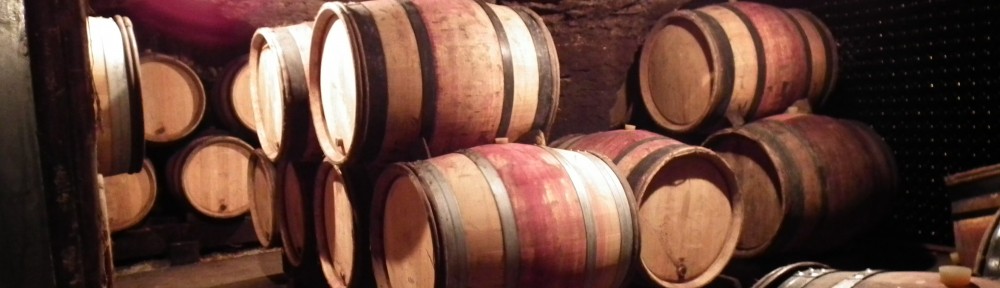
A Lament for White Burgundy

When I started drinking white Burgundy, I used to think of communal wines as reaching their peaks after four or five years, premier crus around eight to ten, and grand crus for ten years and up. Today those ranges seem hopelessly optimistic. Even aside from the problem with premature oxidation that has plagued white Burgundy since the 1996 vintage, with rare exceptions, the wines no longer seem to have that staying power. I wonder whether my memories of drinking old but glorious white Burgundy are simply nostalgic.

There is a curious parallel between the problems with California Chardonnay of which I complained recently (A Sonoma Chardonnay that Failed the Reality Check) and my experiences with De Montille’s Les Caillerets from Puligny Montrachet. When De Montille started making this wine I was delighted to find that it followed the tradition of winemakers such as Leflaive for expressing the steely minerality that characterizes Puligny.

It seemed to me that the early vintages – the first I tasted was 1999 – showed something of a mark of a red winemaker adjusting to white winemaking, as they all had just a little too much obvious oak. But with 2002 I thought De Montille hit his stride as a white winemaker; my initial tasting note, in 2005, found steely tones and precise fruit flavors, a worthy counterpart to the crystalline red Volnays which for which I had previously known De Montille.

The wine developed beautifully for the next few years. Early in 2010 it even seemed close to Grand Cru in standard, fruits becoming fuller, but still showing those steely underpinning. But during the year the steely minerality was replaced by increasingly developed fruits until the overall flavor spectrum seemed almost stewed. The last bottle, last week, actually started out well, rich but restrained, but in the glass turned to stewed and exotic fruits with a sensation of over-ripeness, and then the acidity became pressing rather than refreshing.

Other vintages have not lasted even as long. The 1999 appeared to have reached the end of its life by 2006, although that was more a problem with premature oxidation than over development of the fruits. The 2004 vintage was showing intense tropical fruits when I tasted it in  2007. The 2005 vintage was becoming a bit over phenolic by 2009, by last year it was showing signs of beginning to descend into a blowsy old age. When I tasted the 2009 a few weeks ago, it showed precisely delineated fruits, but with a floral, perfumed impression that reminded me more of Grand Cru Alsace than top Burgundy.

It seems to me that there is a trend for vintages to peak earlier and earlier, making transition from a steely citrus flavor spectrum to over ripe stone fruits. What alarms me most about this is that you can’t see it coming: the transition occurs quite abruptly. The only conclusion I can form is that I shall have to stop buying white Burgundy for the cellar and switch to purchasing only small amounts for current consumption. This does not make me happy.

A Voyage Around Arrowood

When I was in Sonoma last week, I visited all three of the properties where legendary winemaker Richard Arrowood has made wine, ending up with a meeting with the man himself. This I undertook with some trepidation. Earlier in the day, I had been warned that as well as winemaking, he is famous for his gun collection, so I took great care not to arrive too early in case I was mistaken for a trespasser. When I arrived (exactly on time) I was greeted by Richard Arrowood with his arm in a sling, the result of an accident when he was requalifying for his concealed gun permit. But to go back the beginning.

I started out at Chateau St. Jean, where Richard was the first winemaker after it was founded in 1973. “The owners asked me to do vineyard designates like the Burgundians do,” he recollects, and Chateau St. Jean became famous for the single vineyard Chardonnays; at one time there were as many as nine. Although these attracted the most attention, there was actually more red wine production than white, with the focus on Cabernet Sauvignon. Chateau St. Jean changed ownership when it was sold to Beringer in 1996.

The year that Arrowood left, in 1990, Chateau St. Jean produced the first vintage of its Cinq Cepages, which as its name suggests is a Cabernet-dominated blend with all five of the classic Bordeaux varieties. Until 2007, the wine carried a varietal label as Cabernet Sauvignon, but that was removed as of 2008. “This had been the intent from the beginning. We put Cabernet Sauvignon on the label at the beginning because we were so closely identified with white wine,” says current winemaker Margo Van Staaveren, who has been at Chateau St Jean almost since the beginning. The wine is definitely softer these days and appears intended for immediate gratification; I tasted vintages from 2003 to 2008, all of which seemed pleasant, but lacking in the stuffing required for longevity.

Richard had bought land and built a winery, called Arrowood, in 1987. From 1990 his main focus was producing wines there. The operation followed the same model as Chateau St. Jean in sourcing wine from growers. Its own vineyards are just 9 acres planted with Bordeaux varieties used for blending with Cabernet Sauvignon; it was known at the winery as Richard’s spice box. The top wines here, which are not distinguished by price, are the Monte Rosso single vineyard designate and the Réserve Spéciale, a blend that is made more years than not, but not every year, from sources that may change depending on the vintage. I tasted several of the vintages that Arrowood made before he left in 2010. (Arrowood was sold in 2004 to Mondavi, and then after Constellation bought Mondavi, had a troubled period when it changed hands more than once, ending up with Jackson Family Estates in 2010). The Monte Rosso wines had all the power of a top vineyard and I generally preferred them to the Réserve Spéciale. The latter was interesting because the older vintages (before 1998) were blends, but the more recent vintages are 100% Cabernet Sauvignon. Even allowing for development with age, I preferred the blends: only one of the pure Cabernet vintages struck me as being as complete as the blended wines. I did not taste the most recent vintages, which following Jackson Family Estate’s takeover are now being made at Jackson’s central facility in Napa Valley.

Finally, on to Amapola Creek, which is Richard’s latest venture. He had purchased the site in 2000 and planted the vineyard with the intention of selling the grapes, but then decided to make the wine himself. The 100 acre ranch just below the famous Monte Rosso vineyard is planted with 20 acres of French clones of Cabernet Sauvignon and a little Petit Verdot, Syrah, and Grenache. I tasted all vintages of the Cabernet since the first (2005, which is 100% Cabernet; later vintages also include a little Petit Verdot), and liked the precision in the fruits; the only thing detracting from complete refinement is the high alcohol (around 15%). The style was more similar to the Arrowood Monte Rosso (perhaps not surprising considering the proximity of the vineyards) than to the Réserve Spéciale. It will be fascinating in future years to see how Amapola Creek Cabernet Sauvignon compares with the Arrowood Monte Rosso.